VIP Airliner
Airbus ACJ320
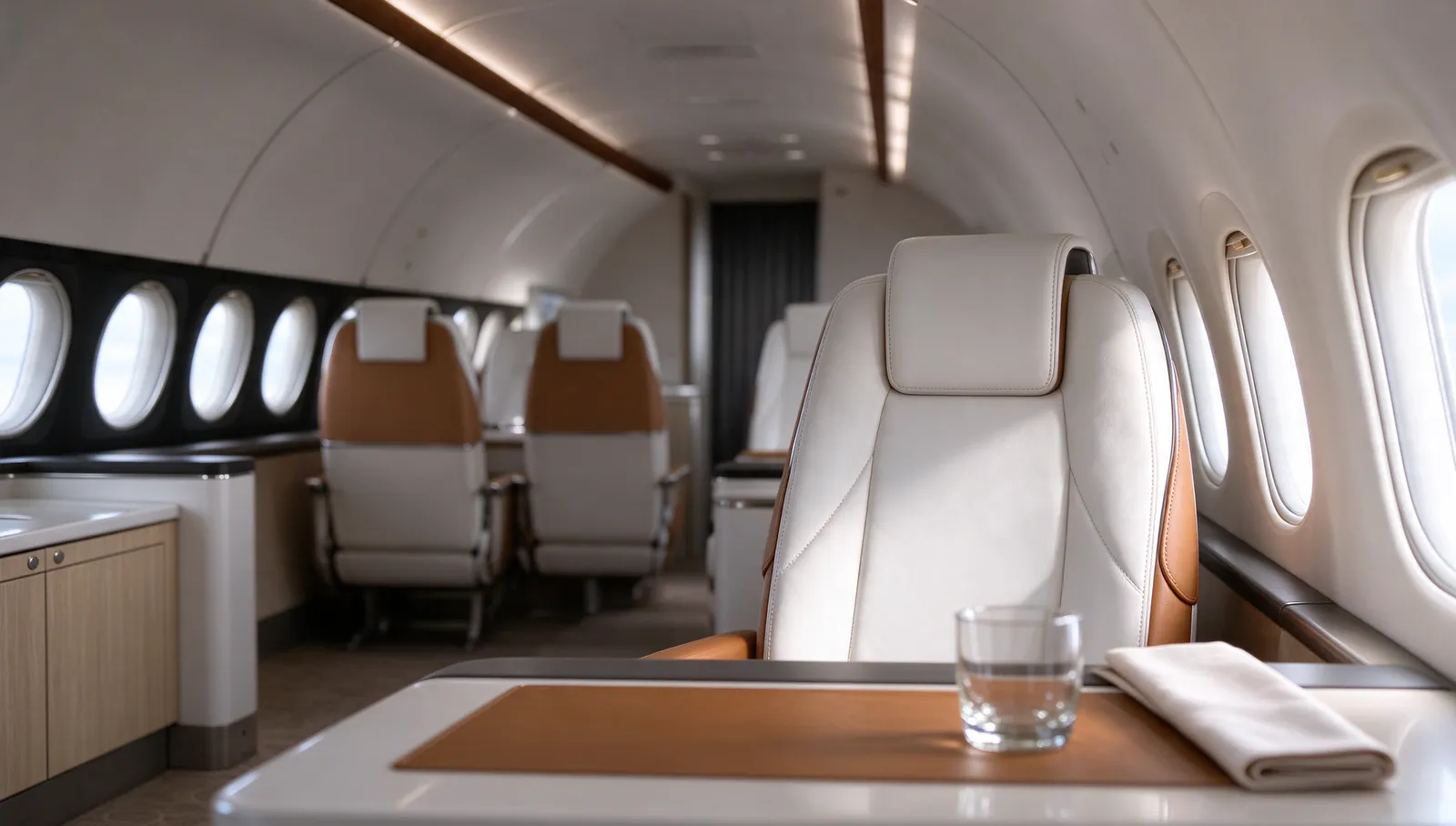
Range
4,300 NM
Cruise speed
473 kts
Seats
19
History
Airbus built on the success of the ACJ319 with a corporate version of the A320. It was first marketed as the A320 Prestige, entered service in 2000 and took the ACJ320 name in 2011. The airliner it is based on first flew on 22 February 1987 and was certified in February 1988, so the VIP model started from a proven design.
For corporate use, Airbus raised the service ceiling to 41,000 ft, added removable auxiliary fuel tanks and created a cabin of almost 100 square metres. The standard layout seats 19 passengers, and the range is 4,300 nm (7,963 km). More than 20 ACJ320s have been delivered to owners around the world.
In 2018 Airbus introduced the ACJ320neo, powered by the latest CFM LEAP engines, which burn less fuel. The first neo flew on 16 November 2018 and reached its first customer in January 2019. The original ACJ320 stayed in production until 2021, the year the A320neo replaced the A320 on airline production lines.
Technical Specifications
General information
| Model name | ACJ320 |
|---|---|
| Manufacturer | Airbus |
| Aircraft category | VIP airliner |
| ICAO Designator | A320 |
| Start/End of Production | 2000 - 2021 |
| Number of pilot(s) | 2 |
Performances
| Range (with IFR reserves) | 4300 NM (7963 km) |
|---|---|
| Ferry range | 5250 NM (9723 km) |
| Cruise speed | 473 kts (876 km/h) |
| Max Operating Speed – VMO | 350 KIAS |
| Max Mach Operating Speed - MMO | Mach 0.82 |
| Long-Range Cruise Speed - LRC | 451 KTAS |
| Approach Speed | 137 kts |
| Takeoff Distance | 2025 m |
| Average Landing Distance | 1500 m |
| Service Ceiling | 41000 ft |
| Thrust | 22256 lbf |
Aircraft technology
| Engine type | Turbofan |
|---|---|
| Engine(s) | CFM International CFM56-5 or IAE V2500 |
| Avionics | Glass cockpit, Fly-by-wire, ECAM |
Dimensions and capacity
| Aircraft length | 37.57 m |
|---|---|
| Aircraft height | 11.76 m |
| Wing span | 35.8 m |
| Cabin height | 2.25 m (7.4 ft) |
| Cabin length | 27.74 m (91.0 ft) |
| Cabin width | 3.7 m (12.2 ft) |
| Baggage volume | 15 m3 |
| Seats (standard config) | 19 |
| Seats (max) | 35 |
| Suitcases | 45 |
| Carry-on luggage | 15 |
| Maximum payload | 19900 kg |
| Maximum TakeOff Weight - MTOW | 78000 kg |
| Maximum Landing Weight - MLW | 66000 kg |
| Fuel capacity | 27200 L |
FAQ
ACJ320ceo or ACJ320neo: what changed?
The ceo is the original aircraft. It uses CFM56-5B engines and, with auxiliary tanks, flies 4,300 nm (7,963 km). The neo arrived in 2018 with new-generation engines, either the CFM LEAP-1A or the Pratt & Whitney PW1100G, plus aerodynamic refinements. With eight passengers it can fly roughly 6,000 nm (11,100 km), enough for London to Los Angeles, subject to payload and winds.
ACJ318, ACJ319 or ACJ320: which Airbus corporate jet fits?
Of the three, the ACJ320 is the biggest, with the longest cabin and 19 seats in standard layout. The ACJ318 is the smallest and holds steep-approach approval. The ACJ319 has a smaller footprint and more intercontinental range. Clients usually pick the ACJ320 when they want several lounges, a conference area or more than one bedroom, accepting longer runways and higher operating costs in return.
What can be fitted inside an ACJ320?
The cabin is large enough for bedrooms, bathrooms with a shower, a dining room or a lounge. Some layouts also include an office, a media room or a gym. Few business jets can offer that range of options, and the ACJ320 can serve as a home or an office in the air. Our advisors can tell you which layout a specific aircraft has.
Which aircraft is the ACJ320's closest rival?
The usual comparison is with Boeing's BBJ2 (Boeing Business Jet 2), a version of the 737-800. The ACJ320 generally has the larger cabin cross-section and floor area, which gives more freedom in planning a VIP interior. Depending on version, fuel tanks and load, the BBJ2 can match or slightly exceed its range on some non-stop intercontinental missions, so the better choice depends on the specific trip.
Gallery
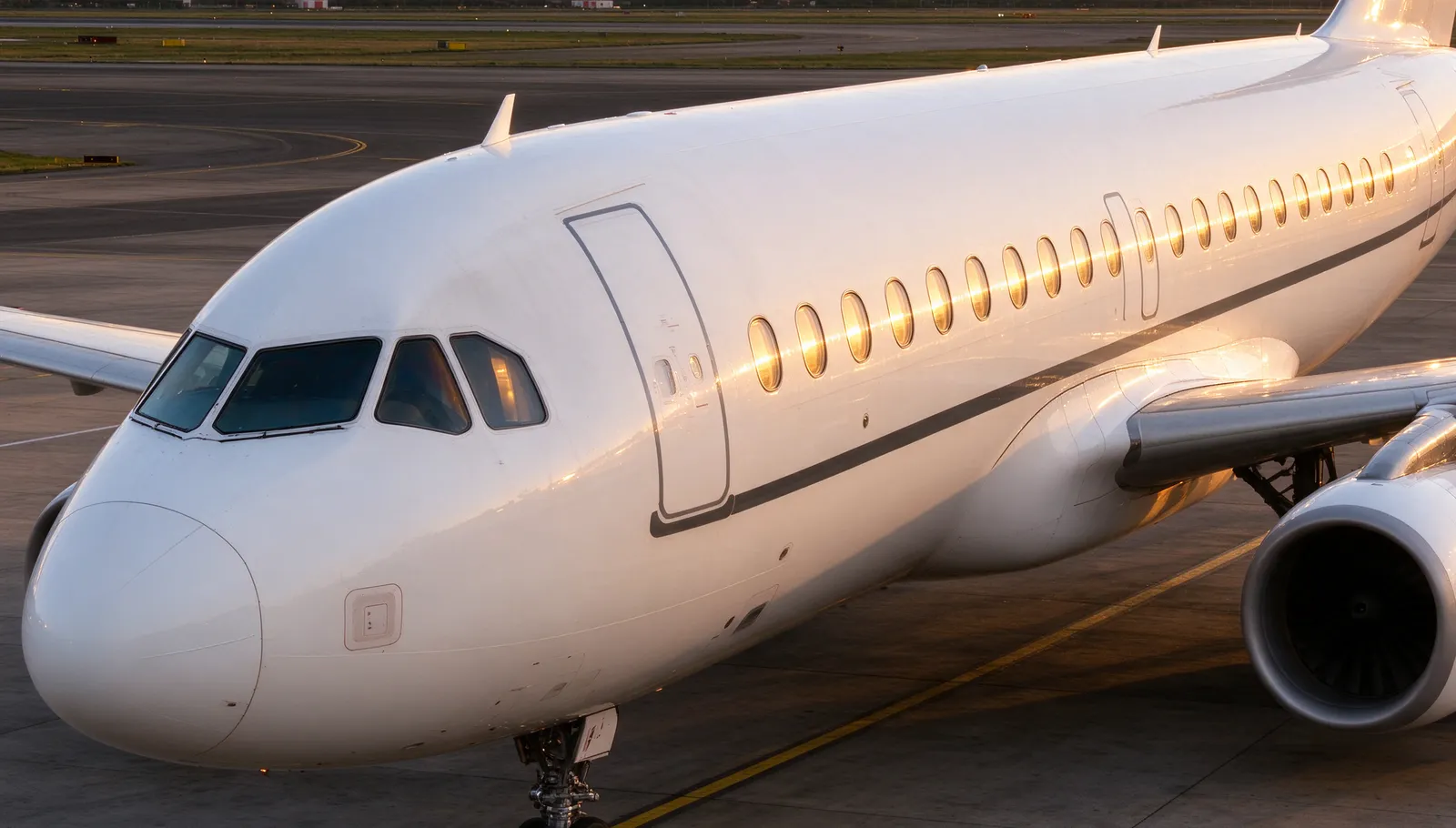
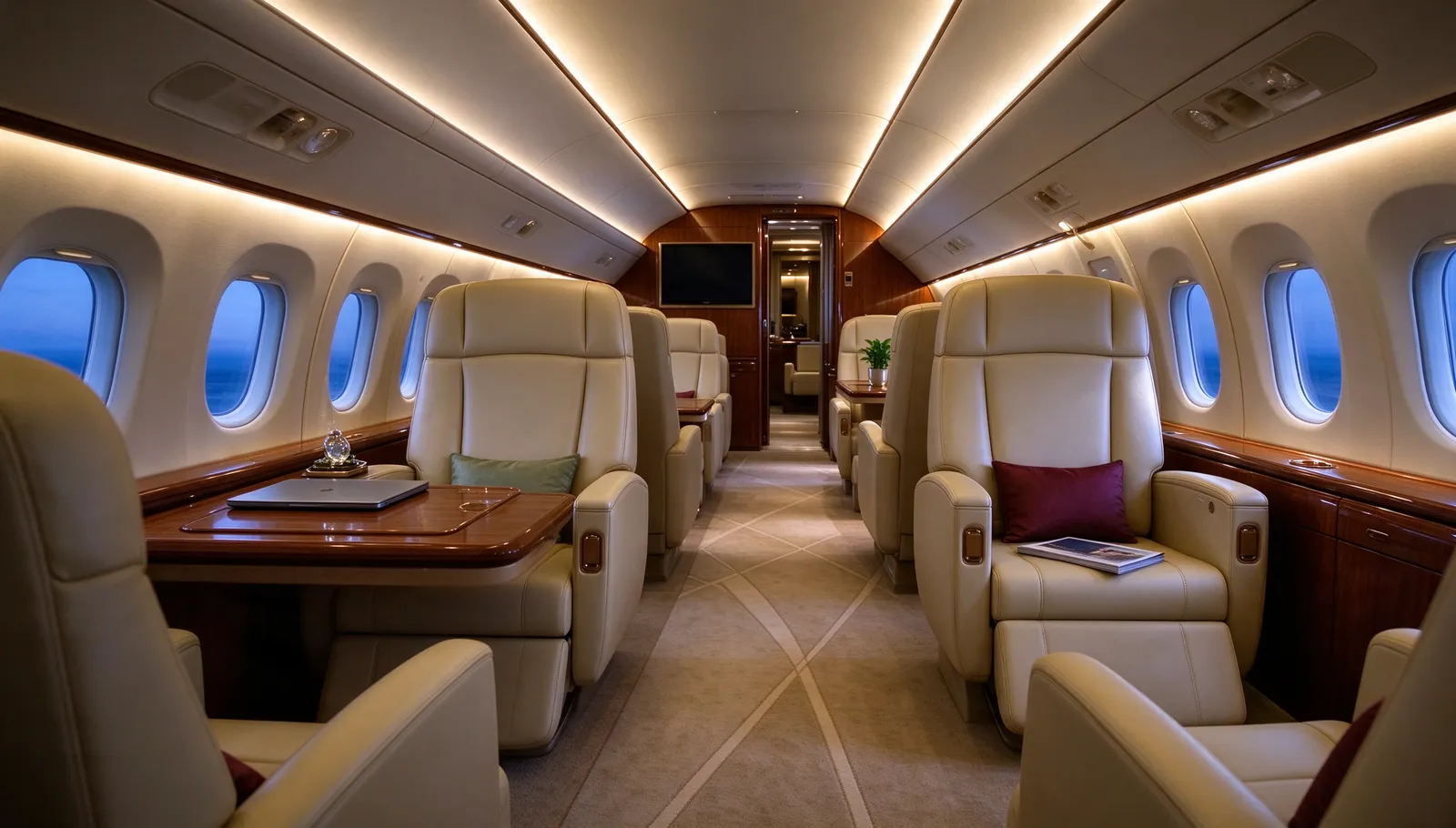
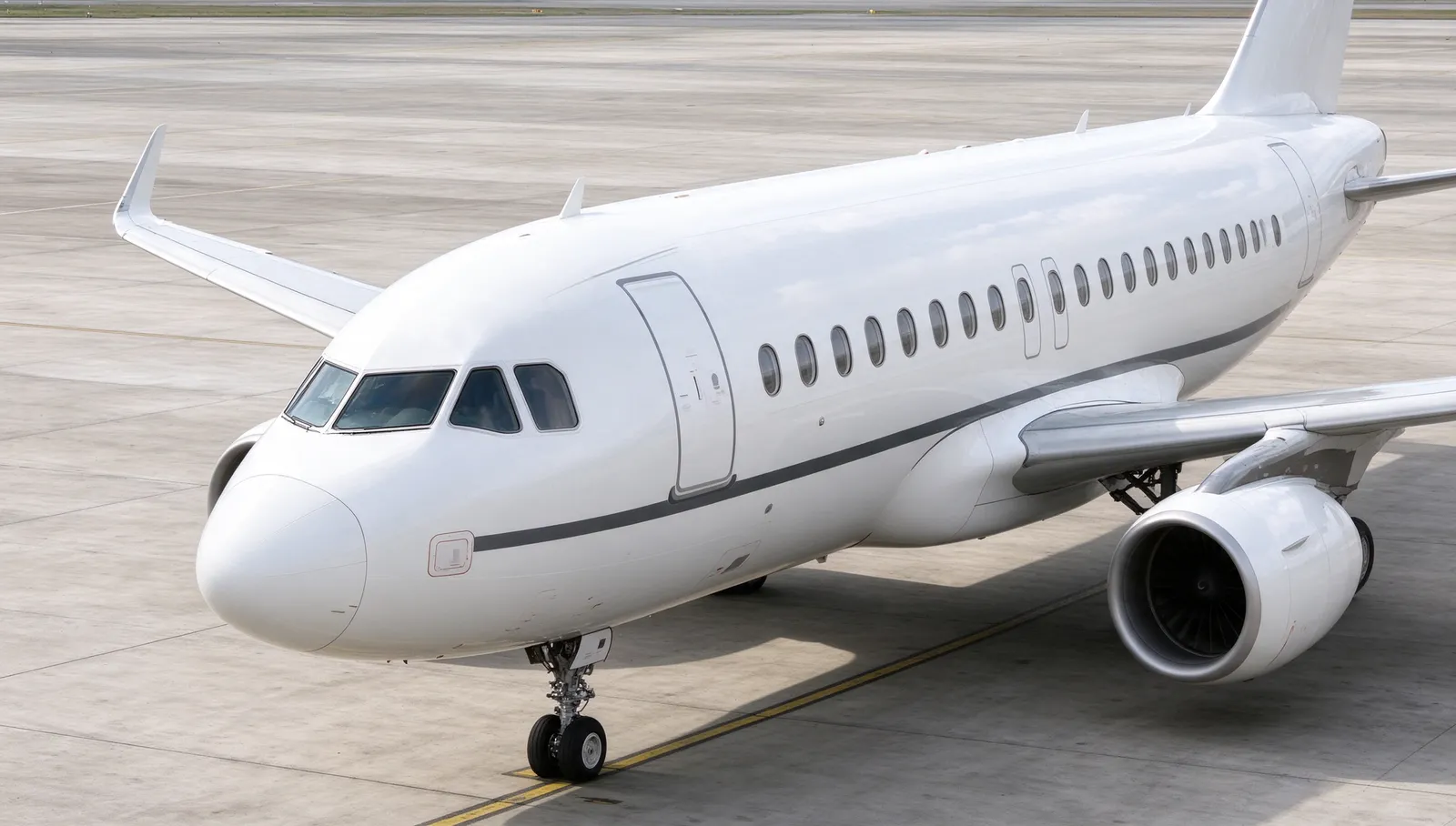
Figures are published manufacturer data, shown for illustration only. Images are generated for this concept and show the ACJ320 type, not a specific aircraft. Airbus and ACJ320 are trademarks of their owner, used only to identify the aircraft.