VIP Airliner
Boeing BBJ
Range
6,200 NM
Cruise speed
470 kts
Seats
18-19
History
In 1996 Boeing entered the VIP airliner segment through a joint venture with General Electric to build the Boeing Business Jet. It was a response to demand for business aircraft that were larger than conventional jets and could fly more than 6,000 miles. The design was based on the 737-700 from the Next Generation family, using the 737-800's stronger wings and landing gear.
The first BBJ was rolled out on 26 July 1998 and flew on 4 September that year. The first customer aircraft was handed over in October 1998, and the type entered service in 1999. It paired the proven systems of the airline 737 with VIP interiors, and its transcontinental range and size gave access to airports that larger airliners cannot use.
When Boeing added the BBJ2 and BBJ3, the original aircraft was renamed the BBJ1. Boeing has delivered more than 260 BBJs across all variants, which gave it a place next to the established business jet makers in the VIP airliner market. The BBJ covered on this page was produced from 1998 to 2021.
Technical Specifications
General information
| Model name | BBJ |
|---|---|
| Manufacturer | Boeing |
| Aircraft category | VIP airliner |
| ICAO Designator | B737 |
| Start/End of Production | 1998 - 2021 |
| Number of pilot(s) | 2-4 |
Performances
| Range (with IFR reserves) | 6200 NM (11482 km) |
|---|---|
| Ferry range | 6285 NM (11640 km) |
| Cruise speed | 470 kts (870 km/h) |
| Max Operating Speed – VMO | 340 KIAS |
| Max Mach Operating Speed - MMO | Mach 0.82 |
| Long-Range Cruise Speed - LRC | 452 KTAS |
| Approach Speed | 137 kts |
| Takeoff Distance | 1855 m |
| Average Landing Distance | 1370 m |
| Rate of Climb | 3100 ft/min |
| Service Ceiling | 41000 ft |
| Thrust | 27300 lbf |
Aircraft technology
| Engine type | Turbofan |
|---|---|
| Engine(s) | 2 x CFM International CFM56-7B27 / LEAP-1B |
| Avionics | Honeywell Primus Epic / Rockwell Collins HGS-4000 |
Dimensions and capacity
| Aircraft length | 33.6 m |
|---|---|
| Aircraft height | 12.5 m |
| Wing span | 35.8 m |
| Cabin height | 2.20 m (7.25 ft) |
| Cabin length | 24.13 m (79.2 ft) |
| Cabin width | 3.54 m (11.58 ft) |
| Baggage volume | 18.1 m3 |
| Seats (standard config) | 18-19 |
| Seats (max) | 56-63 |
| Suitcases | 32 |
| Maximum payload | 16420 kg |
| Maximum TakeOff Weight - MTOW | 77564 kg |
| Maximum Landing Weight - MLW | 66361 kg |
| Fuel capacity | 26025 L |
FAQ
Can a BBJ fly into any airport, or does it need long runways?
As a 737 derivative, the BBJ needs more runway than smaller private jets, with a take-off distance of about 1,855 m depending on weight and conditions. It is best suited to major international airports and well-equipped regional hubs. That still covers hundreds of airports worldwide, but it rules out some smaller airfields that light and midsize jets can use.
How far can the BBJ fly without a fuel stop?
Fitted with auxiliary fuel tanks, the BBJ is rated for 6,200 nm (11,482 km) with IFR reserves. That is enough for long intercontinental city pairs such as Paris to Tokyo or London to Los Angeles, depending on passengers, baggage and the winds on the day.
How does the BBJ1 differ from the newer BBJ Max?
Boeing's first Business Jet, now called the BBJ1, combined the 737-700 fuselage with the reinforced wing and undercarriage of the 737-800, and it became the benchmark for VIP airliner travel, with 6,200 nm of range. The BBJ Max family, launched in the late 2010s, uses 737 Max airframes with LEAP-1B engines, better aerodynamics and more fuel, for up to 6,600 nm (12,220 km). Cabin space is broadly similar, while fuel burn and emissions are lower on the Max.
How does the BBJ compare with an Airbus corporate jet?
Both are derived from airliners and offer far more room than a conventional private jet. The BBJ generally has slightly more range, 6,200 nm (11,482 km) with auxiliary tanks, which suits long non-stop sectors. Airbus corporate jets have a wider cabin cross-section, giving more floor space and freedom in the layout. Every cabin is fitted out differently, so the specific aircraft available often decides the choice.
Gallery
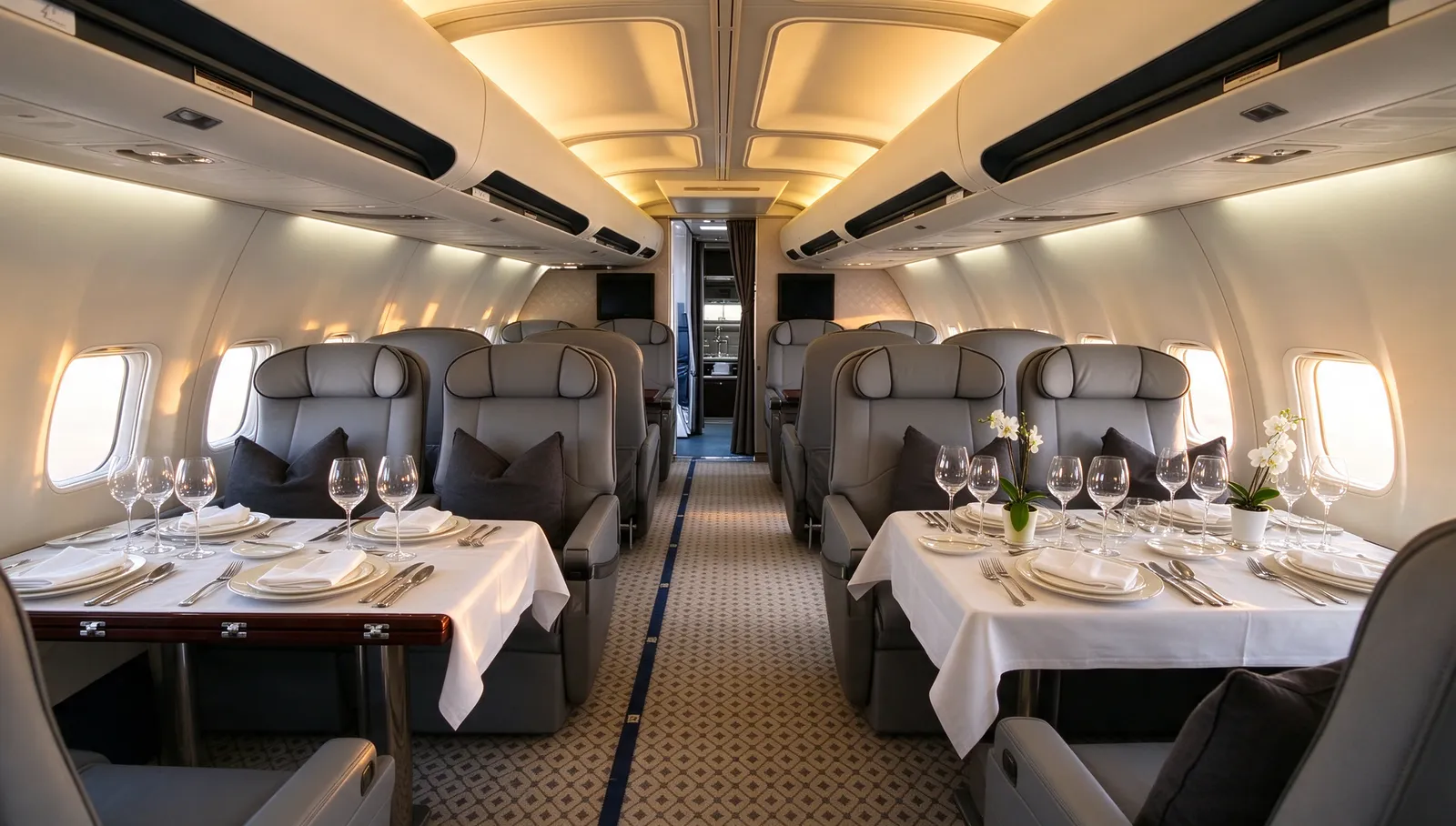
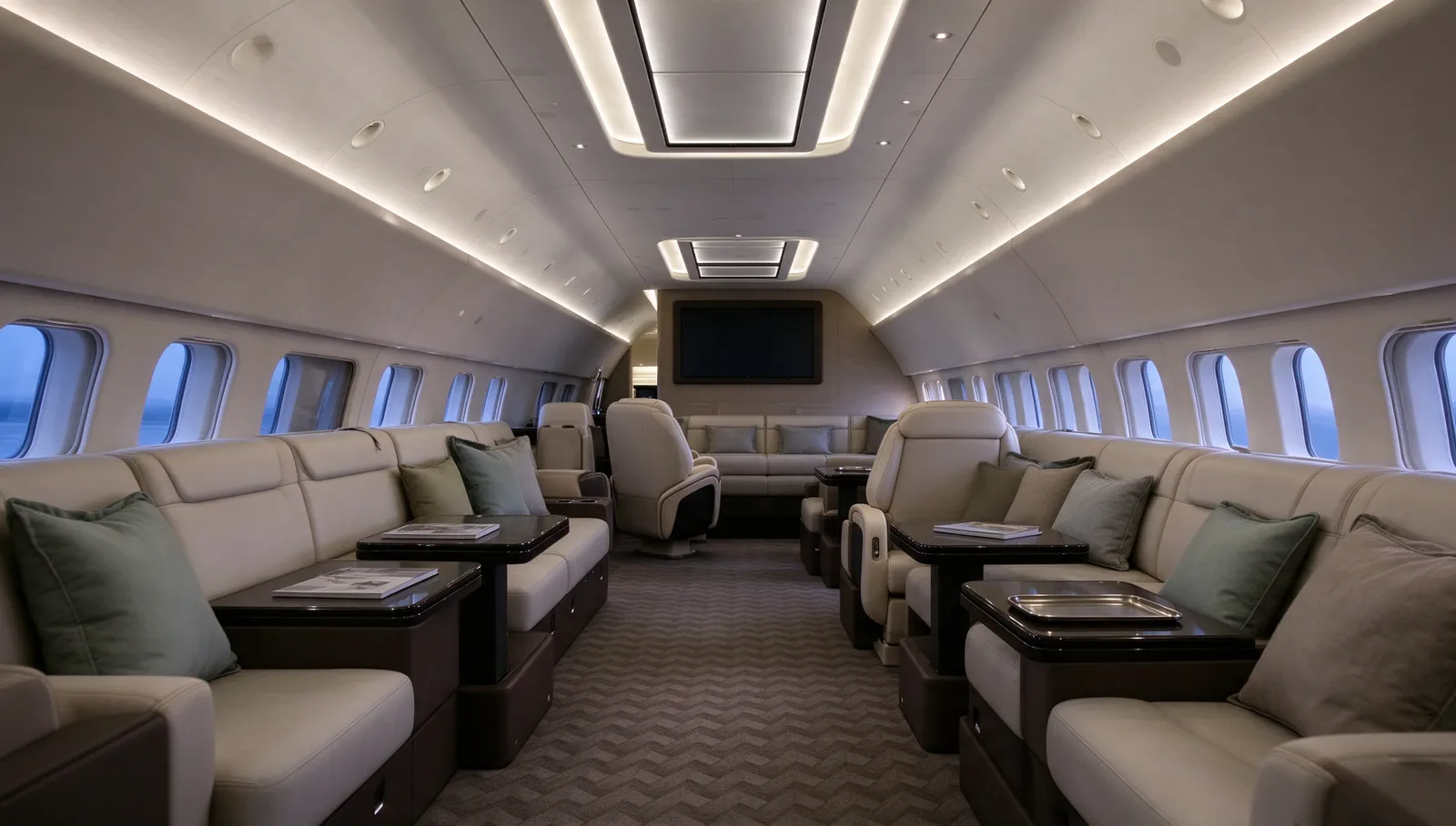
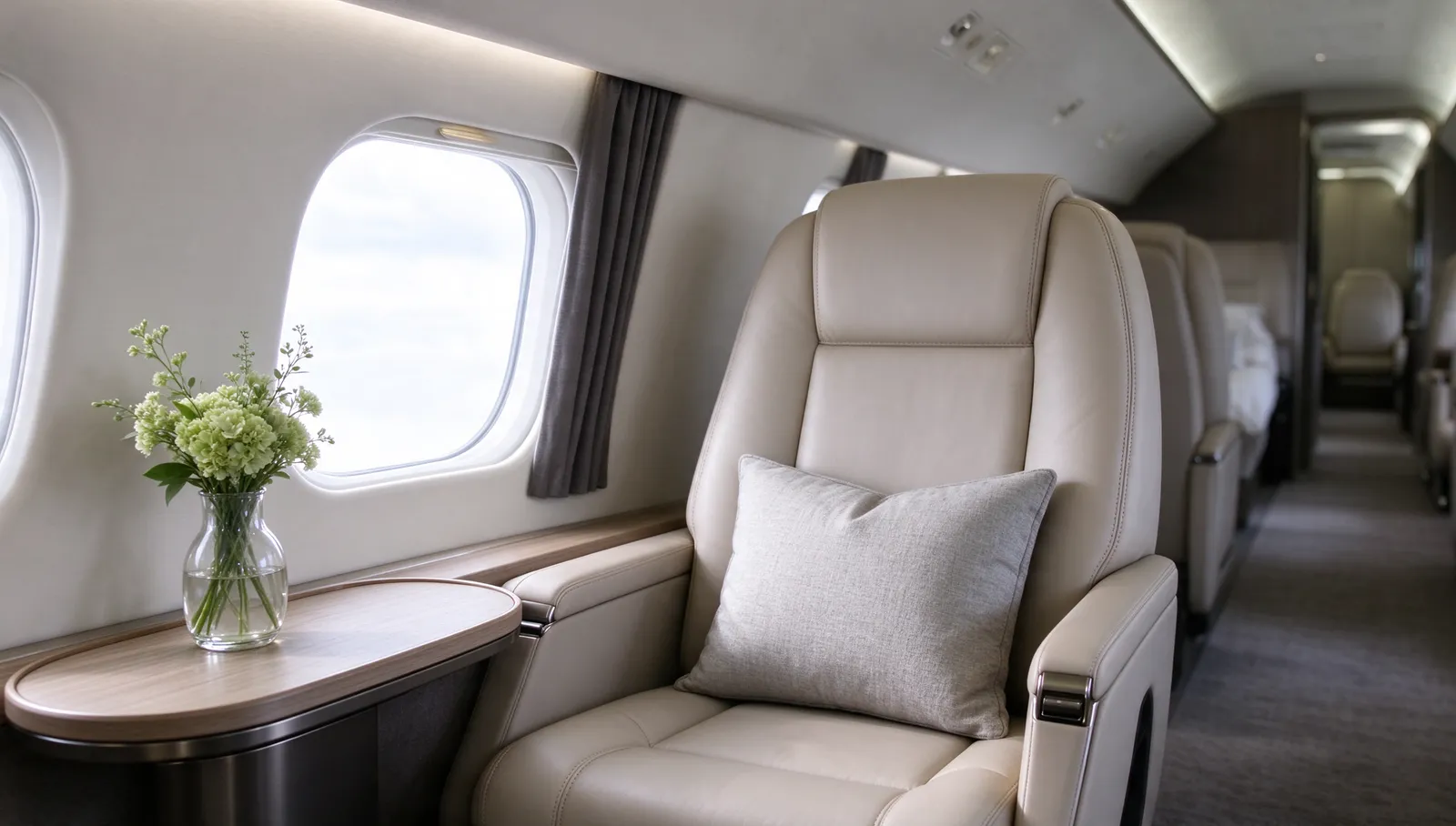
Figures are published manufacturer data, shown for illustration only. Images are generated for this concept and show the BBJ type, not a specific aircraft. Boeing and BBJ are trademarks of their owner, used only to identify the aircraft.