VIP Airliner
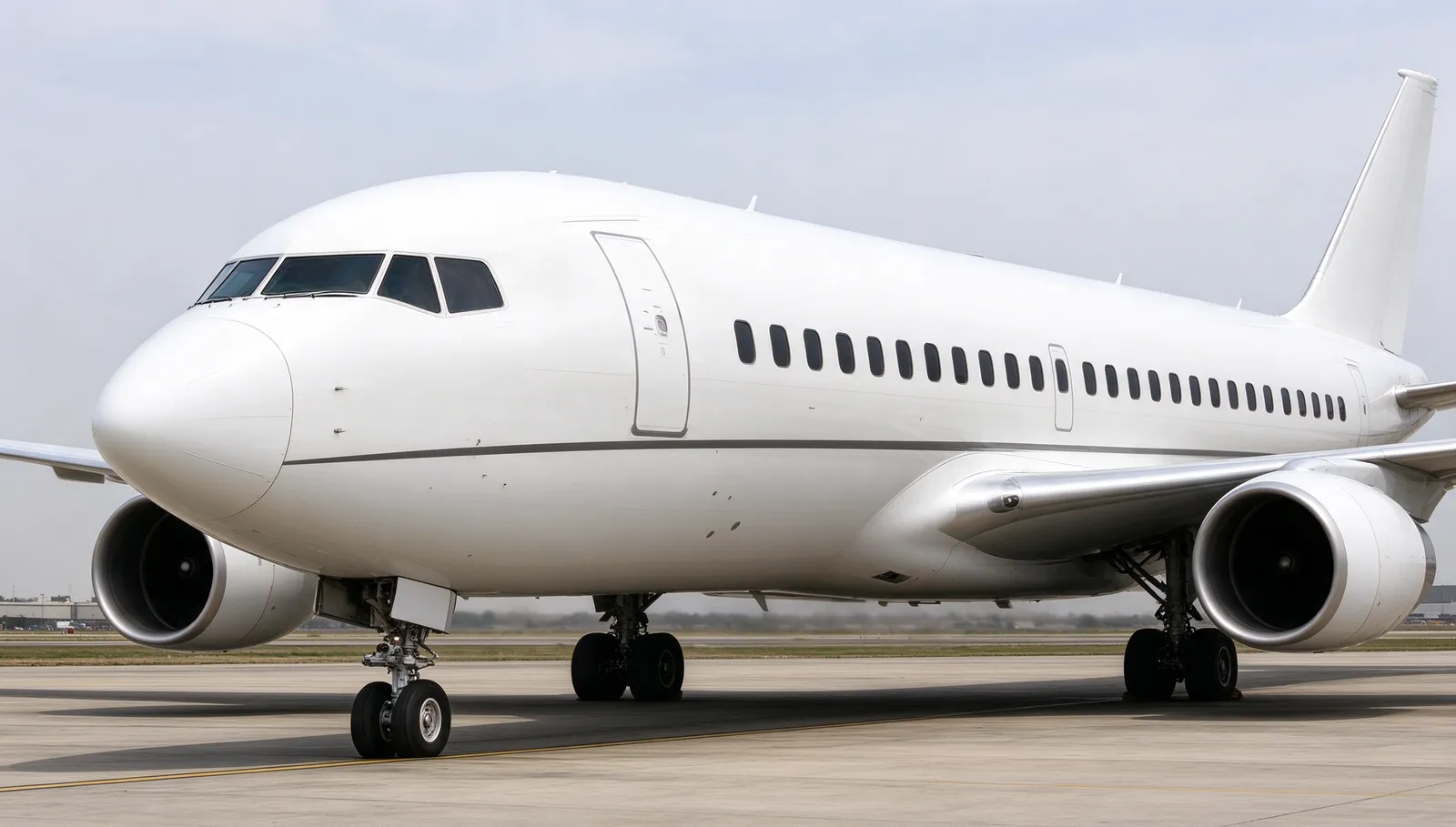
Boeing BBJ3
Range
4,790 NM
Cruise speed
473 kts
Seats
8-24
History
The BBJ3 was the third Boeing Business Jet, revealed in November 2005 after the BBJ and BBJ2. It is based on the 737-900ER, which makes it the biggest aircraft in the family, with 35 per cent more cabin space than the first BBJ. Boeing launched the programme formally in October 2006, when two customers placed orders.
After FAA and EASA certification, work on the first aircraft ran from May to August 2008, and the type went into service in 2009. It offered the biggest cabin of any BBJ while keeping the everyday flexibility of the 737. Production of the type ran from 2008 to 2012.
Boeing designed the BBJ3 for clients who wanted as much VIP cabin space as possible. It is a large aircraft, yet it retains the airport access and running costs that drew corporate and government operators worldwide to the BBJ family, and every cabin can be fitted out to the owner's brief.
Technical Specifications
General information
| Model name | BBJ3 |
|---|---|
| Manufacturer | Boeing |
| Aircraft category | VIP airliner |
| ICAO Designator | B739 |
| Start/End of Production | 2008 - 2012 |
| Number of pilot(s) | 2 |
Performances
| Range (with IFR reserves) | 4790 NM (8871 km) |
|---|---|
| Ferry range | 5500 NM (10186 km) |
| Cruise speed | 473 kts (876 km/h) |
| Max Operating Speed – VMO | 340 KIAS |
| Max Mach Operating Speed - MMO | Mach 0.82 |
| Long-Range Cruise Speed - LRC | 454 KTAS |
| Approach Speed | 134 kts |
| Takeoff Distance | 2500 m |
| Average Landing Distance | 1700 m |
| Rate of Climb | 3000 ft/min |
| Service Ceiling | 41000 ft |
| Thrust | 27300 lbf |
Aircraft technology
| Engine type | Turbofan |
|---|---|
| Engine(s) | 2 x CFM International CFM56-7B27 / LEAP-1B |
| Avionics | Honeywell digital / Rockwell Collins |
Dimensions and capacity
| Aircraft length | 42.1 m |
|---|---|
| Aircraft height | 12.55 m |
| Wing span | 35.8 m |
| Cabin height | 2.20 m (7.25 ft) |
| Cabin length | 32.61 m (107.0 ft) |
| Cabin width | 3.54 m (11.58 ft) |
| Baggage volume | 52.5 m3 |
| Seats (standard config) | 8-24 |
| Seats (max) | 60-63 |
| Suitcases | 38 |
| Maximum payload | 20700 kg |
| Maximum TakeOff Weight - MTOW | 85139 kg |
| Maximum Landing Weight - MLW | 71500 kg |
| Fuel capacity | 41511 L |
FAQ
BBJ3 or Airbus ACJ321: where do they differ?
They are direct rivals, each based on the largest model in its airliner family. The BBJ3's cabin is a little longer and it carries more baggage, which suits groups with a lot of luggage or a layout with several zones. The ACJ321's wider cross-section gives more room for open lounges. The BBJ3 also flies further, at 4,790 nautical miles against about 4,200.
Which airports can a BBJ3 use?
It needs far more runway than a typical private jet: around 2,500 m for take-off and about 1,700 m for landing, depending on weight, airfield altitude and weather. In practice that keeps it mostly to large international airports, with short regional runways out of reach, and our advisors check runway suitability for every airport on your itinerary.
What can a BBJ3 cabin include?
The cabin is over 32 metres long and 3.54 m wide, so each owner can fit it out very differently. Depending on the aircraft, there may be bedrooms with their own bathroom and shower, a room for dining or meetings, and more than one lounge. Owners often add a private office, an entertainment area and a full galley for long-haul catering.
What distance can the BBJ3 fly non-stop?
With IFR reserves it is rated for 4,790 nautical miles (8,871 km). That is enough for New York to Athens, roughly 7,925 km. Longer trips such as London to Singapore (about 10,846 km) or New York to Dubai (about 11,023 km) are beyond it and normally include a technical stop for fuel.
Gallery
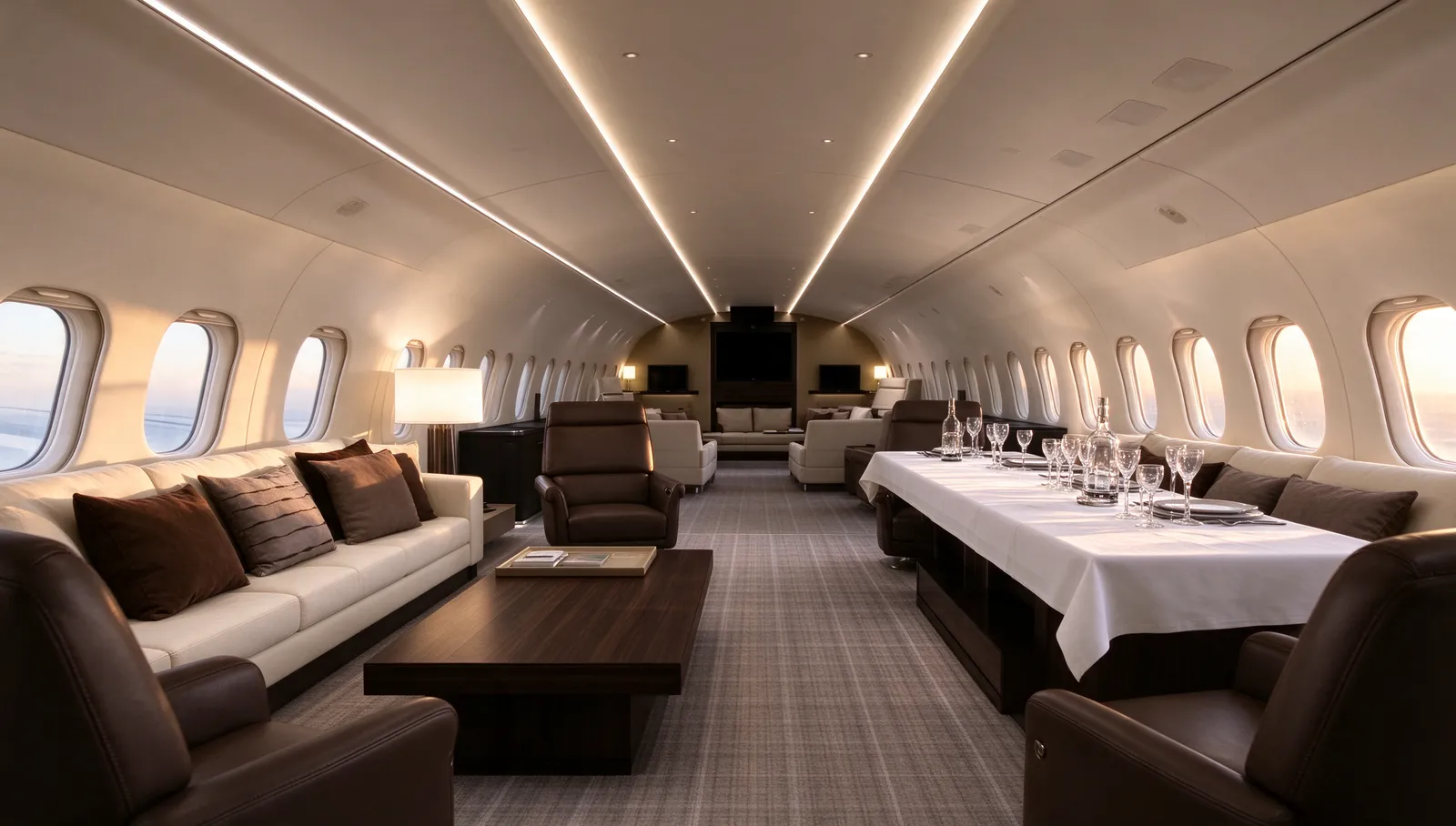
Figures are published manufacturer data, shown for illustration only. Images are generated for this concept and show the BBJ3 type, not a specific aircraft. Boeing and BBJ3 are trademarks of their owner, used only to identify the aircraft.