Super Midsize Jet
Bombardier Challenger 350
Range
3,200 NM
Cruise speed
528 kts
Seats
8
History
Bombardier launched the Challenger 350 at EBACE on 20 May 2013 as an upgraded version of the Challenger 300, although the first aircraft had already flown on 2 March that year. Transport Canada certified it on 12 June 2014, with FAA approval following on 25 June, and the aircraft has remained in production since then.
The main changes were to power and aerodynamics. Its Honeywell HTF7350 engines each produce 7,323 lb of thrust, 7.3 per cent more than the engines on the 300, and Bombardier strengthened the wing and added canted winglets. Range increased by 145 nautical miles, taking it to 3,200 nautical miles when carrying eight passengers.
The flight deck moved to the Pro Line 21 Advanced avionics suite, which adds MultiScan weather radar, synthetic vision and dual inertial reference systems. The cockpit also became fully paperless, which reduces the crew's workload and gives them a clearer overall picture of the flight.
Technical Specifications
General information
| Model name | Challenger 350 |
|---|---|
| Manufacturer | Bombardier |
| Aircraft category | super midsize jet |
| ICAO Designator | CL35 |
| Start/End of Production | 2014 - Still in production |
| Number of pilot(s) | 2 |
Performances
| Range (with IFR reserves) | 3200 NM (5926 km) |
|---|---|
| Ferry range | 3400 NM (6297 km) |
| Cruise speed | 528 kts (978 km/h) |
| Max Operating Speed – VMO | 320 KIAS |
| Max Mach Operating Speed - MMO | Mach 0.83 |
| Long-Range Cruise Speed - LRC | 459 KTAS |
| Approach Speed | 115 kts |
| Takeoff Distance | 1470 m |
| Average Landing Distance | 720 m |
| Rate of Climb | 4000 ft/min |
| Service Ceiling | 45000 ft |
| Thrust | 7323 lbf |
Aircraft technology
| Engine type | Turbofan |
|---|---|
| Engine(s) | 2 |
| Avionics | Collins Aerospace Advanced Avionics |
Dimensions and capacity
| Aircraft length | 20.9 m |
|---|---|
| Aircraft height | 6.1 m |
| Wing span | 21 m |
| Cabin height | 1.85 m (6.10 ft) |
| Cabin length | 7.68 m (25.20 ft) |
| Cabin width | 2.18 m (7.20 ft) |
| Baggage volume | 3 m3 |
| Seats (standard config) | 8 |
| Seats (max) | 10 |
| Suitcases | 8 |
| Carry-on luggage | 8 |
| Maximum payload | 1550 kg |
| Maximum TakeOff Weight - MTOW | 18400 kg |
| Maximum Landing Weight - MLW | 15500 kg |
| Fuel capacity | 8000 L |
FAQ
What is the Challenger 350's non-stop range?
Its range with IFR reserves is 3,200 nautical miles (5,926 km). In favourable conditions that allows direct flights between Paris and Dubai, or London and New York, so the aircraft suits transcontinental trips as well as longer regional routes. Headwinds and passenger load decide the margin on the longest sectors.
Should I choose a Challenger 350 or the newer Challenger 3500?
Bombardier introduced the 3500 in 2021 as an update of the 350. Range (about 3,200 nautical miles) and standard seating for eight are the same. The changes are mostly in the cabin: redesigned seats, a lower cabin altitude of 4,850 ft at cruise against 7,250 ft for the 350, and cabin systems that respond to voice commands. Newer avionics and a wider choice of interiors complete the update.
Can I fly a Challenger 350 into London City or Gstaad?
London City, yes, but not Gstaad. The Challenger 350 is certified for the 5.5 degree steep approach and shorter runway at London City (LCY). Gstaad's Saanen airfield (LSGK) is a different case: its short runway and the surrounding mountains limit it to light aircraft and smaller turboprops, so the Challenger 350 cannot operate there.
How does the Challenger 350 differ from the Challenger 650?
The 350 is a super midsize jet that seats eight in a standard layout and flies 3,200 nautical miles. The Challenger 650 is a large-cabin jet with ten seats, a wider cabin and a range of about 4,000 nautical miles. Choose the 350 for medium and long routes with a smaller group, and the 650 for larger groups or ocean crossings.
Gallery
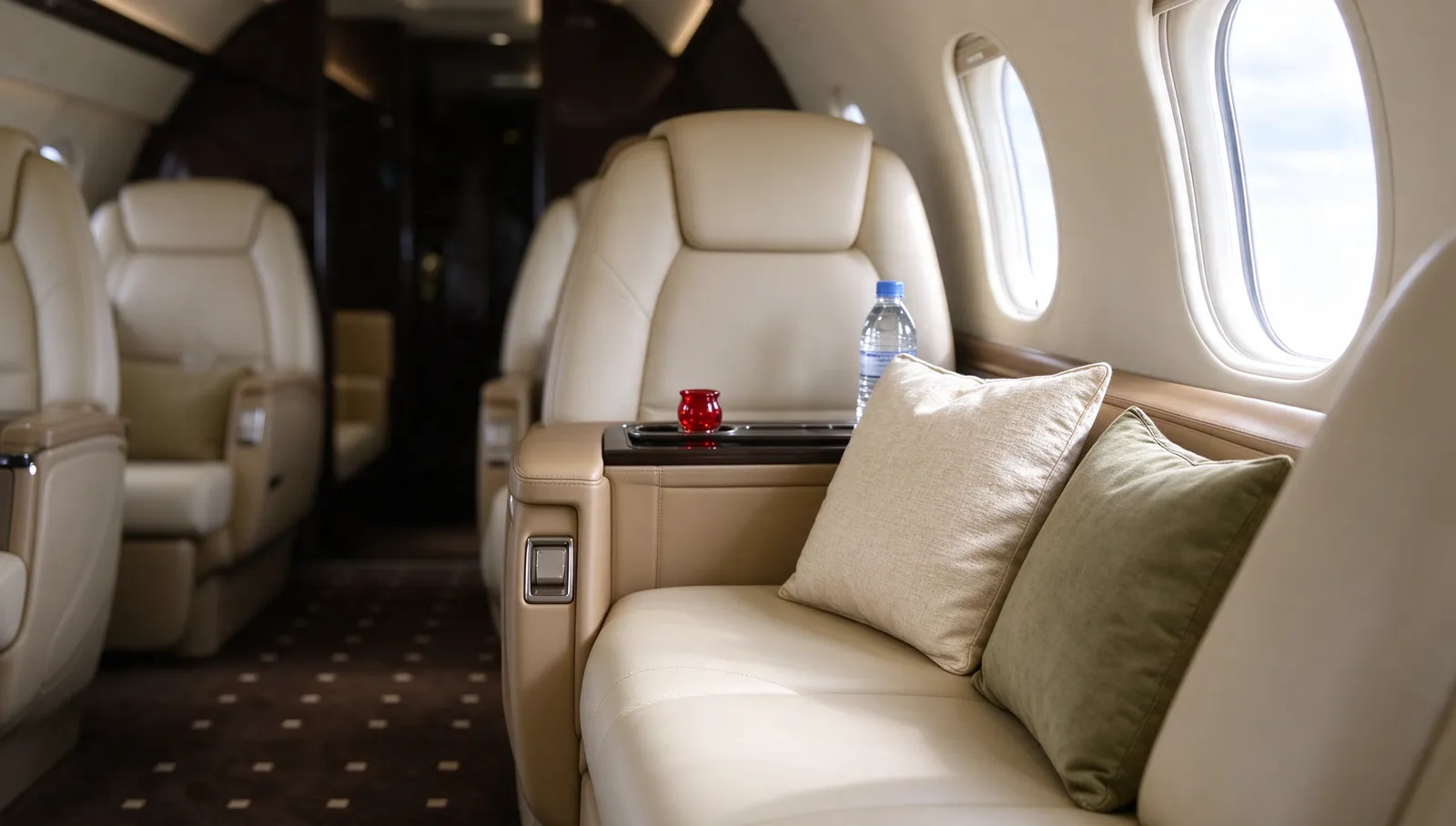
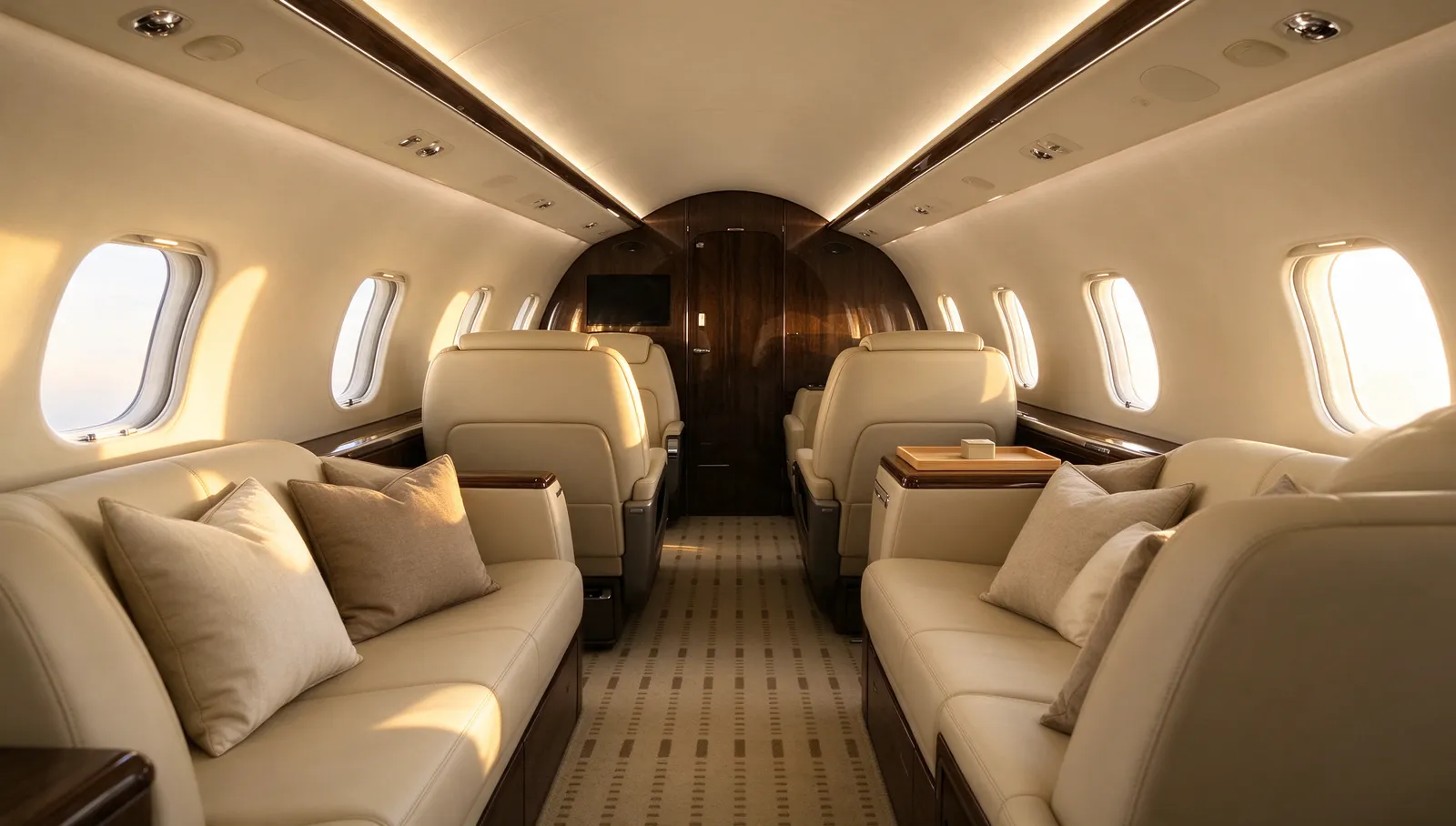
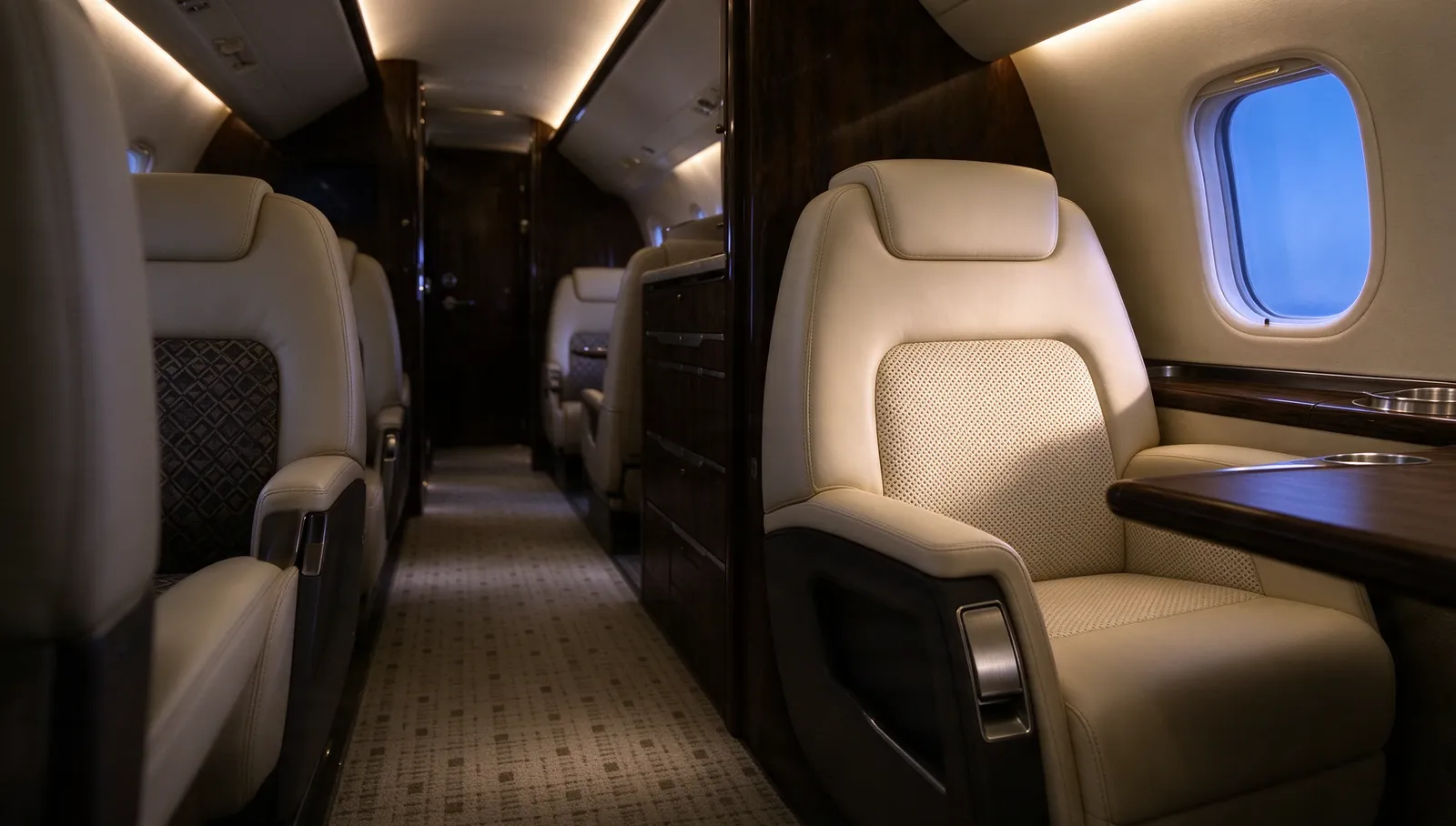
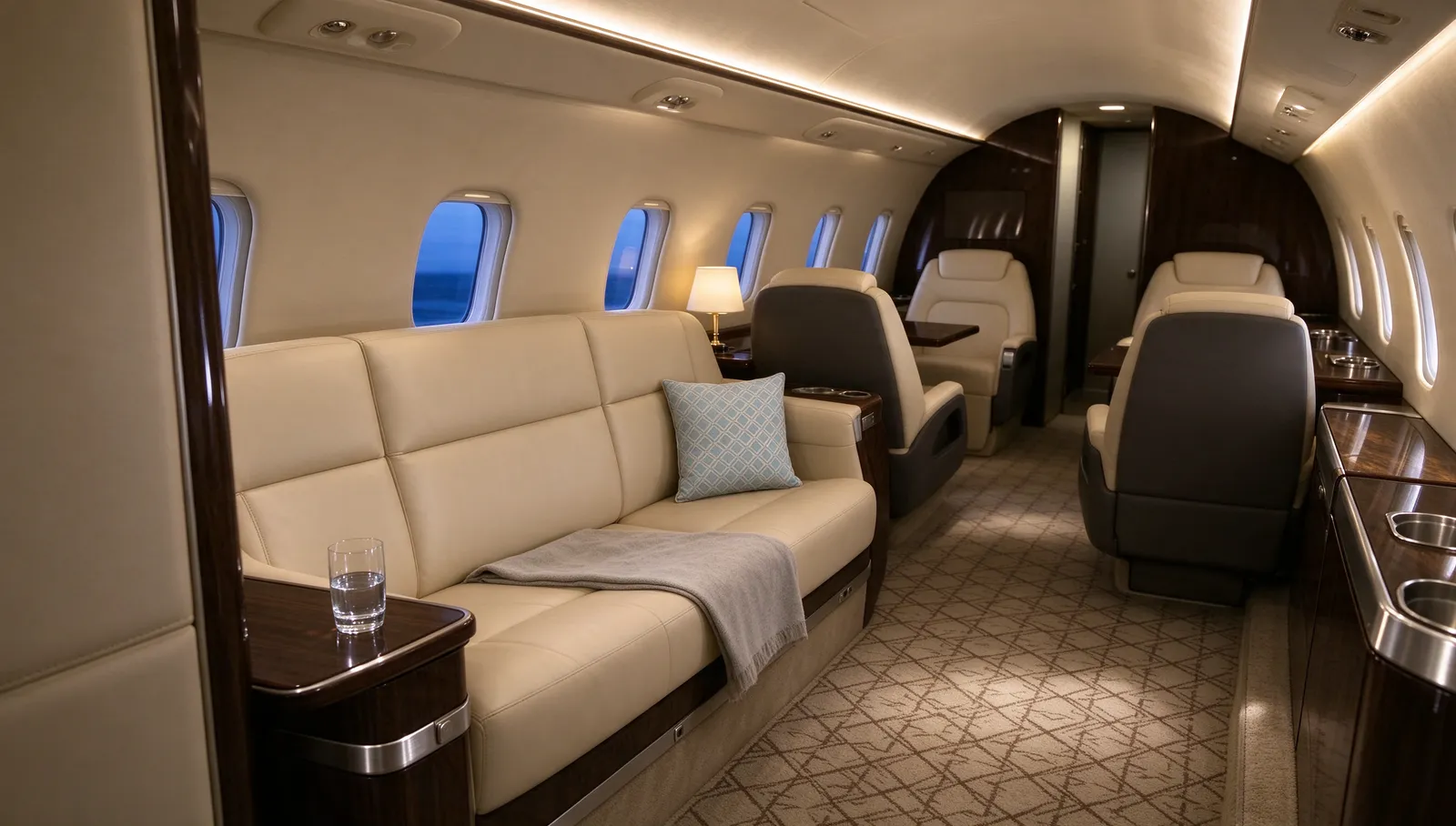
Figures are published manufacturer data, shown for illustration only. Images are generated for this concept and show the Challenger 350 type, not a specific aircraft. Bombardier and Challenger 350 are trademarks of their owner, used only to identify the aircraft.