Super Midsize Jet
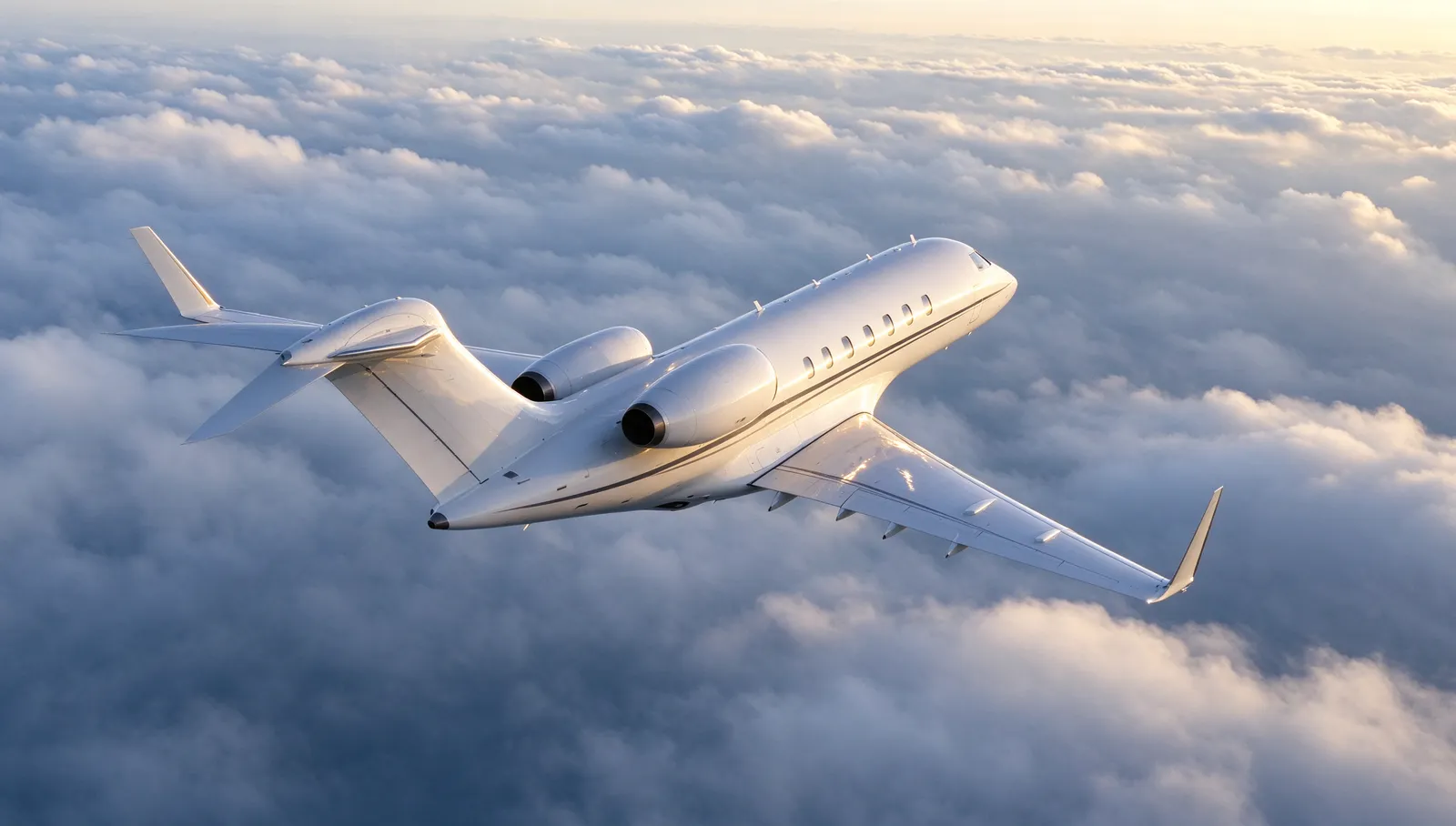
Bombardier Challenger 3500
Range
3,400 NM
Cruise speed
531 kts
Seats
8-10
History
The Challenger 3500 is the newest member of the Challenger 300 family, one of Bombardier's most successful super midsize lines. Its forerunner, the Challenger 300, began flying with operators early in the 2000s and built a reputation for a good balance of range, cabin comfort and dependability. The Challenger 350 followed, and the 3500 builds directly on that design rather than starting from a clean sheet.
Bombardier unveiled the 3500 in September 2021 at an event in Montréal, and it entered service a year later, in September 2022. The changes over the Challenger 350 are mostly inside: a redesigned interior, Bombardier's Nuage seats, more passenger technology and an updated cockpit. Power comes from Honeywell HTF7350 turbofans, and the flight deck uses Collins Aerospace Pro Line 21 Advanced avionics.
For charter clients, the attraction is a proven aircraft family with the comfort and connectivity of a modern business jet. The cabin is 7.62 m long and 2.13 m wide with a flat floor, and the 3,400 nm range with IFR reserves covers most regional and many transcontinental routes.
Technical Specifications
General information
| Model name | Challenger 3500 |
|---|---|
| Manufacturer | Bombardier |
| Aircraft category | super midsize jet |
| ICAO Designator | CL35 |
| Start/End of Production | 2021 - Still in production |
Performances
| Range (with IFR reserves) | 3400 NM (6300 km) |
|---|---|
| Cruise speed | 531 kts (985 km/h) |
| Max Operating Speed – VMO | 300 KIAS |
| Max Mach Operating Speed - MMO | Mach 0.83 |
| Long-Range Cruise Speed - LRC | 432 KTAS |
| Takeoff Distance | 1474 m |
| Average Landing Distance | 721 m |
| Service Ceiling | 45000 ft |
| Thrust | 7323 lbf |
Aircraft technology
| Engine type | Turbofan |
|---|---|
| Engine(s) | Honeywell HTF7350 |
| Avionics | Collins Aerospace Pro Line 21 Advanced |
Dimensions and capacity
| Aircraft length | 20.9 m |
|---|---|
| Aircraft height | 6.2 m |
| Wing span | 21.1 m |
| Cabin height | 1.82 m (6 ft) |
| Cabin length | 7.62 m (25.2 ft) |
| Cabin width | 2.13 m (7.2 ft) |
| Baggage volume | 3 m3 |
| Seats (standard config) | 8-10 |
| Seats (max) | 10 |
| Suitcases | 14 |
| Carry-on luggage | 16 |
| Maximum payload | 142 kg |
| Maximum TakeOff Weight - MTOW | 18416 kg |
| Maximum Landing Weight - MLW | 15490 kg |
| Fuel capacity | 7934 L |
Advantages & Disadvantages
Advantages
- Cabin comfort: A wide cabin with a flat floor, a redesigned interior and Bombardier's Nuage seats give the 3500 one of the most refined cabins in the super midsize class.
- Current technology: Passengers can control cabin functions by voice, charge devices wirelessly and use 4K entertainment, all run through a modern cabin management system.
- Useful range: The 3500's super midsize range suits many regional and transcontinental charters, and the cabin is larger than that of a smaller midsize jet.
- Passenger wellbeing: A low cabin altitude, a quiet cabin and rapid fresh-air circulation make longer flights more comfortable.
- Proven platform: The 3500 is the latest step in the Challenger 300 line, an aircraft family used widely by corporate flight departments, fractional programmes and charter operators.
Disadvantages
- Not built for the longest routes: The 3500 belongs to the super midsize class, and it is not meant for the very long flights between continents that a heavy jet or an ultra-long-range jet handles.
- Range varies with conditions: The published range depends on the passenger load, the routing, the weather and the speed flown, along with operational limits, so some longer sectors may need a fuel stop.
- Fewer aircraft available: Because the 3500 is new, there are fewer for charter in some regions than there are older Challenger 300 and 350 models.
- Costly for short hops: On short regional flights, a light or midsize jet may be the more economical choice, depending on the number of passengers, their luggage and the airports involved.
- Smaller than a heavy jet: Spacious as it is for its class, the cabin lacks the room, separate zones and long-haul amenities of a Bombardier Global or other large-cabin aircraft.
FAQ
What does the Challenger 3500 add over the Challenger 350?
It keeps the 350's proven airframe and modernises the passenger experience. The cabin is redesigned around Bombardier's Nuage seats, passengers get voice control, 4K entertainment and wireless charging for their devices, and an autothrottle is now standard. Range also rises slightly, to 3,400 nm (6,300 km) from the 350's 3,200 nm (5,926 km).
Can I find a Challenger 3500 for charter easily?
Because the 3500 has only been flying since 2022, fewer are on charter than older Challenger 300 and 350 aircraft, though the number is rising, especially among large fleet operators. Availability varies by region, season and route. Our advisors will offer a 3500 when one is well placed for your trip, or a comparable super midsize jet when that suits the itinerary better.
How many pilots fly the Challenger 3500?
Two. Single-pilot operation is not permitted on this type, as you would expect for a super midsize jet with this size and performance. On charter flights it is flown by a professional crew made up of a captain and a first officer.
Challenger 3500 or Embraer Praetor 600: which should I choose?
Both are super midsize jets suited to long regional and transcontinental charters. The Praetor 600 has more range, 4,018 nm (7,441 km) against 3,400 nm (6,300 km), so it is the pick when distance matters most. Seating is similar, 8 to 10 in the 3500 and 8 to 9 in the Praetor. The 3500's advantages are its wide cabin with a flat floor, the Nuage seats and its passenger technology.
Is there a toilet on the Challenger 3500?
Yes. The aircraft usually has an enclosed lavatory at the rear, with a galley at the front and storage areas on board. Some layouts fit a certified belted seat in the lavatory, and the arrangement varies from one aircraft to the next, so it is confirmed when the aircraft is selected for your trip.
Which airports can the Challenger 3500 use?
It serves most major business aviation airports and a number of airfields with more demanding runways or approaches, thanks to good short-field performance. Steep-approach airports such as London City need specific approval for both the aircraft and the operator. The type can gain London City approval, but each individual aircraft and its operator must hold it.
Gallery
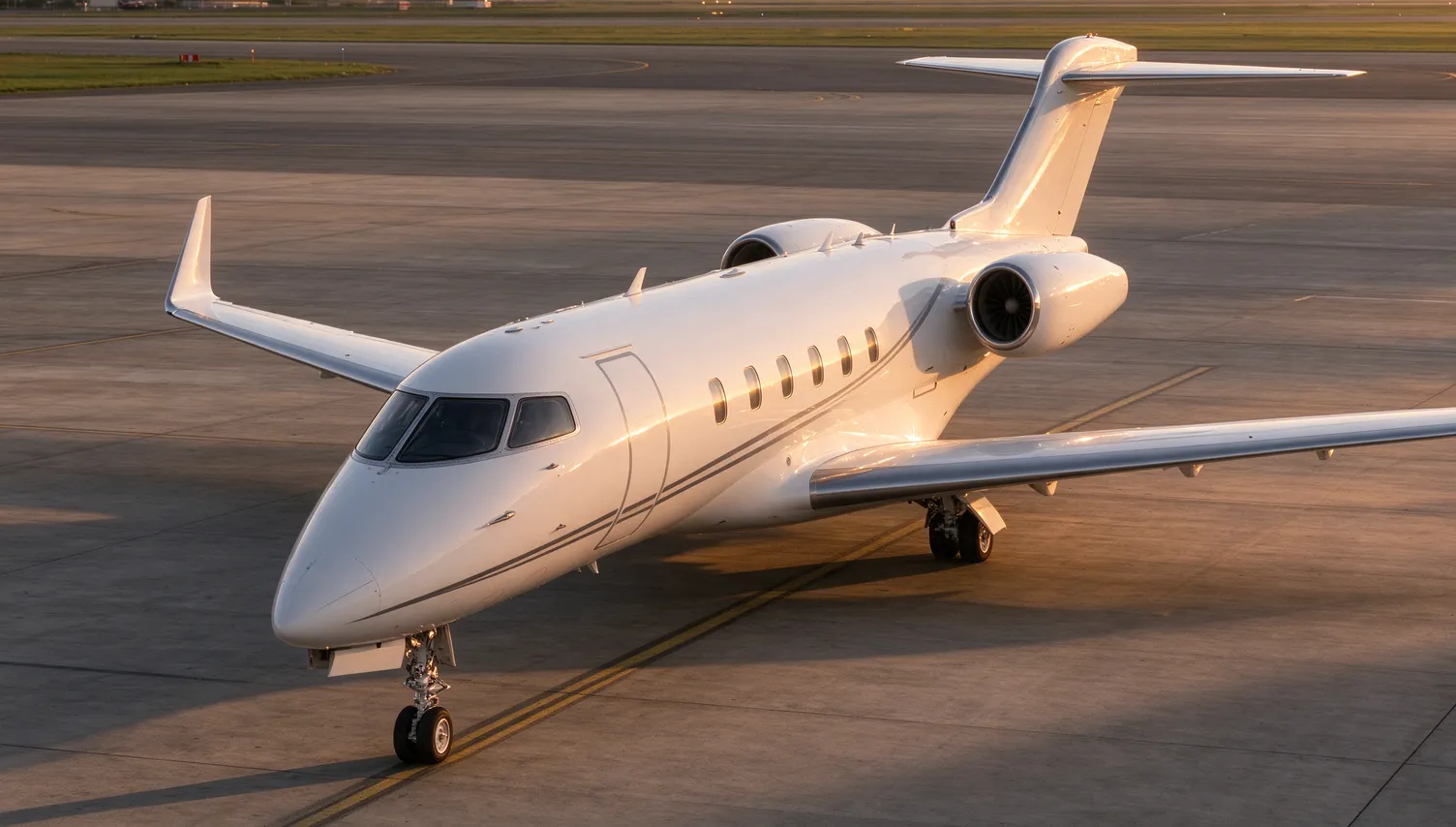
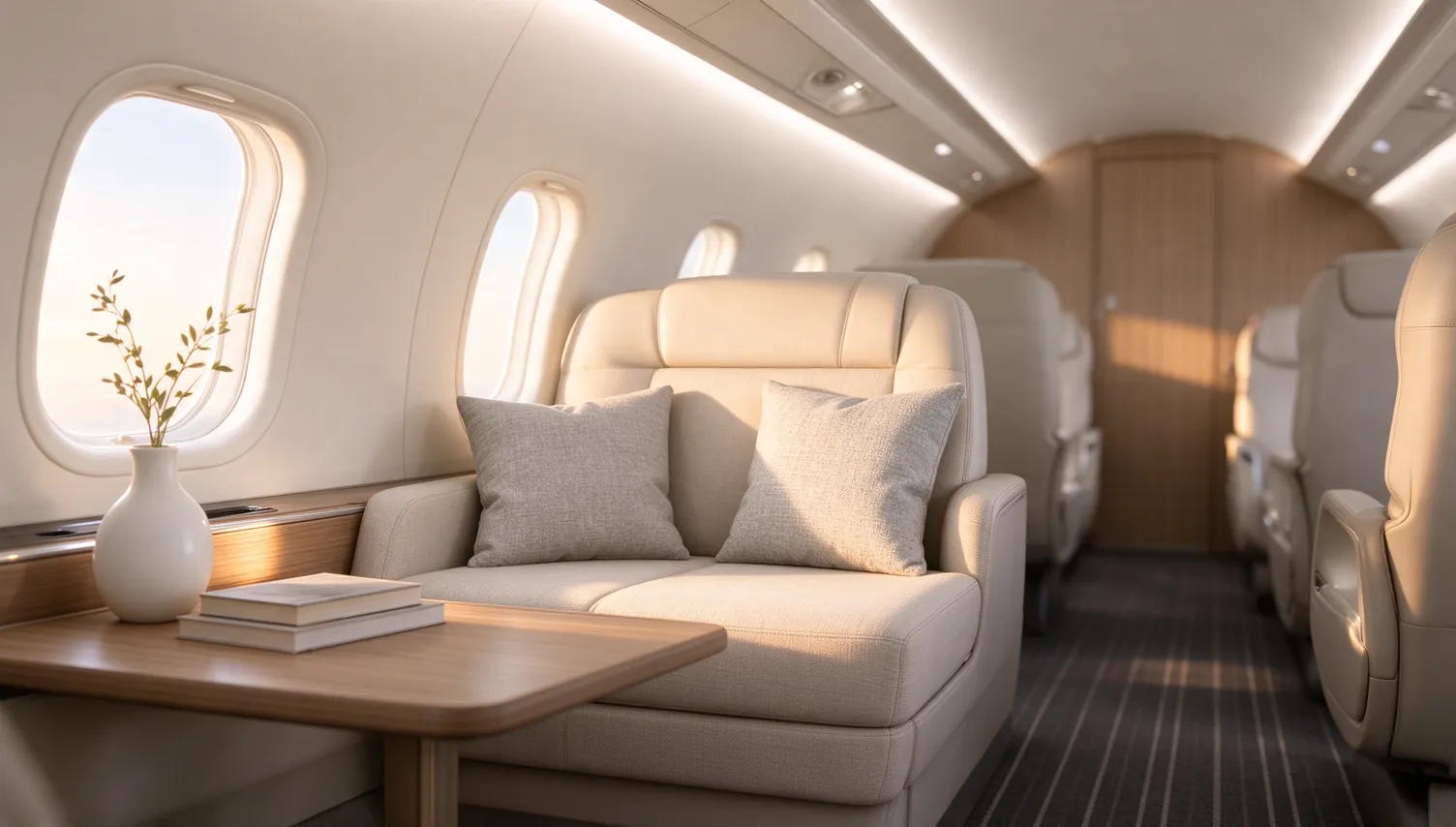
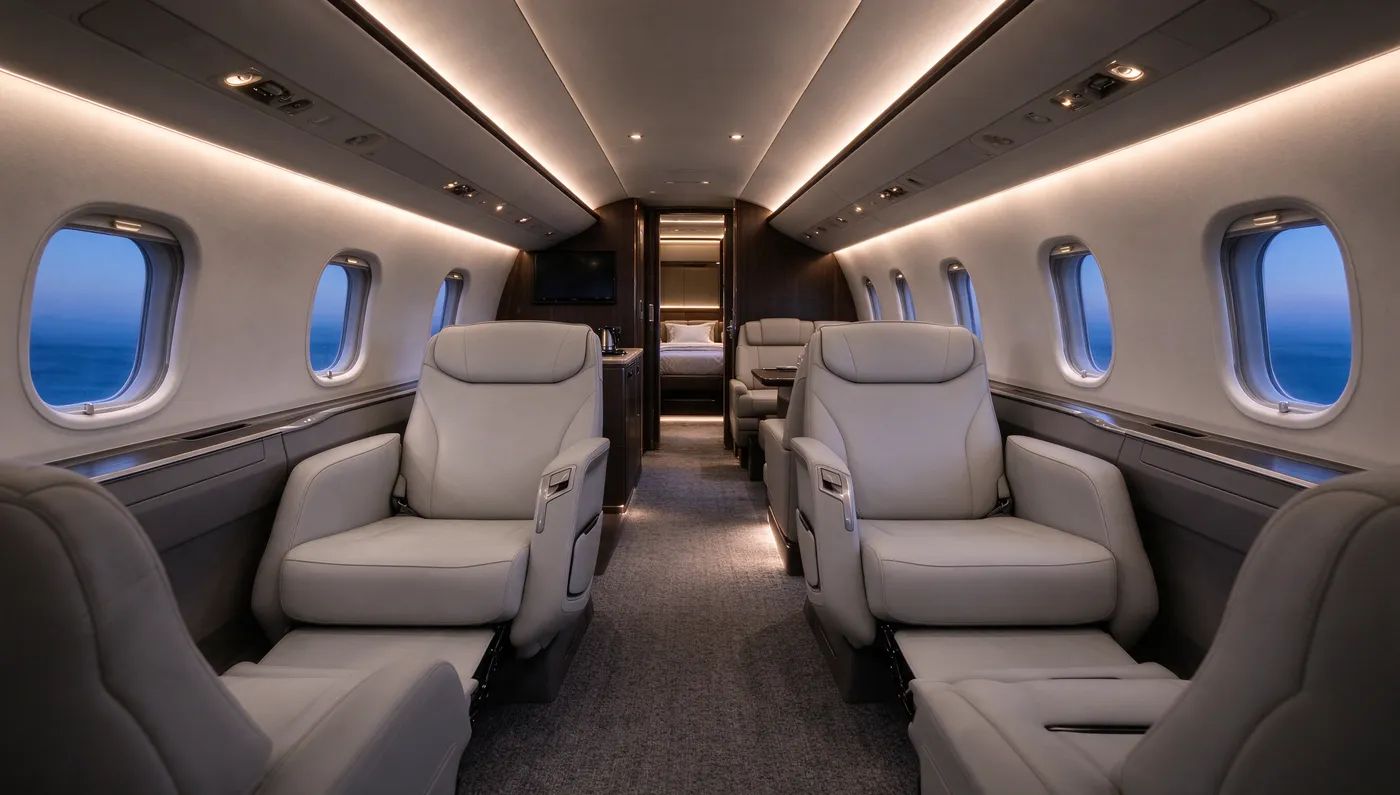
Figures are published manufacturer data, shown for illustration only. Images are generated for this concept and show the Challenger 3500 type, not a specific aircraft. Bombardier and Challenger 3500 are trademarks of their owner, used only to identify the aircraft.