Large Jet
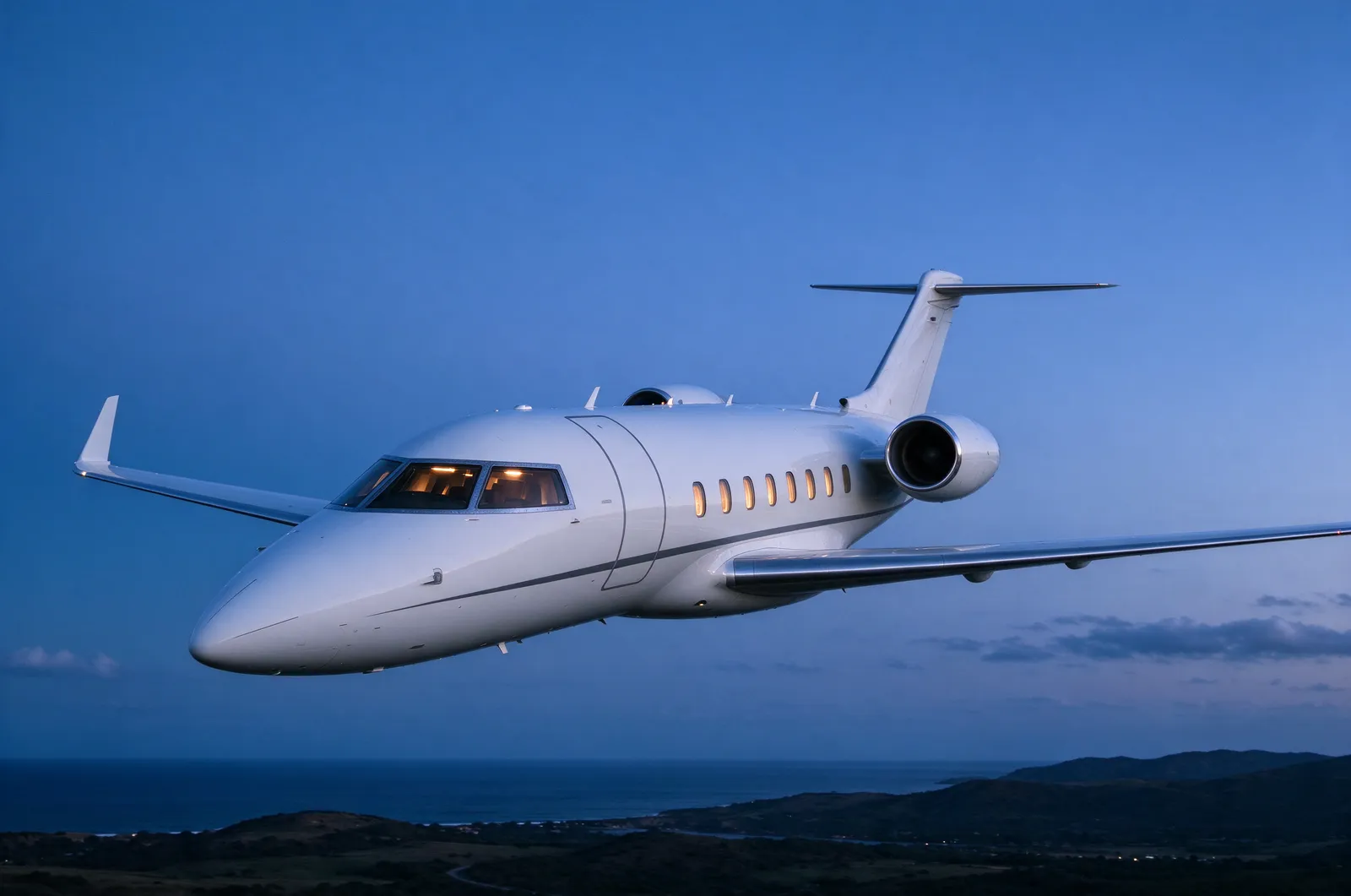
Bombardier Challenger 604
Range
3,756 NM
Cruise speed
468 kts
Seats
10
History
The Challenger began as the LearStar 600. Canadair started funding its development in late 1975, acquired the widebody design outright in spring 1976 and had backing from the Canadian government. The aircraft became the Challenger 600 in March 1977, and the same year a T-tail replaced its conventional tail. The prototype was rolled out on 25 May 1978 and flew for the first time on 8 November.
The CL-600 gained Transport Canada certification on 10 August 1980, and the platform kept evolving. The 604 was a thorough upgrade of the 601, with more powerful engines, a bigger fuel tank and a strengthened wing and tail, and it was built from 1996 to 2006. Bombardier followed it with the 605, which brought new avionics and a modernised fuselage, and then with the 650 in 2015.
Deliveries passed 500 aircraft in May 2000 and reached 1,000 in December 2015, and most of the Challengers delivered are still flying. For charter clients, that means a large pool of aircraft to draw on and a good chance of finding one at short notice for popular destinations.
Technical Specifications
General information
| Model name | Challenger 604 |
|---|---|
| Manufacturer | Bombardier |
| Aircraft category | large jet |
| ICAO Designator | CL60 |
| Start/End of Production | 1996 - 2006 |
| Number of pilot(s) | 2 |
Performances
| Range (with IFR reserves) | 3756 NM (6958 km) |
|---|---|
| Ferry range | 4119 NM (7628 km) |
| Cruise speed | 468 kts (867 km/h) |
| Max Operating Speed – VMO | 348 KIAS |
| Max Mach Operating Speed - MMO | Mach 0.85 |
| Long-Range Cruise Speed - LRC | 436 KTAS |
| Approach Speed | 132 kts |
| Takeoff Distance | 1780 m |
| Average Landing Distance | 719 m |
| Rate of Climb | 4345 ft/min |
| Service Ceiling | 41000 ft |
| Thrust | 8729 lbf |
Aircraft technology
| Engine type | Turbofan |
|---|---|
| Engine(s) | 2 x General Electric CF34-3B |
| Avionics | Rockwell Collins Pro Line 4 |
Dimensions and capacity
| Aircraft length | 20.9 m |
|---|---|
| Aircraft height | 6.3 m |
| Wing span | 19.6 m |
| Cabin height | 1.86 m (6.1 ft) |
| Cabin length | 8.7 m (28.5 ft) |
| Cabin width | 2.5 m (8.17 ft) |
| Baggage volume | 3.26 m3 |
| Seats (standard config) | 10 |
| Seats (max) | 12 |
| Suitcases | 12 |
| Carry-on luggage | 10 |
| Maximum payload | 2184 kg |
| Maximum TakeOff Weight - MTOW | 21863 kg |
| Maximum Landing Weight - MLW | 17237 kg |
| Fuel capacity | 9312 L |
Advantages & Disadvantages
Advantages
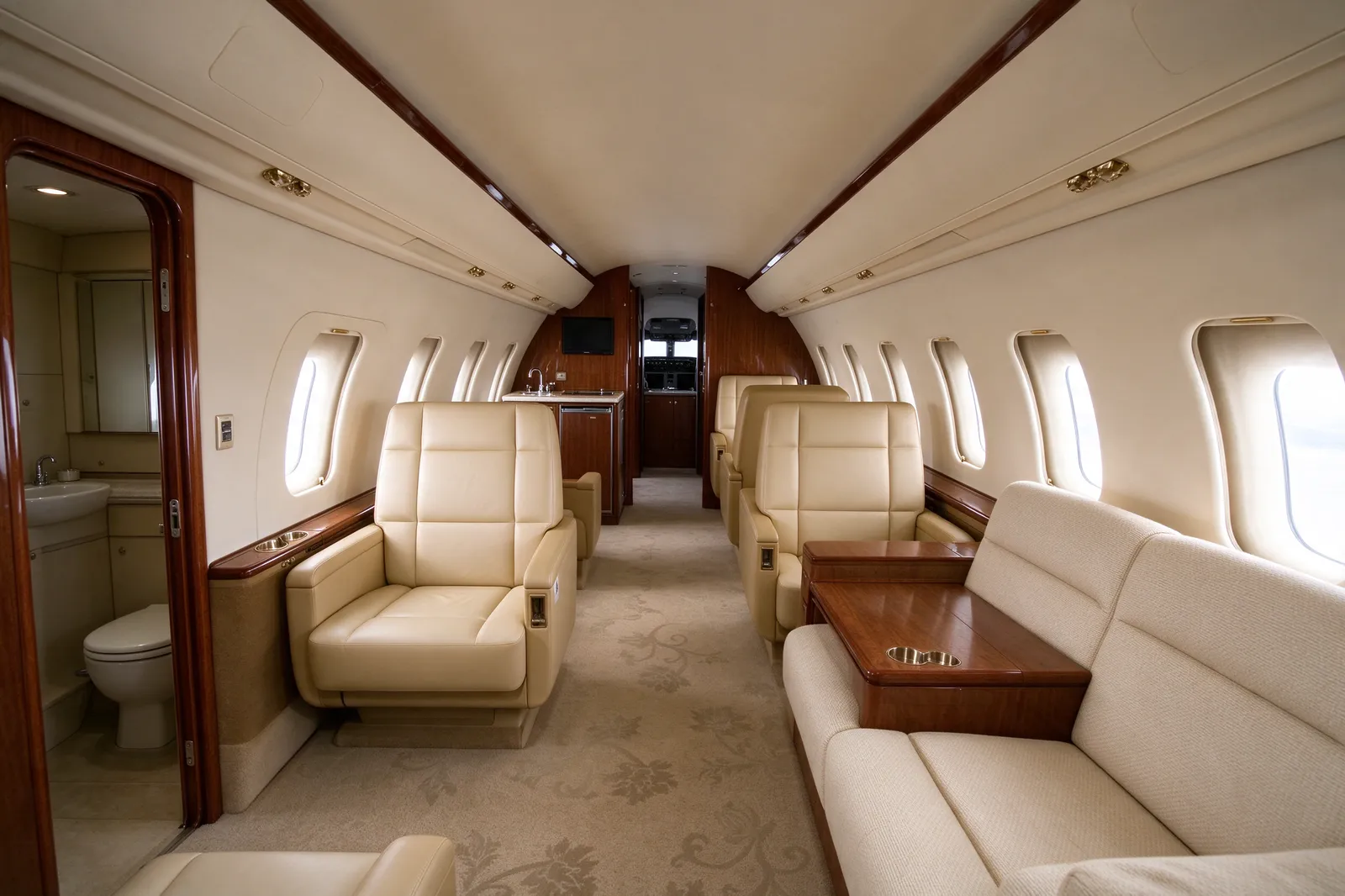
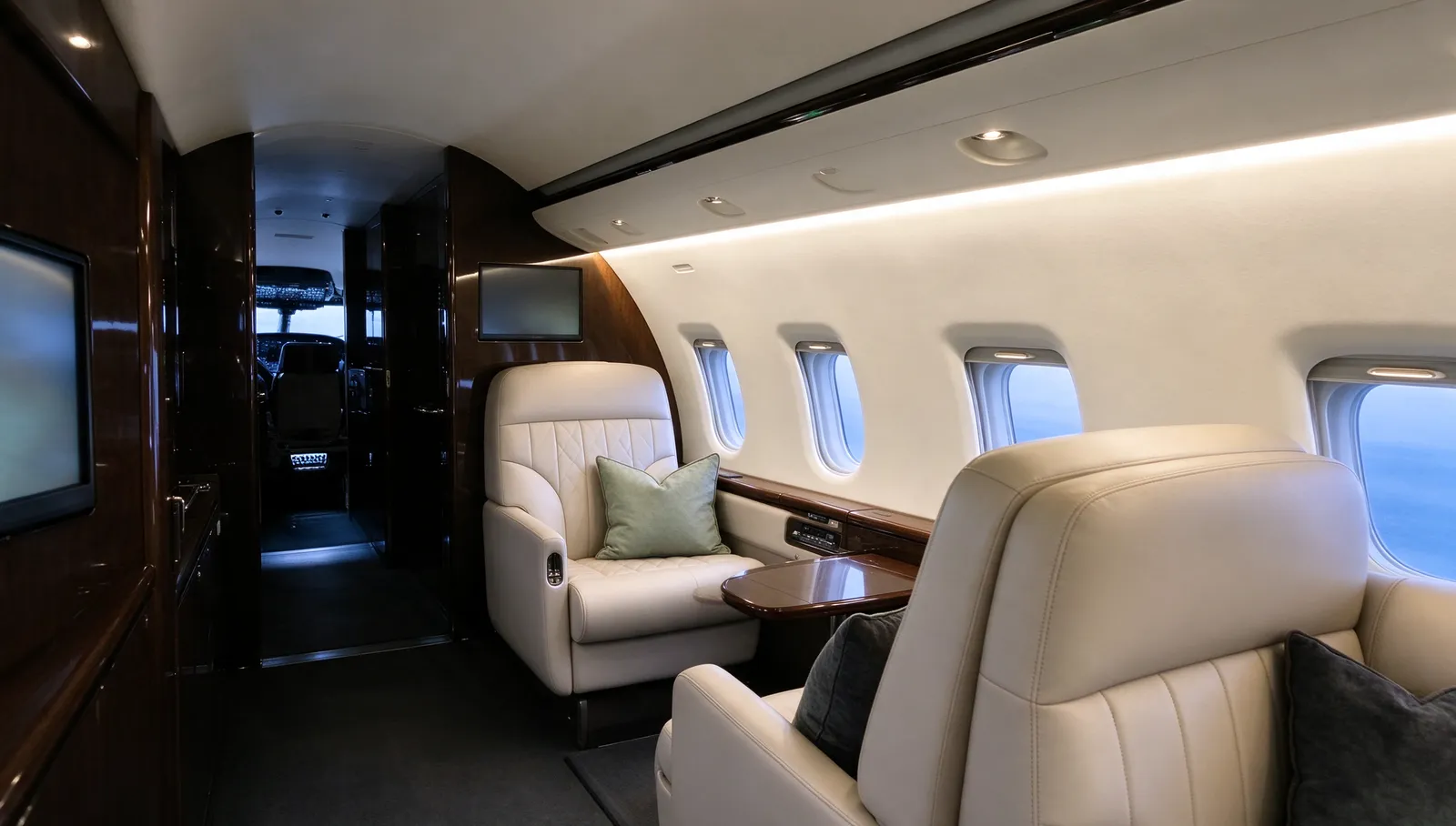
- A wide cabin: At 2.5 metres across, the cabin gives passengers room to stretch out on a long flight, or to spread out work without feeling hemmed in. There is also space for entertainment equipment within easy reach.
- Proven systems: The Challenger's systems have been tested and refined over more than 25 years in service, and they sit on an airframe with a long track record. That history gives operators and passengers good grounds for confidence in its reliability.
- Pilot awareness: The flight deck gives the crew strong situational awareness, and aircraft in the series can carry a synthetic vision system that draws a 3D image of the surrounding terrain on the cockpit displays. It helps pilots navigate in fog or at night.
- Quiet comfort: Generous seating and effective soundproofing keep the cabin calm and comfortable over long sectors, whether passengers want to rest or work.
- Easy to find: The Challenger 600 series has sold in large numbers and is a common charter choice, valued by crews and clients alike for its reliability and comfort. With so many in service, a short-notice booking to popular destinations is often possible.
Disadvantages
- Out of production: Bombardier no longer builds the 604, so it lacks the newest equipment and will not receive future developments from the factory. Whether that matters depends on the trip and your priorities.
- Less suited to short hops: The 604 is a heavy jet with a fuel burn to match. On short flights, a smaller and lighter aircraft is usually the more efficient choice.
FAQ
How far can the Challenger 604 fly?
With IFR reserves it covers 3,756 nautical miles (6,958 km) at a cruise speed of 468 knots, well beyond the original Challenger 600. Within the series, the later 650 goes furthest, at about 4,000 nautical miles (7,408 km). Our advisors can confirm which variant suits your route.
How many passengers can the Challenger 604 take?
The standard layout seats 10, and the cabin is certified for up to 12. It is 8.7 metres long, 2.5 metres wide and 1.86 metres high, and there is room for about 12 suitcases and 10 carry-on bags, enough for a full cabin on a long trip.
How did the Challenger change from the 600 to the 605?
The original 600 entered service in 1980 with Lycoming ALF502 engines and the shortest range of the family. The 601 switched to more reliable GE CF34 engines. The 604, built from 1996, added stronger CF34-3B engines, bigger tanks and updated systems, and the 605 kept that performance with new avionics and a modernised cockpit and cabin. Few 600s and 601s remain on the charter market, so most clients fly a 604 or 605.
How does the Challenger 605 differ from the 650?
The 650 is the newer development of the 605. Its improved engines give 5 per cent more take-off thrust, so it needs a shorter runway to depart. It also has a redesigned cabin with room for more passengers and a larger, more modern galley for preparing meals on board.
How does the Challenger 604 stack up against the Gulfstream IV and Falcon 2000?
The Challenger family has a cabin wider than most in its class and seats 10 in standard form. The 604 reaches about 3,756 nautical miles, comfortably more than the 3,052 of the original Falcon 2000, and the 650 stretches to 4,000, close to the Gulfstream IV. Some Gulfstream versions fly further, but clients choose the Challenger for the room in its cabin and reasonable operating costs.
What does it cost to charter a Challenger 604?
There is no standard rate. The price depends on the route, your dates, where the nearest suitable aircraft is based and which operator flies it. Our advisors price each flight individually and can compare the 604 with similar large jets on your route before you decide.
Gallery
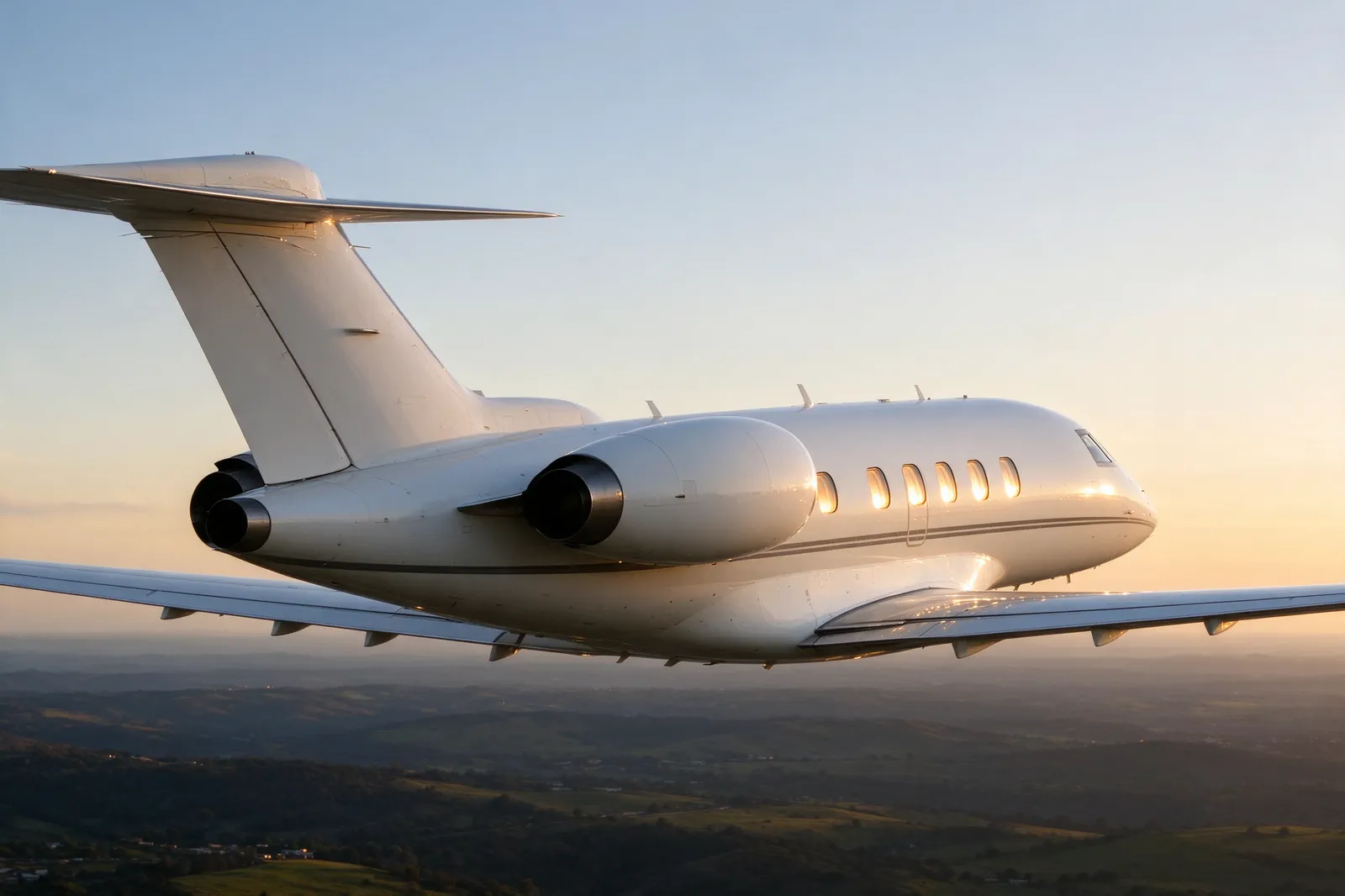
Figures are published manufacturer data, shown for illustration only. Images are generated for this concept and show the Challenger 604 type, not a specific aircraft. Bombardier and Challenger 604 are trademarks of their owner, used only to identify the aircraft.