Large Jet
Bombardier Challenger 605
Range
3,702 NM
Cruise speed
470 kts
Seats
10
History
Bombardier developed the Challenger 605 from the Challenger 604, which first appeared in 1995. A first flight in January 2006 opened the 605's test programme, and the design drew on what operators had learned from a decade of flying the 604.
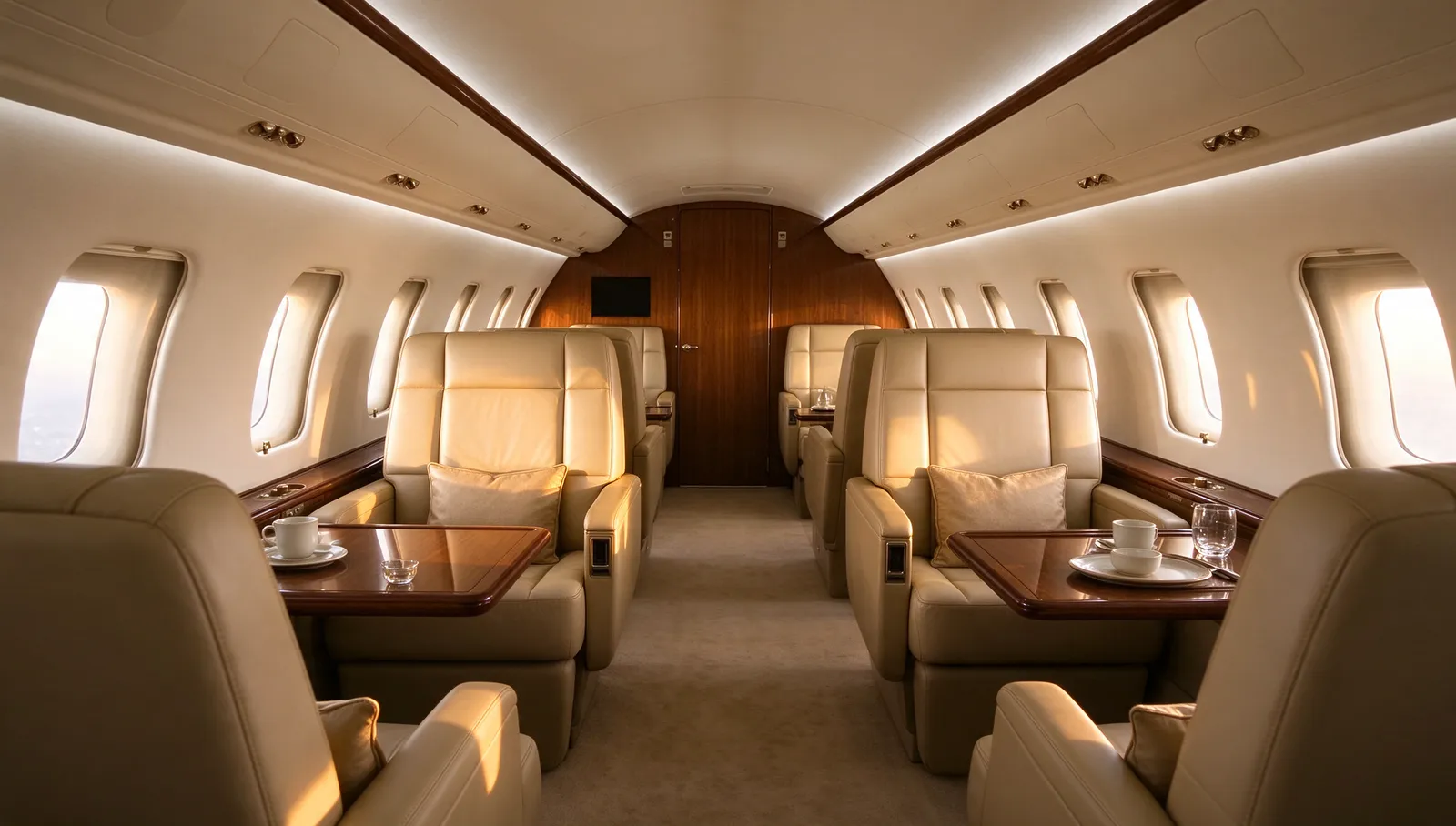
The changes were visible from the outside. The cabin windows are larger and sit higher on the fuselage, and the tail cone is new. Inside, the cabin was redesigned to give more headroom and volume, and the aircraft can carry 91 kg more payload than the 604.
In the cockpit, Bombardier fitted the Pro Line 21 suite from Rockwell Collins, which brings electronic flight displays (EFIS) and integrated engine readouts with crew alerts (EICAS). Bombardier's enhanced vision system (EVS) was part of the package, and the flight deck was ready for an electronic flight bag.
Transport Canada ran its operational evaluation over August and September 2006, and the Canadian, European and US regulators all certified the aircraft that October. Customer operations began in January 2007. Bombardier built 290 Challenger 605s before production ended in 2016 and the Challenger 650 took its place.
Technical Specifications
General information
| Model name | Challenger 605 |
|---|---|
| Manufacturer | Bombardier |
| Aircraft category | large jet |
| ICAO Designator | CL60 |
| Start/End of Production | 2006 - 2016 |
| Number of pilot(s) | 2 |
Performances
| Range (with IFR reserves) | 3702 NM (6856 km) |
|---|---|
| Ferry range | 4020 NM (7445 km) |
| Cruise speed | 470 kts (870 km/h) |
| Max Operating Speed – VMO | 348 KIAS |
| Max Mach Operating Speed - MMO | Mach 0.85 |
| Long-Range Cruise Speed - LRC | 424 KTAS |
| Approach Speed | 132 kts |
| Takeoff Distance | 1780 m |
| Average Landing Distance | 892 m |
| Rate of Climb | 4345 ft/min |
| Service Ceiling | 41000 ft |
| Thrust | 8729 lbf |
Aircraft technology
| Engine type | Turbofan |
|---|---|
| Engine(s) | 2 x General Electric CF34-3B |
| Avionics | Rockwell Collins Pro Line 21 |
Dimensions and capacity
| Aircraft length | 20.85 m |
|---|---|
| Aircraft height | 6.3 m |
| Wing span | 19.6 m |
| Cabin height | 1.86 m (6.1 ft) |
| Cabin length | 8.66 m (28.42 ft) |
| Cabin width | 2.49 m (8.17 ft) |
| Baggage volume | 3.26 m3 |
| Seats (standard config) | 10 |
| Seats (max) | 12 |
| Suitcases | 12 |
| Carry-on luggage | 10 |
| Maximum payload | 2200 kg |
| Maximum TakeOff Weight - MTOW | 21863 kg |
| Maximum Landing Weight - MLW | 17237 kg |
| Fuel capacity | 9005 L |
FAQ
What does the Challenger 650 add over the 605?
Bombardier introduced the Challenger 650 in 2015 with more powerful engines, updated cabin styling and newer avionics. The cabin dimensions are much the same. Its range is 4,000 nm (7,408 km), against 3,702 nm (6,856 km) for the 605. The 605 is often the more economical charter, and for routes within its range it offers a very similar experience.
Should I choose a Challenger 605 or a Dassault Falcon 2000?
The Challenger 605 has the wider cabin, which gives passengers more room. Its 3,702 nm range is close to, or a little short of, the later Falcon 2000 variants, with the 2000LXS at about 4,000 nm. On fuel burn, the Falcon 2000 generally does better. If cabin space matters most, the 605 is the stronger choice, and our advisors can compare both for your route.
Which routes can a Challenger 605 fly in one leg?
With IFR reserves its range is 3,702 nm (6,856 km), and its ferry range is 4,020 nm. That covers Dubai to Geneva or London to New York in one leg, subject to weather, payload and the number of passengers. It suits transatlantic crossings and other intercontinental work.
How is the Challenger 605 different from earlier Challengers?
The main changes against the 604 are in the cockpit and cabin. Pilots have Collins Pro Line 21 avionics on four large displays, which improves both function and safety. Passengers get a redesigned interior with larger windows and updated seating, so the cabin is brighter and better connected, and the aircraft keeps the long range and dependability of the 600 series.
Gallery
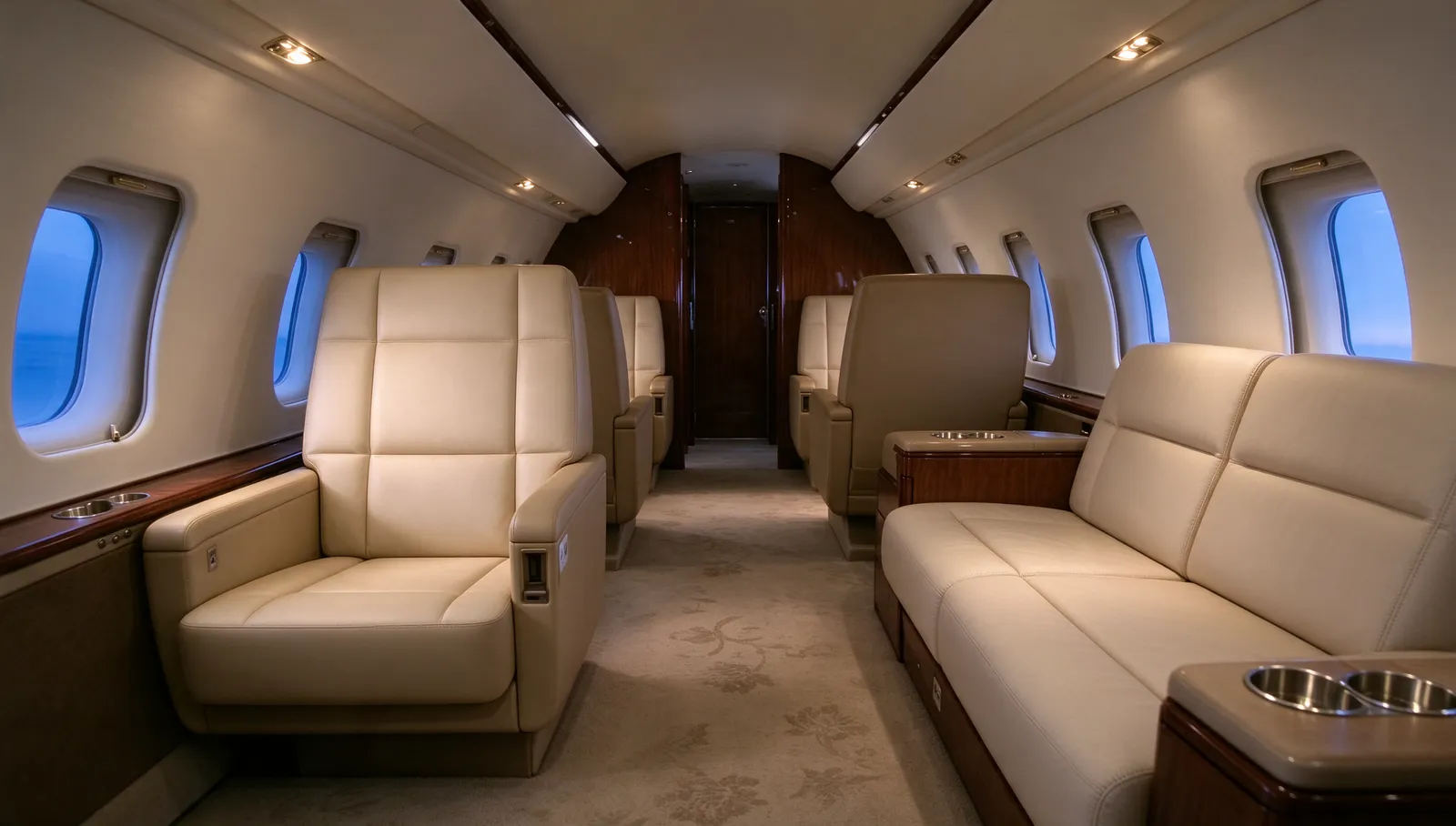
Figures are published manufacturer data, shown for illustration only. Images are generated for this concept and show the Challenger 605 type, not a specific aircraft. Bombardier and Challenger 605 are trademarks of their owner, used only to identify the aircraft.