Super Large Jet
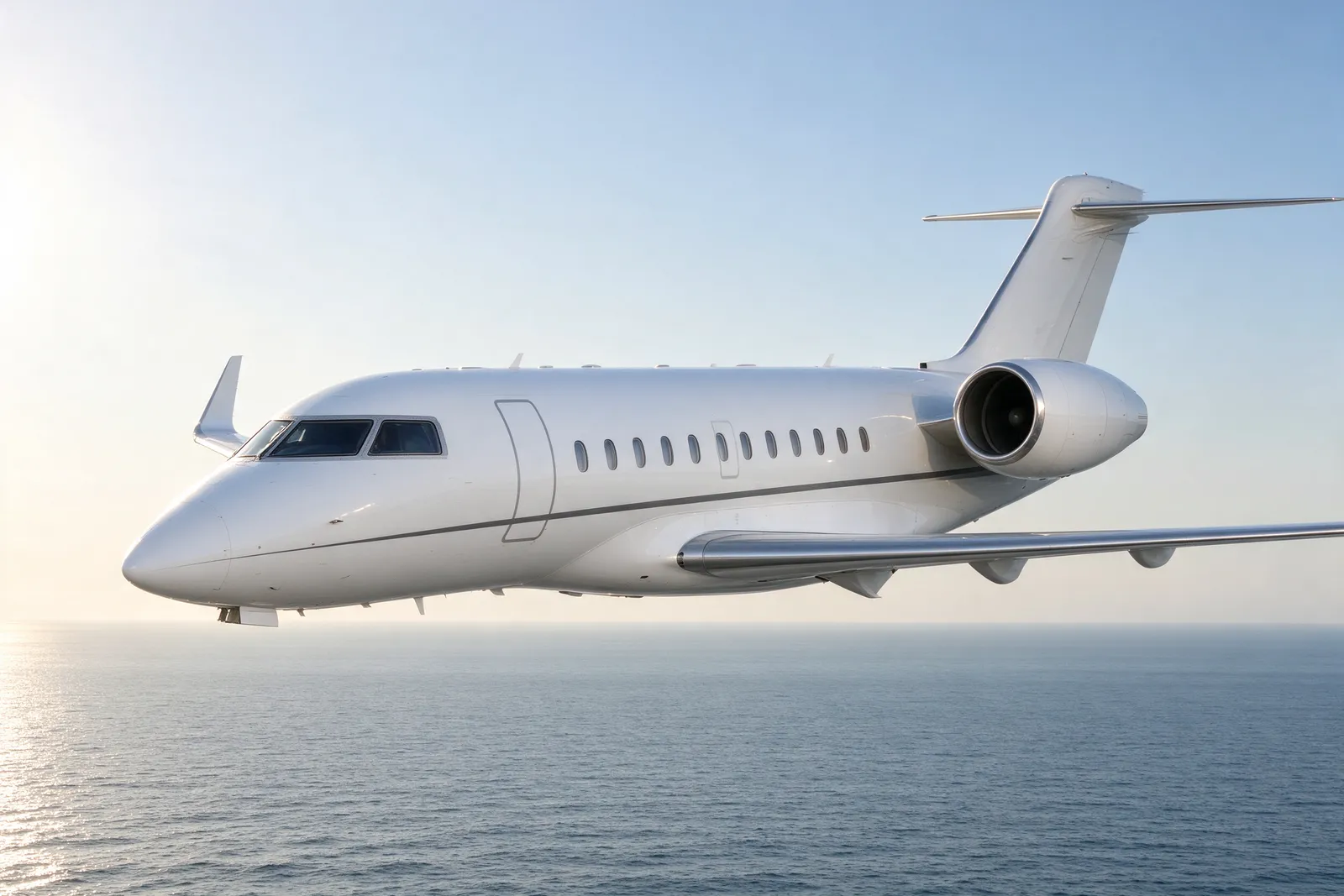
Bombardier Challenger 850
Range
2,811 NM
Cruise speed
459 kts
Seats
14
History
The Challenger 850 is the business version of Bombardier's 50-seat CRJ200 LR regional airliner, updated from the earlier Challenger 800. Bombardier first offered the aircraft in 1996 under the name Challenger SE, for Special Edition, and renamed it the Challenger 850 in 2006. It stayed in production until 2012, by which time 71 had been delivered. From the outside, it looks very much like the airliner it came from.
Because it shares its airframe with the CRJ200, the same fuselage can be fitted with 27, 32 or 50 seats for commuter service. In executive form it seats 14 to 16. The cabin is 14.76 m long and 2.49 m wide, and it is split into three zones, with a lavatory at each end, a large galley and a baggage compartment that passengers can reach during the flight.
In comfort and cabin fittings, the 850 is comparable with the Bombardier Global 6000, a far costlier and slightly quicker aircraft. Two General Electric CF34-3B1 turbofans give it a cruise speed of 459 kts (850 km/h) and 2,811 nm (5,206 km) of range with IFR reserves, enough for New York to Los Angeles in one leg.
Technical Specifications
General information
| Model name | Challenger 850 |
|---|---|
| Manufacturer | Bombardier |
| Aircraft category | super large jet |
| ICAO Designator | CRJ2 |
| Start/End of Production | 2006 - 2012 |
| Number of pilot(s) | 2 |
Performances
| Range (with IFR reserves) | 2811 NM (5206 km) |
|---|---|
| Ferry range | 3096 NM (5734 km) |
| Cruise speed | 459 kts (850 km/h) |
| Max Operating Speed – VMO | 335 KIAS |
| Max Mach Operating Speed - MMO | Mach 0.85 |
| Long-Range Cruise Speed - LRC | 424 KTAS |
| Approach Speed | 141 kts |
| Takeoff Distance | 1922 m |
| Average Landing Distance | 887 m |
| Service Ceiling | 41000 ft |
| Thrust | 8730 lbf |
Aircraft technology
| Engine type | Turbofan |
|---|---|
| Engine(s) | 2 x General Electric CF34-3B1 |
| Avionics | Rockwell Collins Pro Line 4 |
Dimensions and capacity
| Aircraft length | 26.77 m |
|---|---|
| Aircraft height | 6.22 m |
| Wing span | 21.21 m |
| Cabin height | 1.85 m (6.08 ft) |
| Cabin length | 14.76 m (48.42 ft) |
| Cabin width | 2.49 m (8.17 ft) |
| Baggage volume | 5.72 m3 |
| Seats (standard config) | 14 |
| Seats (max) | 16 |
| Suitcases | 15 |
| Carry-on luggage | 12 |
| Maximum payload | 4256 kg |
| Maximum TakeOff Weight - MTOW | 24040 kg |
| Maximum Landing Weight - MLW | 21319 kg |
| Fuel capacity | 10361 L |
Advantages & Disadvantages
Advantages
- A wide cabin: At 2.49 m across, the cabin gives each passenger a generous seat and plenty of legroom, with space left over for extras such as a bar or a conference area. Groups can hold meetings or entertain guests on board during longer flights.
- Large-jet space at lower cost: The cabin is similar in size to a Global 6000's, but its running costs and range are nearer those of a super midsize jet. For groups who need space more than distance, that makes the 850 good value.
- Built for hard use: The General Electric engines are known for needing little maintenance, and the airframe, derived from the CRJ200 regional jet, was engineered for as many as 12 flight cycles a day, a pace usually found only in airline service. It handles demanding schedules better than a typical corporate jet.
- Spare parts on hand: The 850 shares much of its design with the widely flown CRJ family, so parts are generally easy to source. Maintenance and repairs can be completed quickly, which keeps the aircraft reliable and in service.
- Practical comfort: Two separate lavatories, room to move about and a walk-in baggage compartment that is accessible in flight all add to the 850's appeal. The galley has a plain design, but it is fully equipped for everything a long flight requires.
Disadvantages
- Out of production: Bombardier no longer builds the 850, and the youngest examples date from 2012. Clients who want the newest cabin technology, or who want an aircraft that presents a modern image to business partners, may prefer a more recent type.
- Long runway needs: The 850 needs more runway than a typical business jet, with a take-off distance of 1,922 m, and more still in hot weather. That makes airports such as Aspen difficult in midsummer, and in practice the aircraft often uses busier commercial airports, which can add time to the trip.
FAQ
How is a Challenger 850 charter priced?
Every quote is built around the specific trip. The price depends on the route, the dates you want to fly, where an available aircraft is positioned beforehand and the operator that flies it. Our advisors price each request individually and explain what drives the figure, so there are no surprises once you confirm.
How many Challenger 850s were built?
Bombardier delivered 71 between 2006 and 2012. That is a small number next to the Challenger 350 and Challenger 650, which are smaller, less expensive and sold in much greater volume. Business and VIP clients choose the 850 mainly for its spacious cabin. Because the fleet is small, it pays to ask about availability early in your planning.
How many seats does the Challenger 850 have?
The standard layout seats 14, and the maximum is 16. Most aircraft are set up with 14 or 15 passenger seats, which gives the most comfortable spacing. The extra width of the cabin leaves room between the seats to move about freely, something passengers notice on a longer flight.
How far can the Challenger 850 fly?
With IFR reserves it covers 2,811 nm (5,206 km), a strong figure for an aircraft carrying this many passengers in comfort. Typical non-stop sectors include New York to Los Angeles, Rome to Moscow, London to Cairo and New York to Seattle. Longer routes would need a fuel stop or an aircraft with more range.
Can the Challenger 850 use smaller airports?
Its size and airliner origins mean it needs longer runways than smaller jets, with a take-off distance of 1,922 m. It is at home at large business aviation airports like Paris Le Bourget or London Luton, but it cannot use London City or other short or steep-approach runways. Our advisors build its itineraries around well-equipped regional and international airports.
Challenger 850 or Global Express: what is the difference?
The cabins are close in size, but the Global Express was designed for ultra-long-range flying, with 5,960 nm (11,038 km) of range against the 850's 2,811 nm (5,206 km). On shorter routes, the 850 gives a comparable cabin for a lower charter cost. Clients usually decide on whether distance or budget matters more for the trip.
What separates the Challenger 850 from the Embraer Legacy 600?
Both are large-cabin jets aimed at regional and medium-haul flying. The Legacy 600 flies further, 3,250 nm (6,019 km) against 2,811 nm (5,206 km), while the Challenger 850's cabin is wider, at 2.49 m compared with 2.08 m. Both suit corporate and group trips in which cabin room is as important as distance.
Gallery
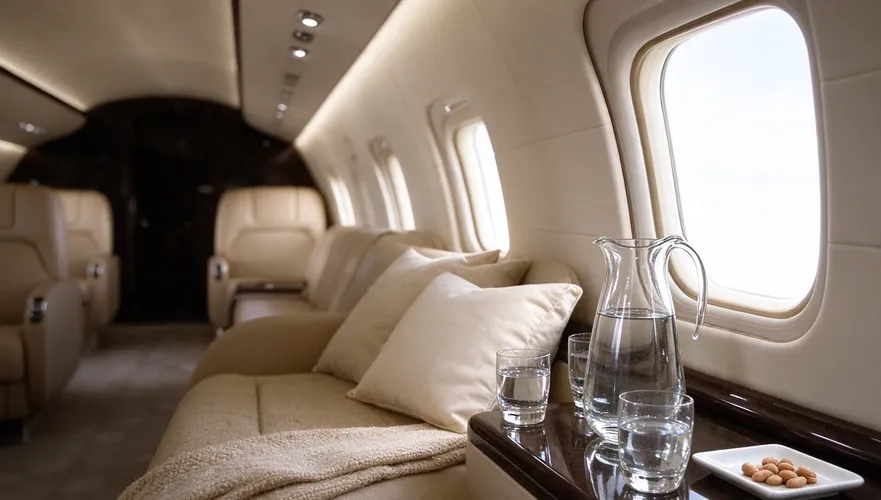
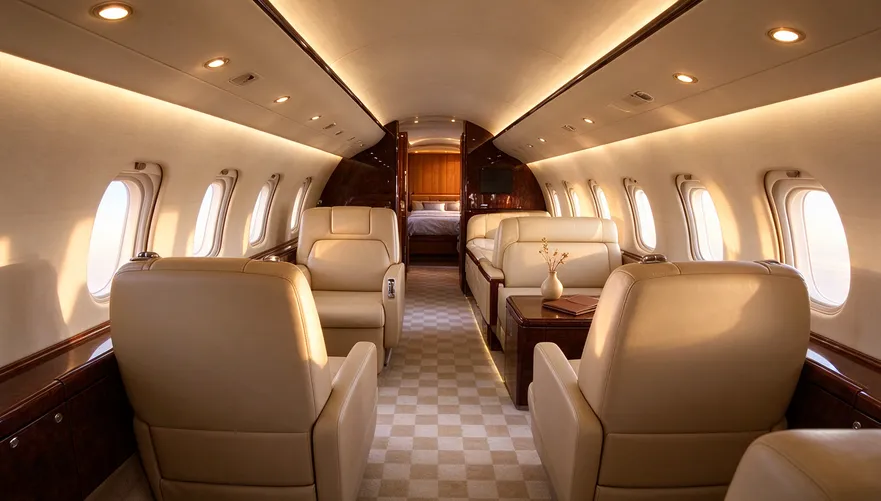
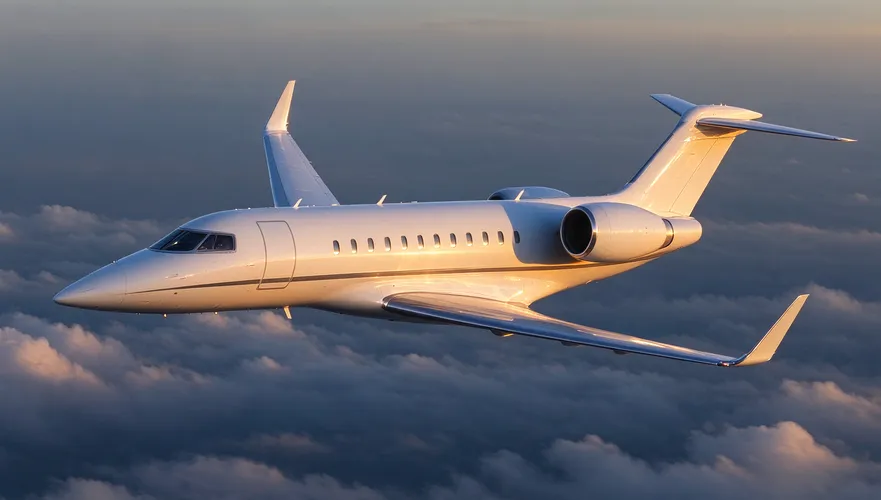
Figures are published manufacturer data, shown for illustration only. Images are generated for this concept and show the Challenger 850 type, not a specific aircraft. Bombardier and Challenger 850 are trademarks of their owner, used only to identify the aircraft.