Very Light Jet
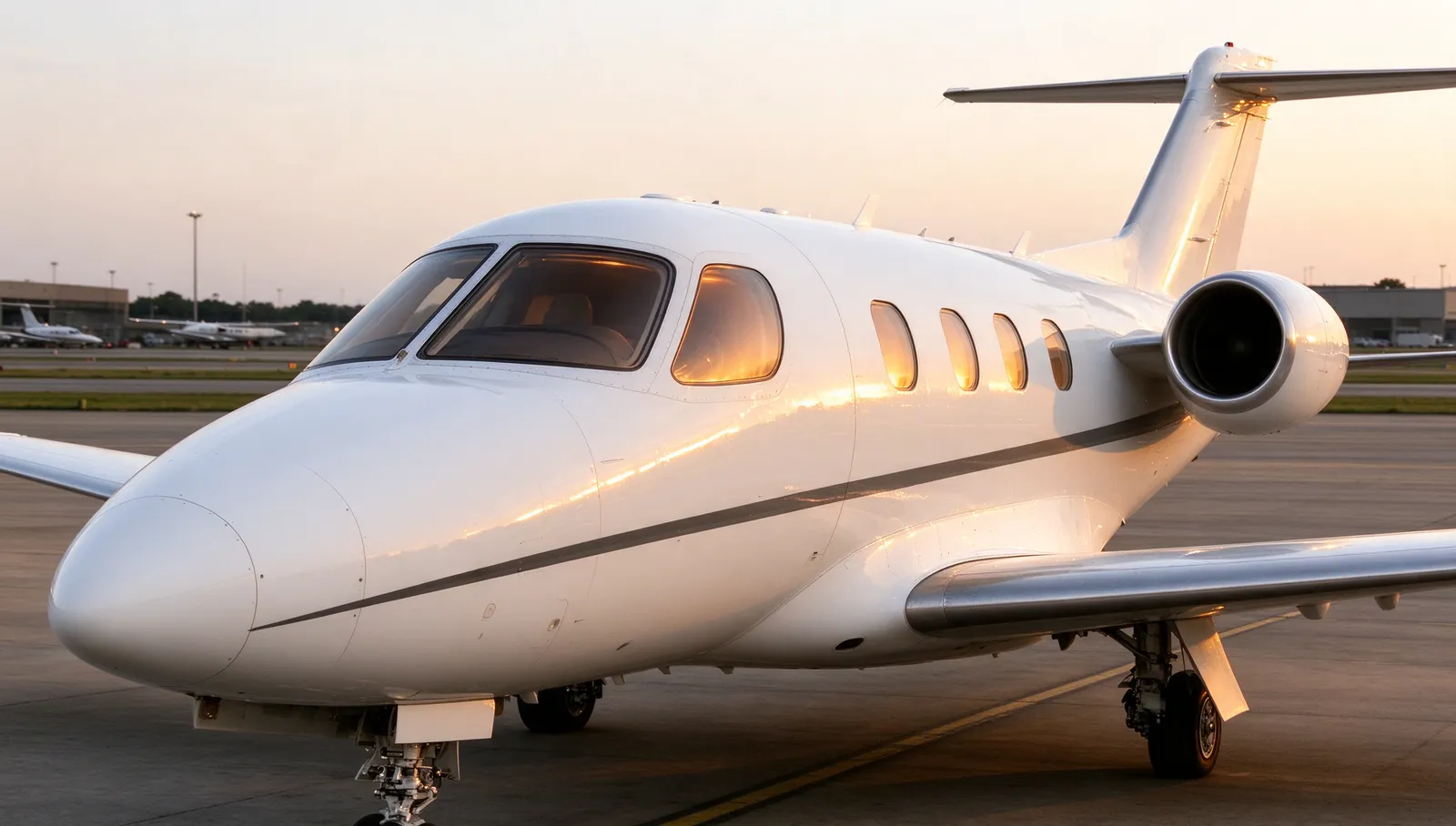
Cessna Citation Mustang
Range
1,167 NM
Cruise speed
339 kts
Seats
4
History
The Mustang was Cessna's entry-level very light jet, aimed at bringing business aviation within reach of owner-pilots. It first flew in 2005. The FAA certified it in 2006, and it went into service that same year as Cessna's first aircraft in the very light jet category, a segment that was growing at the time.
Cessna built it for single-pilot operation, with simplified systems, Garmin G1000 avionics and two Pratt & Whitney Canada PW615F-A engines suited to short and medium-range flights. Its main market was owner-operators who wanted Citation quality in a smaller aircraft, and it kept the family's record for safety and ease of operation.
Deliveries ran from 2006 to 2017. For many operators the Mustang was the first step into jet ownership, and it widened access to business aviation as a whole. It also added to the Citation family's total, which passed 8,000 deliveries by 2022 and underpins Cessna's strong position in the business jet market.
Technical Specifications
General information
| Model name | Citation Mustang |
|---|---|
| Manufacturer | Cessna |
| Aircraft category | very light jet |
| ICAO Designator | C510 |
| Start/End of Production | 2006 - 2017 |
| Number of pilot(s) | 1-2 |
Performances
| Range (with IFR reserves) | 1167 NM (2161 km) |
|---|---|
| Ferry range | 1200 NM (2222 km) |
| Cruise speed | 339 kts (628 km/h) |
| Max Operating Speed – VMO | 250 KIAS |
| Max Mach Operating Speed - MMO | Mach 0.63 |
| Long-Range Cruise Speed - LRC | 319 KTAS |
| Approach Speed | 88 kts |
| Takeoff Distance | 948 m |
| Average Landing Distance | 729 m |
| Rate of Climb | 3010 ft/min |
| Service Ceiling | 41000 ft |
| Thrust | 1460 lbf |
Aircraft technology
| Engine type | Turbofan |
|---|---|
| Engine(s) | 2 x Pratt & Whitney Canada PW615F-A |
| Avionics | Garmin G1000 |
Dimensions and capacity
| Aircraft length | 12.37 m |
|---|---|
| Aircraft height | 4.09 m |
| Wing span | 13.16 m |
| Cabin height | 1.35 m (4.42 ft) |
| Cabin length | 2.95 m (9.67 ft) |
| Cabin width | 1.37 m (4.5 ft) |
| Baggage volume | 1.78 m3 |
| Seats (standard config) | 4 |
| Seats (max) | 5 |
| Suitcases | 4 |
| Carry-on luggage | 4 |
| Maximum payload | 522 kg |
| Maximum TakeOff Weight - MTOW | 3930 kg |
FAQ
Is the Citation Mustang able to use smaller airports?
Yes. At sea level it takes off in about 948 m and lands in around 729 m. That brings airports such as Cannes Mandelieu or Sion within reach, close to resorts and city centres. EASA also granted it steep-approach certification in 2007, so it can operate at London City and Lugano, where special descent profiles apply.
Citation Mustang or Embraer Phenom 100: which is better?
Both are very light jets for short trips. The Mustang usually seats four and flies 1,167 nautical miles, while the Phenom 100 seats four or five and reaches about 1,178. The Phenom is faster, at around 390 knots against 339, and has a slightly larger cabin and more baggage room. The Mustang wins on efficiency and running costs for short charters.
Can I still charter a Citation Mustang?
Yes. Production ended in 2017, but many Mustangs are still flying in the charter market. Operators and clients value them for reliability, efficiency and their modest cost on shorter routes, so for a small group on a short sector a Mustang is often a sensible option.
How far can a Citation Mustang fly?
Its range with IFR reserves is 1,167 nautical miles (2,161 km), depending on payload and conditions. That allows direct flights such as Geneva to Madrid or Paris to Rome, which suits European city pairs and holiday destinations a few hours' flying apart.
Is the Mustang cheaper to fly than a Phenom 100 or a HondaJet?
For a group of four or fewer on a short route, the Mustang is usually the most economical of the three. The Phenom 100 and HondaJet are bigger and quicker, and they cost more to operate as a result. The final charter price still depends on route, dates and positioning, and our advisors quote each trip individually.
Gallery
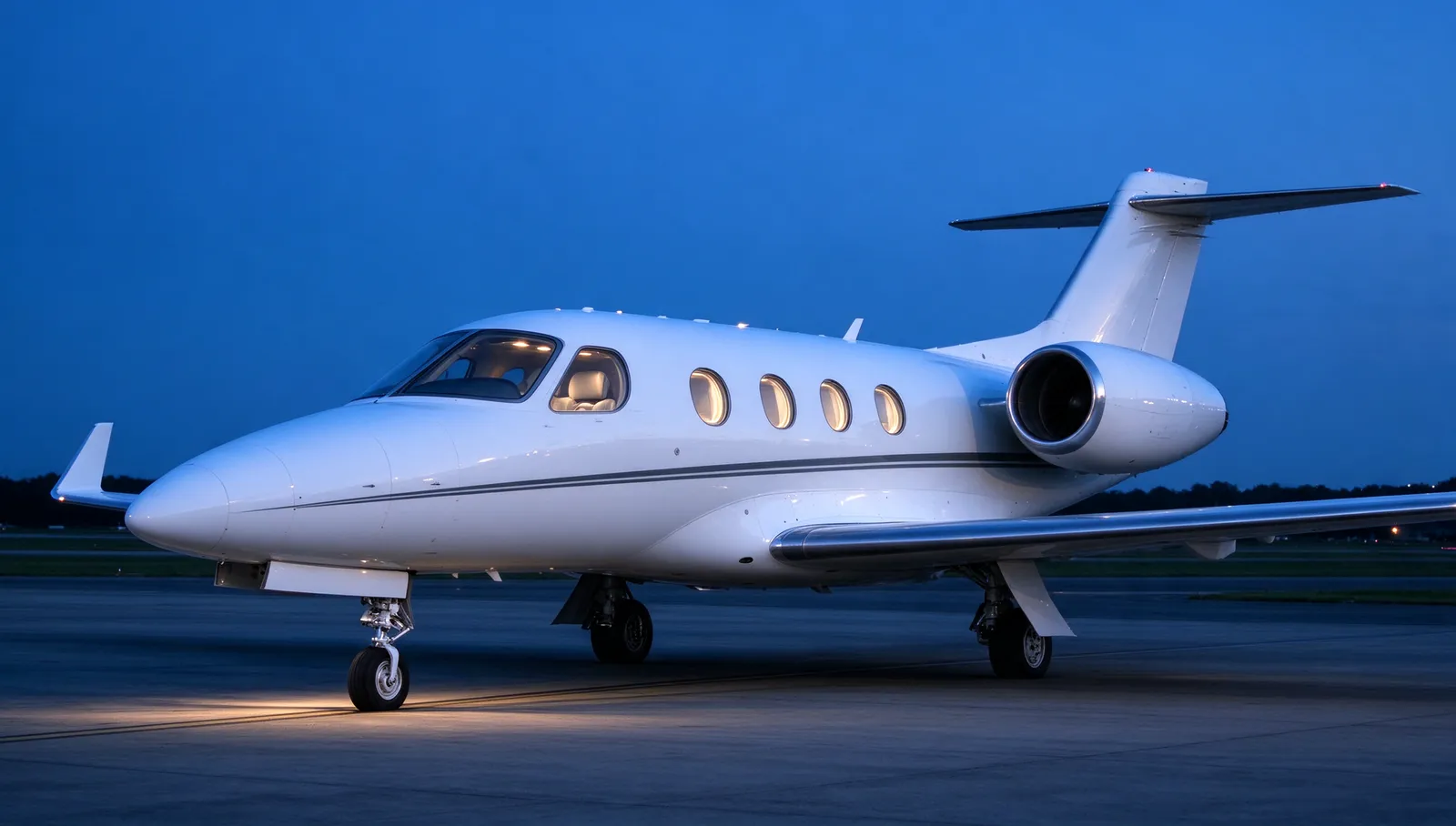
Figures are published manufacturer data, shown for illustration only. Images are generated for this concept and show the Citation Mustang type, not a specific aircraft. Cessna and Citation Mustang are trademarks of their owner, used only to identify the aircraft.