Large Jet
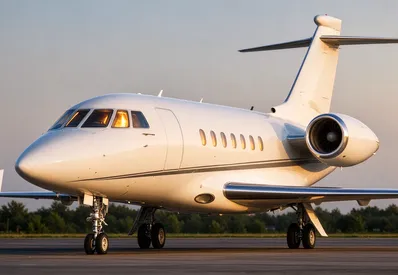
Dassault Falcon 2000EX
Range
3,878 NM
Cruise speed
482 kts
Seats
10
History
Dassault announced the Falcon 2000EX in October 1999 as an improved version of the Falcon 2000, then launched it formally at the NBAA convention on 10 October 2000. The prototype was rolled out on 19 July 2001 and flew for the first time on 25 October 2001.
Two test aircraft then completed 242 flights totalling 568 hours. JAA and FAA certification followed on 21 March 2003, and the 2000EX entered service in May of that year with more fuel capacity, longer range and an updated flight deck compared with the original 2000. Production continued until 2009.
The 2000EX became the base for later versions, starting with the 2000EX EASy and its more advanced avionics in 2004. Across all variants, Dassault has delivered close to 700 aircraft from the Falcon 2000 family since the programme started in 1995.
Technical Specifications
General information
| Model name | Falcon 2000EX |
|---|---|
| Manufacturer | Dassault Aviation |
| Aircraft category | large jet |
| ICAO Designator | F2TH |
| Start/End of Production | 2003 - 2009 |
| Number of pilot(s) | 2 |
Performances
| Range (with IFR reserves) | 3878 NM (7182 km) |
|---|---|
| Ferry range | 3944 NM (7304 km) |
| Cruise speed | 482 kts (893 km/h) |
| Max Operating Speed – VMO | 370 KIAS |
| Max Mach Operating Speed - MMO | Mach 0.86 |
| Long-Range Cruise Speed - LRC | 437 KTAS |
| Approach Speed | 112 kts |
| Takeoff Distance | 1702 m |
| Average Landing Distance | 797 m |
| Service Ceiling | 47000 ft |
| Thrust | 7000 lbf |
Aircraft technology
| Engine type | Turbofan |
|---|---|
| Engine(s) | 2 x Pratt & Whitney PW308C |
| Avionics | Collins ProLine 4 / Primus Epic |
Dimensions and capacity
| Aircraft length | 20.23 m |
|---|---|
| Aircraft height | 7.11 m |
| Wing span | 21.38 m |
| Cabin height | 1.88 m (6.2 ft) |
| Cabin length | 9.51 m (31.2 ft) |
| Cabin width | 2.34 m (7.7 ft) |
| Baggage volume | 3.7 m3 |
| Seats (standard config) | 10 |
| Seats (max) | 19 |
| Suitcases | 12 |
| Carry-on luggage | 10 |
| Maximum payload | 2585 kg |
| Maximum TakeOff Weight - MTOW | 19414 kg |
| Maximum Landing Weight - MLW | 17826 kg |
| Fuel capacity | 9446 L |
FAQ
Is the Falcon 2000EX suited to short runways?
Yes. With thrust reversers and the ability to fly steep approaches, it can use shorter runways than many aircraft in its class. That steep-approach certification also puts it on London City Airport's list of approved aircraft, giving access to one of the most demanding business aviation airports in Europe. Its take-off distance is 1,702 m.
Falcon 2000EX or Challenger 605: how do they differ?
The Falcon flies further and a little faster, with 3,878 nm (7,182 km) of range and a 482 kt (893 km/h) cruise, against 3,702 nm (6,856 km) and 470 kts (870 km/h) for the Challenger 605. The Challenger's cabin is wider, at 2.49 m against 2.34 m, but the Falcon's is longer, at 9.51 m against 8.66 m, and seats 10 rather than 9 in standard layout. The Falcon also burns less fuel and needs less runway.
What changed between the 2000EX and the 2000LX?
The 2000LX is the upgraded successor. Blended winglets improve its aerodynamics, cut fuel burn and add endurance, taking range to 4,000 nm (7,408 km) against 3,878 nm (7,182 km) for the 2000EX. Cruise speeds are close, at 483 kts for the LX and 482 kts for the EX, and both use Pratt & Whitney PW308C engines with the same cabin layout.
Which routes can the Falcon 2000EX fly non-stop?
With IFR reserves its range is 3,878 nm (7,182 km), enough for transatlantic and transcontinental sectors such as New York to Paris, Los Angeles to New York or Dubai to London. It is often used to link major financial centres with each other and with long-haul leisure destinations. The achievable distance on a given day depends on payload and winds.
Where does the 2000EX sit in the Falcon 2000 family?
It was the original Falcon 2000's first significant upgrade, bringing Pratt & Whitney PW308C engines, more fuel and a range of 3,878 nm. Later models built on that base: the 2000LX added winglets and stretched range to 4,000 nm, and the 2000S and 2000LXS took the design further for short runways and long-range missions. The 2000EX was the model that moved the family into the long-range segment.
Figures are published manufacturer data, shown for illustration only. Images are generated for this concept and show the Falcon 2000EX type, not a specific aircraft. Dassault Aviation and Falcon 2000EX are trademarks of their owner, used only to identify the aircraft.