Large Jet
Dassault Falcon 2000LX
Range
4,000 NM
Cruise speed
482 kts
Seats
8-10
History
Dassault announced the Falcon 2000LX on the eve of EBACE in 2007. It was a development of the Falcon 2000EX EASy, and the main change was a set of winglets that improved fuel efficiency and stretched the range to 4,000 nm (7,408 km) with IFR reserves. From early 2008 the winglet package was also offered as a retrofit, so owners of existing 2000EX EASy aircraft could bring them up to the new standard.
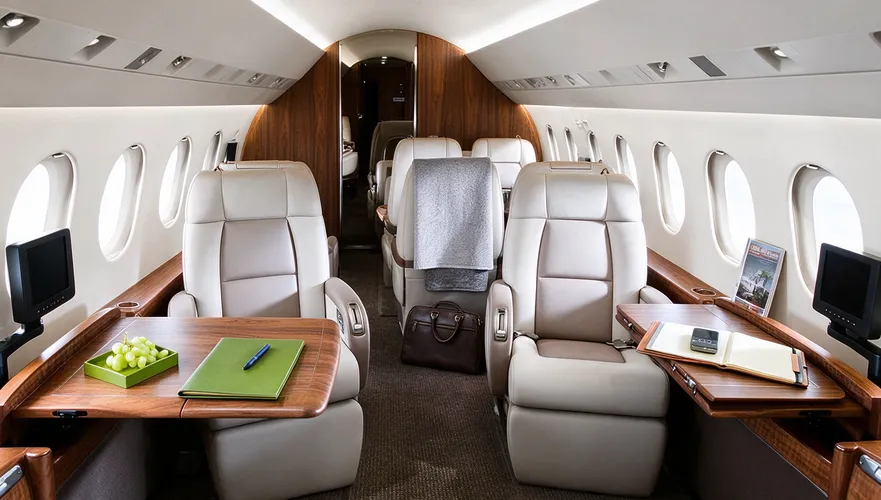
EASA certified the 2000LX on 23 April 2009, the FAA followed on 29 April, and from 2010 every new aircraft left the factory with winglets fitted. Power comes from two Pratt & Whitney Canada PW308C turbofans, giving a cruise speed of 482 kts and a ceiling of 47,000 ft. The cabin is 9.4 m long and 2.34 m wide, with seats for 8 to 10 passengers.
The 2000LX stayed in production until the end of 2014, when the Falcon 2000LXS replaced it. The newer model brought full-length inboard slats and EASy II avionics, which improve performance at smaller airports, but the 2000LX remains a capable choice for transatlantic and longer regional flights.
Technical Specifications
General information
| Model name | Falcon 2000LX |
|---|---|
| Manufacturer | Dassault Aviation |
| Aircraft category | large jet |
| ICAO Designator | F2TH |
| Start/End of Production | 2009 - 2014 |
| Number of pilot(s) | 2 |
Performances
| Range (with IFR reserves) | 4000 NM (7408 km) |
|---|---|
| Ferry range | 4150 NM (7686 km) |
| Cruise speed | 482 kts (893 km/h) |
| Max Operating Speed – VMO | 370 KIAS |
| Max Mach Operating Speed - MMO | Mach 0.86 |
| Long-Range Cruise Speed - LRC | 437 KTAS |
| Approach Speed | 113 kts |
| Takeoff Distance | 1756 m |
| Average Landing Distance | 688 m |
| Service Ceiling | 47000 ft |
| Thrust | 7000 lbf |
Aircraft technology
| Engine type | Turbofan |
|---|---|
| Engine(s) | 2 x Pratt & Whitney Canada PW308C |
| Avionics | Honeywell EASy / Pro Line 4 |
Dimensions and capacity
| Aircraft length | 20.21 m |
|---|---|
| Aircraft height | 7.07 m |
| Wing span | 21.39 m |
| Cabin height | 1.88 m (6.2 ft) |
| Cabin length | 9.4 m (31.0 ft) |
| Cabin width | 2.34 m (7.7 ft) |
| Baggage volume | 3.7 m3 |
| Seats (standard config) | 8-10 |
| Seats (max) | 19 |
| Suitcases | 12 |
| Carry-on luggage | 10 |
| Maximum TakeOff Weight - MTOW | 19414 kg |
| Maximum Landing Weight - MLW | 17826 kg |
FAQ
Falcon 2000LX or Challenger 605: which is the better fit?
The 2000LX flies further, 4,000 nm (7,408 km) at 482 kts against about 3,756 nm at 459 kts for the Bombardier Challenger 605. The Challenger has the wider cabin and seats 10 to 12, so it suits larger groups. The Falcon is known for lower fuel burn and operating costs on long sectors, which can make it the more economical option.
What changed between the Falcon 2000LX and the 2000LXS?
The 2000LX, built from 2009 to 2014, paired PW308C engines with blended winglets for 4,000 nm of range. The 2000LXS arrived in 2013 with the same range, plus further aerodynamic work and the short-field ability of the Falcon 2000S. The LXS therefore reaches smaller airports more easily while keeping the long-range performance.
Which routes can the Falcon 2000LX fly non-stop?
Rated at 4,000 nm (7,408 km) with IFR reserves, the 2000LX can fly Paris to New York or Geneva to Dubai without refuelling. It is widely used across the Atlantic and between major business and leisure destinations. Payload and weather affect what is possible on a given day, so our advisors confirm the range for each itinerary.
How does the 2000LX relate to the other Falcon 2000 models?
It followed the Falcon 2000EX EASy in 2009, keeping the same cabin and PW308C engines but adding blended winglets. Those winglets improved efficiency and took the range to about 4,000 nm. The Falcon 2000S, by contrast, was a shorter-range model with lower costs, so the 2000LX represents the family's step towards intercontinental flying.
Gallery
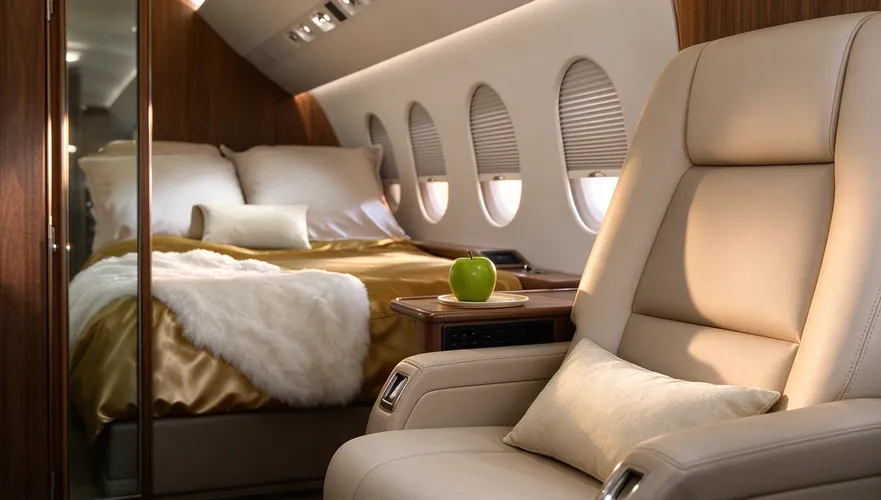
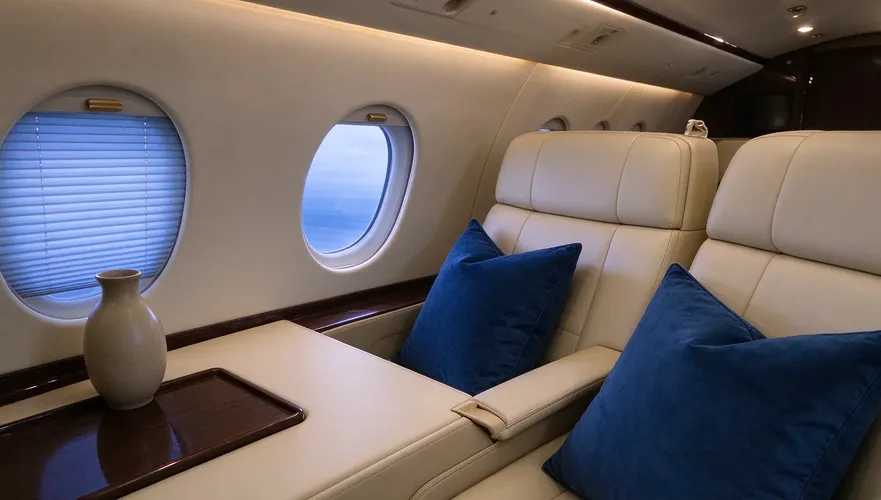
Figures are published manufacturer data, shown for illustration only. Images are generated for this concept and show the Falcon 2000LX type, not a specific aircraft. Dassault Aviation and Falcon 2000LX are trademarks of their owner, used only to identify the aircraft.