Large Jet
Dassault Falcon 2000LXS
Range
4,000 NM
Cruise speed
483 kts
Seats
10
History
The Falcon 2000 programme started in 1989, when Dassault set out to build an efficient large business jet to sit alongside its other models. Series production began in 1994, and the aircraft was positioned as a smaller, twin-engine option below the three-engine Falcon 900. It has been revised several times since, and the 2000LXS is the current version.
New engines in 2003 produced the 2000EX, which flew further on similar fuel consumption. The 2000EX EASy followed a year later with a new avionics suite that gave pilots better situational awareness and a lighter workload. In 2009 Dassault added blended winglets from Aviation Partners, and the resulting 2000LX gained range and climbed faster.
Deliveries of the 2000S began in 2013. It needed much less runway than earlier versions, but a smaller fuel tank cut its range by around 900 km. The 2000LXS, which also entered production in 2013, pairs the short-field ability of the S with the full range of the LX, and it is the version still being built.
The French Navy has ordered a modified 2000LXS for maritime reconnaissance, where it will fly under the name Albatros, a choice driven largely by the aircraft's range. Some of these jets are to be manufactured in India, and deliveries were scheduled to begin in 2025.
Technical Specifications
General information
| Model name | Falcon 2000LXS |
|---|---|
| Manufacturer | Dassault Aviation |
| Aircraft category | large jet |
| ICAO Designator | F2TH |
| Start/End of Production | 2013 - Still in production |
| Number of pilot(s) | 2 |
Performances
| Range (with IFR reserves) | 4000 NM (7410 km) |
|---|---|
| Ferry range | 4200 NM (7778 km) |
| Cruise speed | 483 kts (895 km/h) |
| Max Operating Speed – VMO | 370 KIAS |
| Max Mach Operating Speed - MMO | Mach 0.86 |
| Long-Range Cruise Speed - LRC | 437 KTAS |
| Approach Speed | 105 kts |
| Takeoff Distance | 1425 m |
| Average Landing Distance | 689 m |
| Service Ceiling | 47000 ft |
| Thrust | 7000 lbf |
Aircraft technology
| Engine type | Turbofan |
|---|---|
| Engine(s) | 2 x Pratt & Whitney PW308C |
| Avionics | EASy II / IV |
Dimensions and capacity
| Aircraft length | 20.23 m |
|---|---|
| Aircraft height | 7.11 m |
| Wing span | 21.38 m |
| Cabin height | 1.88 m (6.17 ft) |
| Cabin length | 7.98 m (26.17 ft) |
| Cabin width | 2.34 m (7.67 ft) |
| Baggage volume | 3.7 m3 |
| Seats (standard config) | 10 |
| Seats (max) | 19 |
| Suitcases | 12 |
| Carry-on luggage | 10 |
| Maximum TakeOff Weight - MTOW | 19414 kg |
| Maximum Landing Weight - MLW | 17826 kg |
| Fuel capacity | 10042 L |
Advantages & Disadvantages
Advantages
- Across the Atlantic: A range of 7,410 km takes the 2000LXS from London City, Geneva or Frankfurt to the US East Coast without a stop, and as far as Mumbai. Better short-field performance than earlier Falcon 2000 models also opens up smaller departure and arrival airports.
- Fighter-jet engineering: Dassault's military experience is built into the airframe, and the wing-to-fuselage join comes straight from its combat aircraft, a design regarded as unique in the industry. In the cabin, passengers notice steady and well-controlled handling at high speed and in light turbulence.
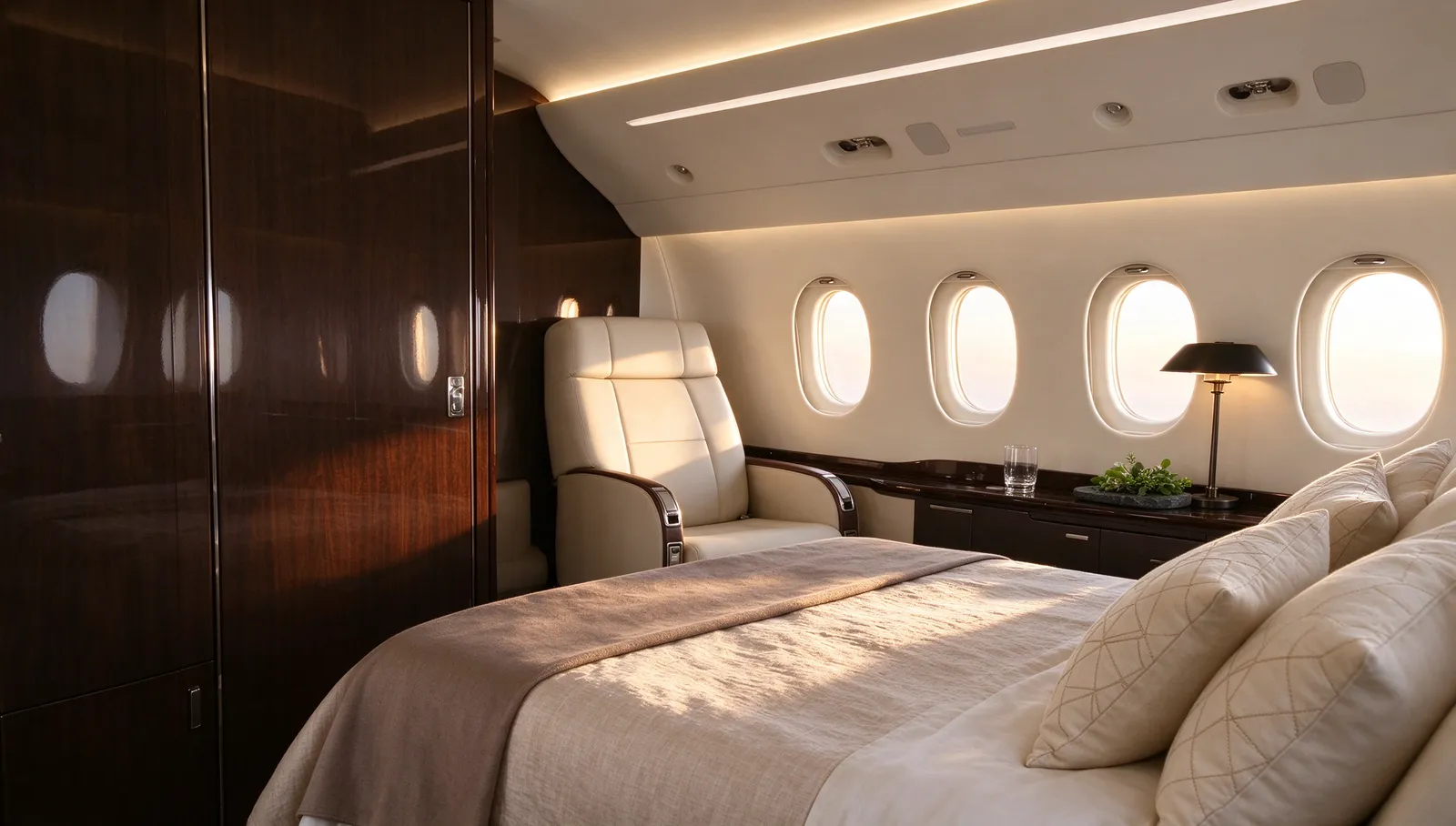
- Two-zone cabin: The quiet, modern cabin seats 10 in standard configuration and is usually divided into two zones, one for working and one for relaxing, with up-to-date entertainment systems throughout.
- Short runways: The 2000LXS can use short, demanding strips that other jets avoid, such as La Môle near Saint-Tropez. Landing that close to your destination means more of the trip is spent in the air and less of it in a car.
- Where to find one: Around 90 are in service, roughly 70 per cent based in North America and nearly 30 per cent in Europe. Between Western Europe and the US East Coast, availability is generally reasonable.
Disadvantages
- Costly to own: The 2000LXS is expensive new, and used examples hold much of their value, so ownership costs stay high. Efficient fuel burn and lower operating costs soften the effect on charter rates.
- Limited numbers: With fewer than a hundred built, a suitable aircraft will not always be available where and when you need it. The Bombardier Challenger 650 and Gulfstream G280 are comparable in performance and capacity, and both are more widely available.
FAQ
Which airports can the Falcon 2000LXS use?
It needs 1,425 metres for take-off and around 689 metres to land, less than many jets in its class. Its steep-approach certification allows it into London City, and it operates as reliably into La Môle near Saint-Tropez, Lugano or Geneva as into major hubs, often putting you closer to a city centre or resort.
How does the 2000LXS compare with the Bombardier Challenger 650?
They are closely matched on range, purchase cost and cabin size. The Challenger is slightly faster in the cruise but burns around 15 per cent more fuel per hour. The Falcon, in turn, offers roughly half a cubic metre of additional hold space, which helps when a group travels with plenty of luggage.
What does it cost to charter a Falcon 2000LXS?
Charter prices are not fixed. Each quote depends on the route, the dates you need, where a suitable aircraft is positioned and which operator flies it. Our advisors price every trip individually, and the aircraft's efficient fuel burn helps keep costs in check for a jet of its size.
How does the 2000LXS compare with the Falcon 8X?
The 8X is the longer-range aircraft, at 6,450 nautical miles (11,945 km) against 4,000 (7,410 km), and it seats 12 to 14 rather than 10. It also cruises a little faster, at 492 knots against 483. The 2000LXS needs 1,425 metres to take off versus 1,792 for the 8X, and it is built for efficiency on shorter intercontinental trips.
How does it compare with the Embraer Praetor 600?
Range is almost identical: the Praetor 600 is quoted at about 7,441 km (4,018 nautical miles) and the 2000LXS at 7,410 km. The Embraer is a super-midsize jet seating 8 in standard configuration, with efficient performance and advanced avionics. The Falcon's wider cabin seats 10 with more room, and its short-field ability opens up airports where runway length is tight.
What is the 2000LXS's nonstop range?
It covers 4,000 nautical miles (7,410 km) with IFR reserves, cruising at 483 knots. London to New York and Paris to Dubai are both within a single flight, which is why the aircraft is a common choice for transatlantic trips. Payload and weather on the day affect the exact figure.
Where does the 2000LXS sit in the Falcon 2000 family?
It is the top model of the family, introduced in 2013. It takes the winglets and 4,000 nautical mile range of the 2000LX and adds the short-field performance of the 2000S, so it can connect intercontinental city pairs and still use airports with shorter runways.
Gallery
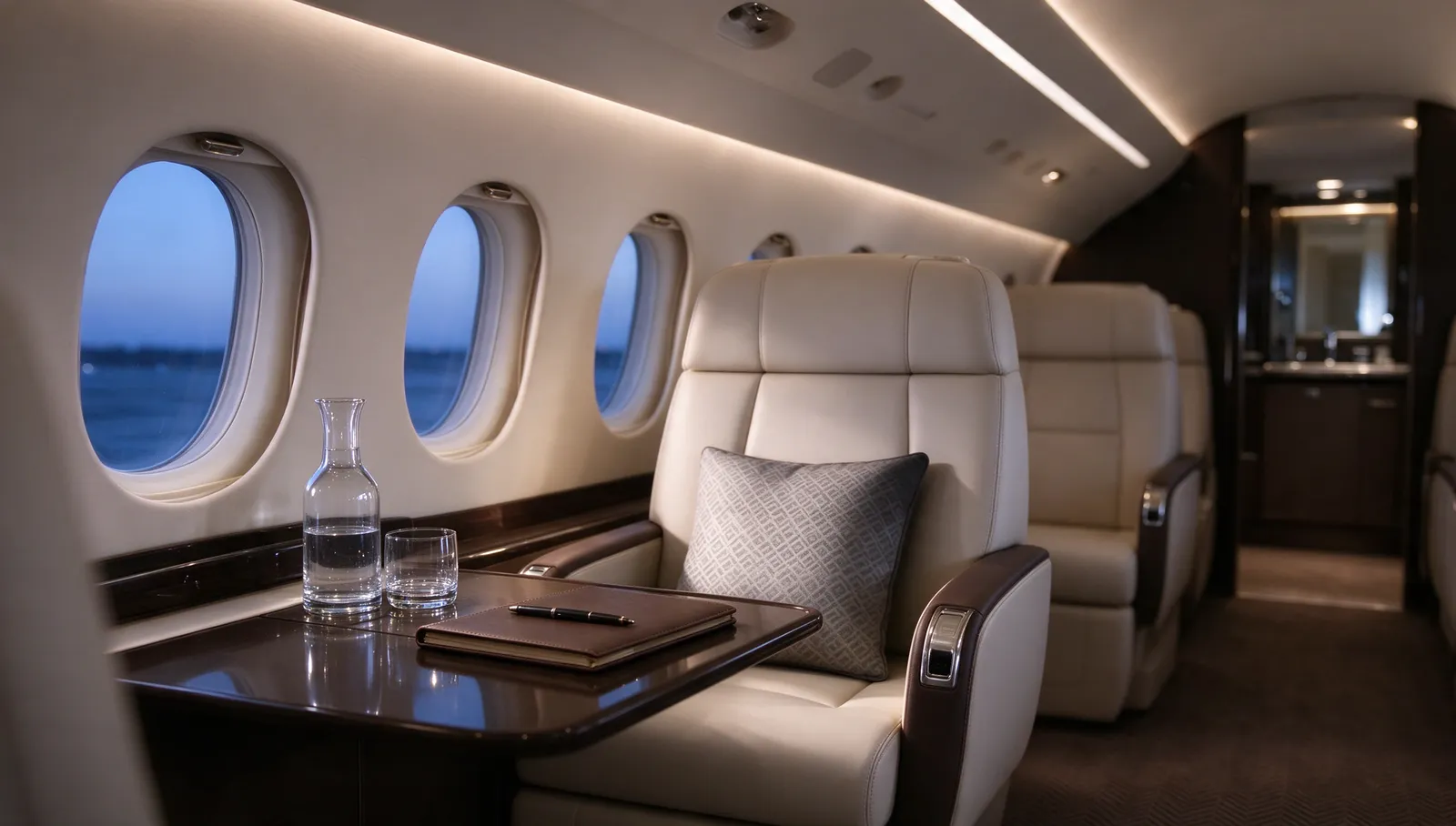
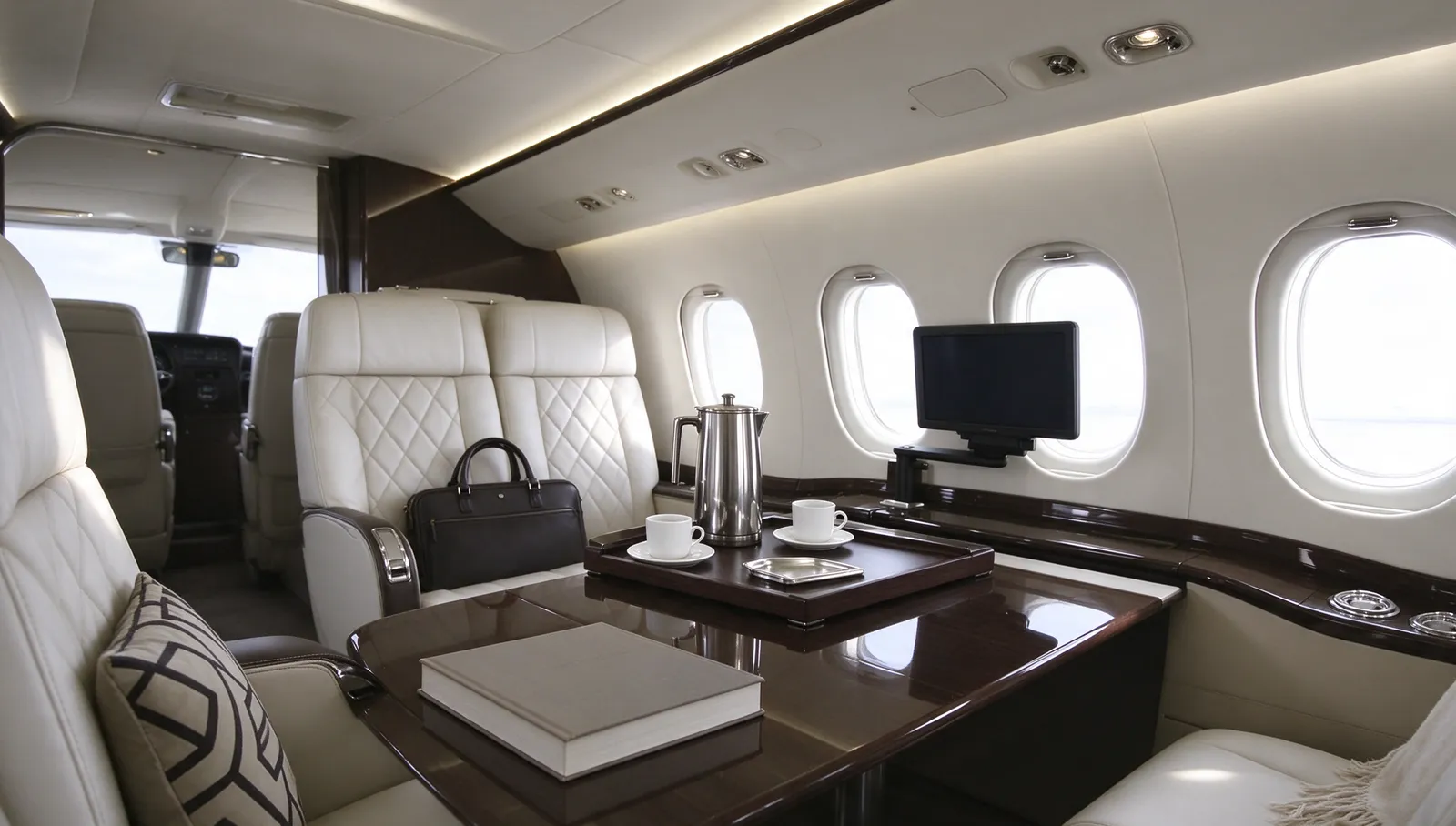
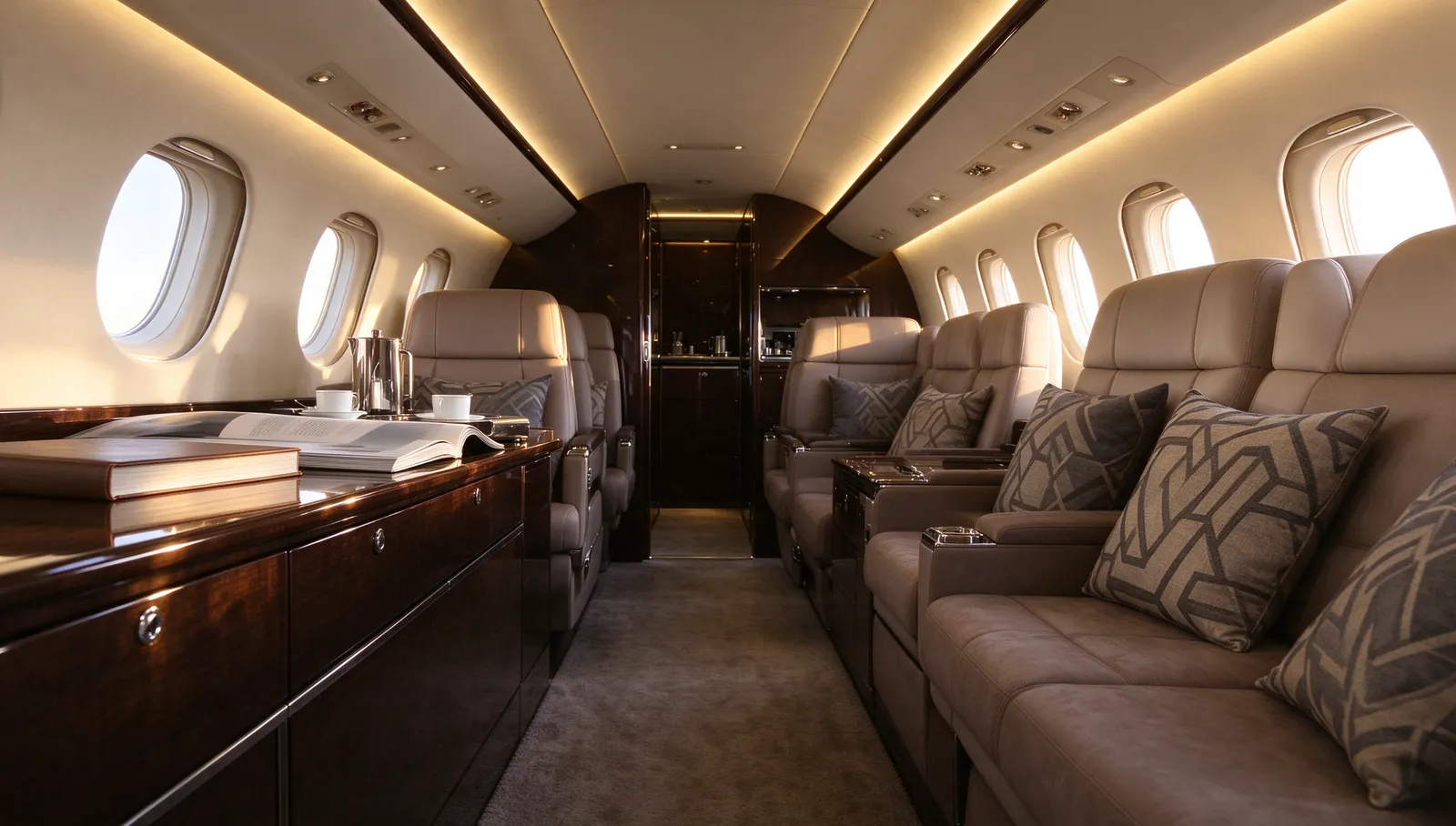
Figures are published manufacturer data, shown for illustration only. Images are generated for this concept and show the Falcon 2000LXS type, not a specific aircraft. Dassault Aviation and Falcon 2000LXS are trademarks of their owner, used only to identify the aircraft.