Large Jet
Dassault Falcon 2000S
Range
3,350 NM
Cruise speed
482 kts
Seats
10
History
The Falcon 2000S was announced on 16 May 2011 as a version of the Falcon 2000 built around short-field performance. The goal was to reach airports whose runways rule out most long-range business jets, and testing to prove that capability began the same year.
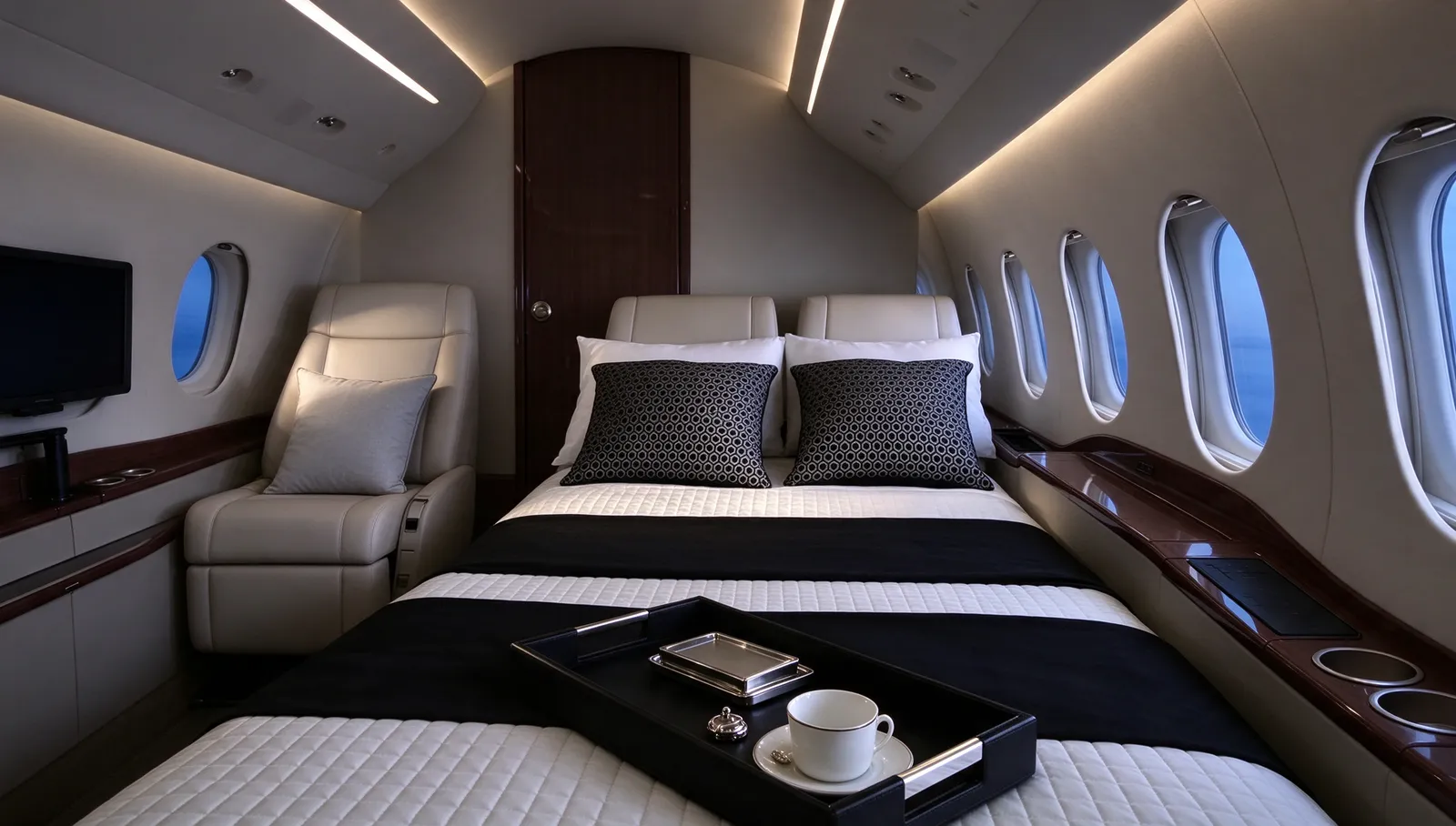
EASA certified the aircraft on 19 March 2013, deliveries started later that year and production continued until 2021. The 2000S kept the range and cabin comfort the Falcon 2000 is known for while adding access to shorter runways, a pairing that few other aircraft offered at the time. It needs 1,318 m to take off and lands in an average of 705 m.
Technical Specifications
General information
| Model name | Falcon 2000S |
|---|---|
| Manufacturer | Dassault Aviation |
| Aircraft category | large jet |
| ICAO Designator | F2TH |
| Start/End of Production | 2013 - 2021 |
| Number of pilot(s) | 2 |
Performances
| Range (with IFR reserves) | 3350 NM (6204 km) |
|---|---|
| Ferry range | 3589 NM (6647 km) |
| Cruise speed | 482 kts (893 km/h) |
| Max Operating Speed – VMO | 370 KIAS |
| Max Mach Operating Speed - MMO | Mach 0.86 |
| Long-Range Cruise Speed - LRC | 441 KTAS |
| Approach Speed | 108 kts |
| Takeoff Distance | 1318 m |
| Average Landing Distance | 705 m |
| Rate of Climb | 3700 ft/min |
| Service Ceiling | 47000 ft |
| Thrust | 7000 lbf |
Aircraft technology
| Engine type | Turbofan |
|---|---|
| Engine(s) | 2 x Pratt & Whitney PW308C |
| Avionics | EASy II / Pro Line 4 |
Dimensions and capacity
| Aircraft length | 20.23 m |
|---|---|
| Aircraft height | 7.11 m |
| Wing span | 21.38 m |
| Cabin height | 1.88 m (6.2 ft) |
| Cabin length | 8.0 m (26.33 ft) |
| Cabin width | 2.34 m (7.7 ft) |
| Baggage volume | 3.7 m3 |
| Seats (standard config) | 10 |
| Seats (max) | 19 |
| Suitcases | 12 |
| Carry-on luggage | 10 |
| Maximum TakeOff Weight - MTOW | 19414 kg |
| Maximum Landing Weight - MLW | 17826 kg |
| Fuel capacity | 6622 L |
FAQ
Can a Falcon 2000S land at small or restricted airports?
Yes, that is what it was designed for. Aerodynamic and landing improvements over earlier 2000 models let it use shorter runways, which brings airports closer to city centres and resorts within reach. It also holds steep-approach certification and approval for London City, where aircraft must fly a 5.5-degree glideslope.
Falcon 2000S or Challenger 350: which is the better fit?
The Falcon flies a little further, 3,350 nm (6,204 km) against 3,200 nm (5,926 km), and its cabin is wider at 2.34 m, compared with 2.19 m in the super-midsize Challenger. It seats 10 in standard layout, where the 350 usually takes 8. On runways the Falcon needs about 1,318 m to take off against roughly 1,472 m for the Challenger, while landing distances are close, at about 705 m and 702 m.
What range can I expect from a Falcon 2000S?
With IFR reserves it flies 3,350 nm (6,204 km), enough to go non-stop between London and Dubai or between Paris and Lagos. The 2000LX and 2000LXS go further, but the 2000S covers most regional trips and many intercontinental ones without a fuel stop.
How does the 2000S fit into the Falcon 2000 range?
When it launched in 2011, the 2000S became the entry point to the wide-cabin Falcon 2000 family. It gave up some range compared with the 2000LX in return for better performance on short runways. That suits travellers who want a large Falcon cabin on shorter intercontinental routes or busy regional ones.
Gallery
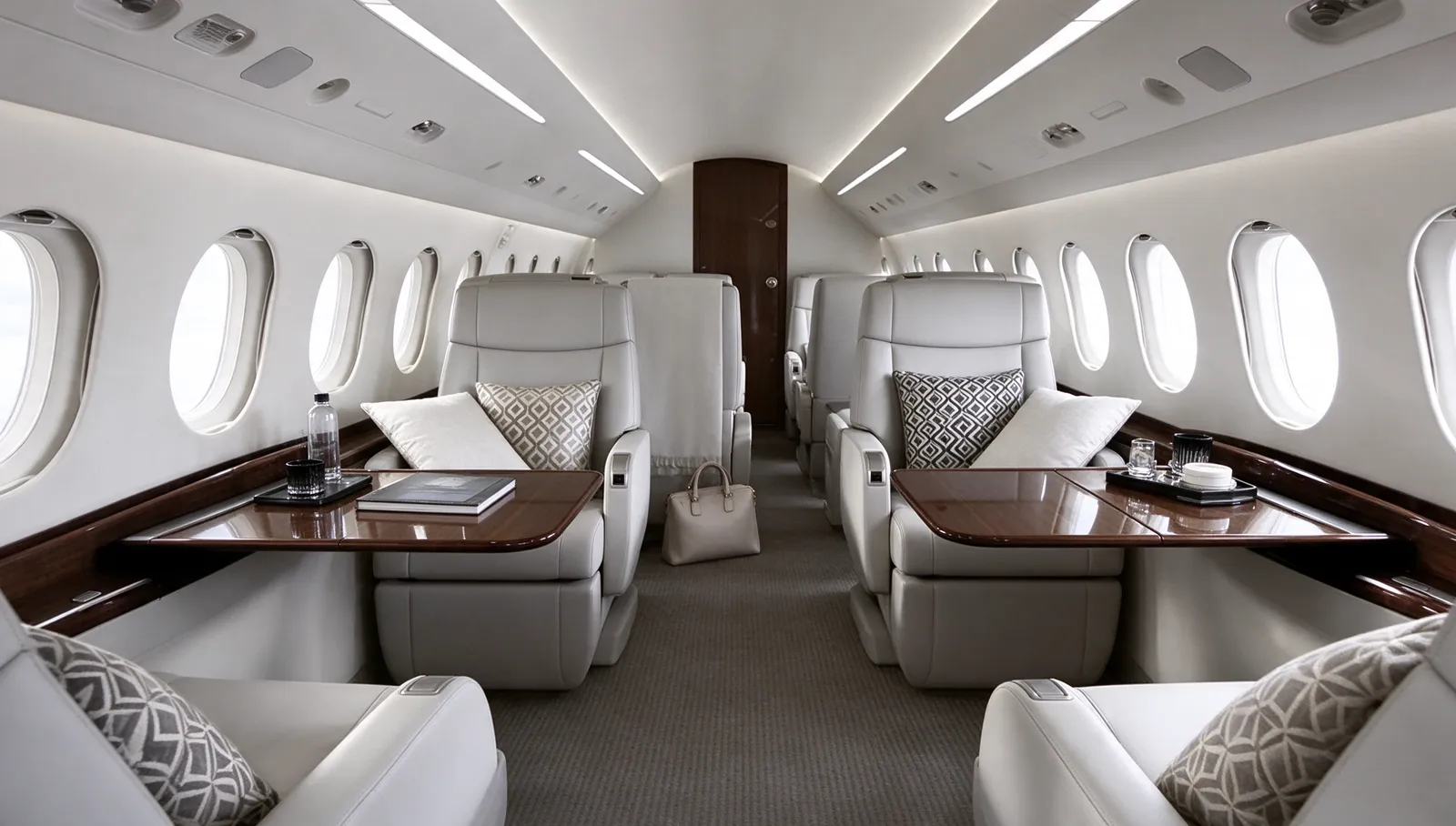
Figures are published manufacturer data, shown for illustration only. Images are generated for this concept and show the Falcon 2000S type, not a specific aircraft. Dassault Aviation and Falcon 2000S are trademarks of their owner, used only to identify the aircraft.