Super Midsize Jet
Dassault Falcon 50EX
Range
3,230 NM
Cruise speed
481 kts
Seats
9
History
Dassault launched the Falcon 50EX in 1995 to give its original Falcon 50 trijet a performance upgrade. Operators had asked for more speed, a higher ceiling and longer range, and the EX programme was planned from the start around those three requests.
The first 50EX flew from Mérignac on 10 April 1996. Its three Honeywell TFE731-40 engines are managed by digital electronic engine controls (DEEC), an auxiliary power unit came as standard, and the avionics were updated to the Collins Pro Line 4 suite.
French certification arrived in late 1996, and the US authorities followed shortly afterwards. The first customer aircraft was delivered in January 1997, and full production began that May. Other changes included refined engine controls, an improved rudder control system and a more modern cockpit.
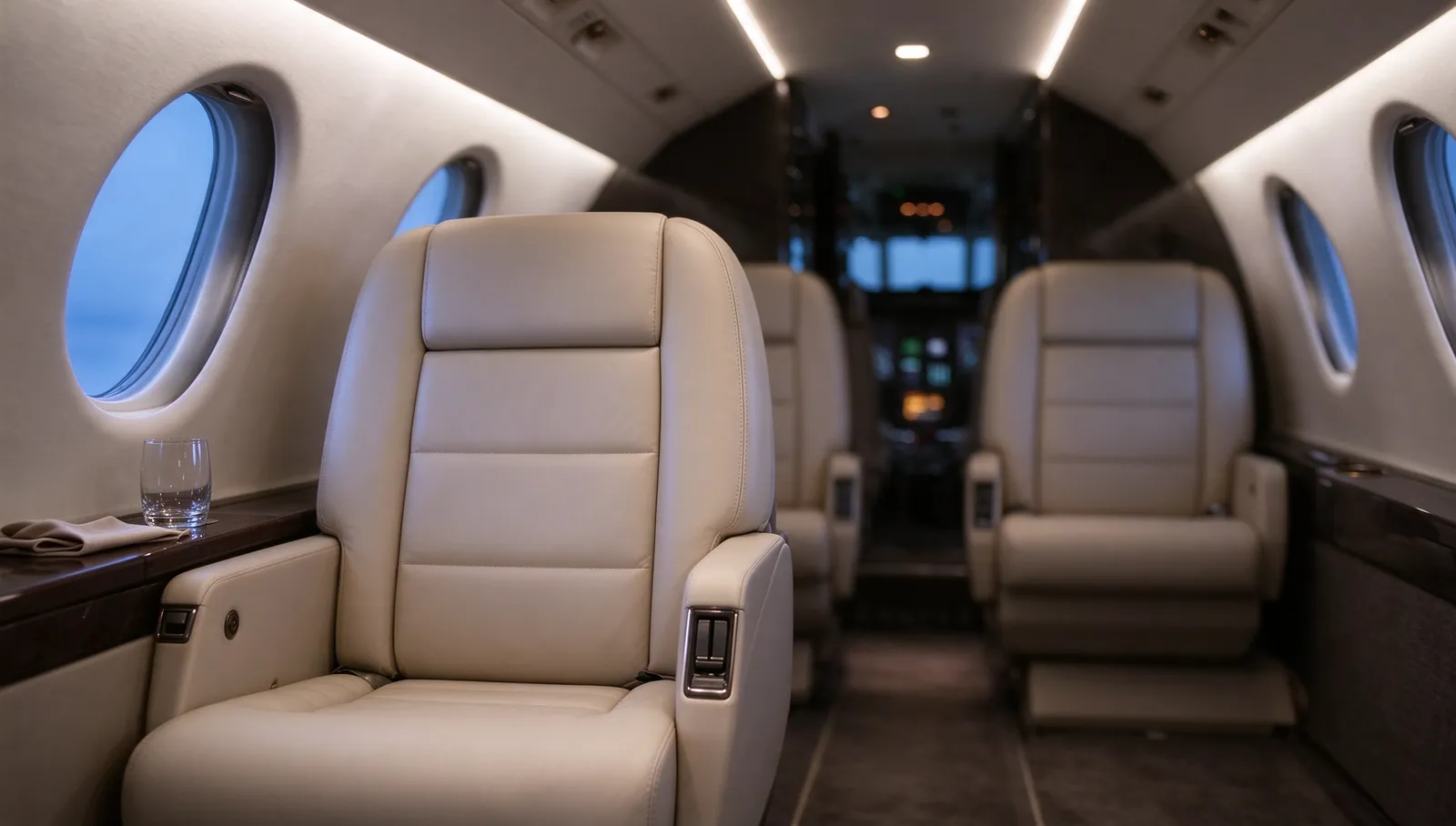
Dassault built the 50EX until 2008, completing 100 new aircraft and converting one existing Falcon 50. A typical charter layout seats nine in a cabin 7.2 m long and 1.8 m high. It drew together what Dassault had learned from its trijets, keeping the three-engine layout while bringing the systems up to date.
Technical Specifications
General information
| Model name | Falcon 50EX |
|---|---|
| Manufacturer | Dassault Aviation |
| Aircraft category | super midsize jet |
| ICAO Designator | FA50 |
| Start/End of Production | 1996 - 2008 |
| Number of pilot(s) | 2 |
Performances
| Range (with IFR reserves) | 3230 NM (5982 km) |
|---|---|
| Ferry range | 3400 NM (6297 km) |
| Cruise speed | 481 kts (891 km/h) |
| Max Operating Speed – VMO | 370 KIAS |
| Max Mach Operating Speed - MMO | Mach 0.86 |
| Long-Range Cruise Speed - LRC | 417 KTAS |
| Approach Speed | 95 kts |
| Takeoff Distance | 1509 m |
| Average Landing Distance | 666 m |
| Rate of Climb | 2176 ft/min |
| Service Ceiling | 49000 ft |
| Thrust | 3704 lbf |
Aircraft technology
| Engine type | Turbofan |
|---|---|
| Engine(s) | 3 x Honeywell TFE731-40 |
| Avionics | Collins Pro Line 4 |
Dimensions and capacity
| Aircraft length | 18.52 m |
|---|---|
| Aircraft height | 7 m |
| Wing span | 18.86 m |
| Cabin height | 1.8 m (5.9 ft) |
| Cabin length | 7.2 m (23.5 ft) |
| Cabin width | 1.9 m (6.1 ft) |
| Baggage volume | 3.26 m3 |
| Seats (standard config) | 9 |
| Seats (max) | 19 |
| Suitcases | 11 |
| Carry-on luggage | 6 |
| Maximum payload | 1506 kg |
| Maximum TakeOff Weight - MTOW | 18144 kg |
| Maximum Landing Weight - MLW | 16200 kg |
| Fuel capacity | 8800 L |
FAQ
Should I choose a Falcon 50EX or a Cessna Citation X?
The Citation X is the faster aircraft: it can reach Mach 0.92 (about 514 knots), against the Falcon's 481 knot cruise. The Falcon 50EX goes further, at 3,230 nm against roughly 3,111 nm, and seats nine rather than eight. Choose the Citation X when speed matters most. The Falcon suits trips into shorter runways and passengers who value three engines.
What is the range of the Falcon 50EX?
With IFR reserves, the 50EX flies 3,230 nm (5,982 km), and its ferry range is 3,400 nm. That covers London to Lagos or Paris to Dubai without a fuel stop. Newer Falcons fly further, but for intercontinental trips of this length the 50EX remains a practical choice for business and leisure travel.
How does the Falcon 50EX differ from the original Falcon 50?
It is the upgraded version, with Honeywell TFE731-40 engines that give more thrust and better fuel efficiency, and Collins Pro Line 4 avionics with a modern flight management system. Together these improved the climb rate, extended the range to 3,230 nm (5,982 km) and made the aircraft more reliable than the model it replaced.
Where does the Falcon 50EX sit in the Falcon family?
Built from 1996 to 2008, it filled the space between the smaller Falcon 20 and 200 and the larger Falcon 900. It kept the trijet layout but flew further and handled short runways better than earlier Falcons. The 7X, the 8X and the Falcon 2000 have since taken the spotlight, yet charter operators still value the 50EX for intercontinental reach combined with short-field ability.
Gallery
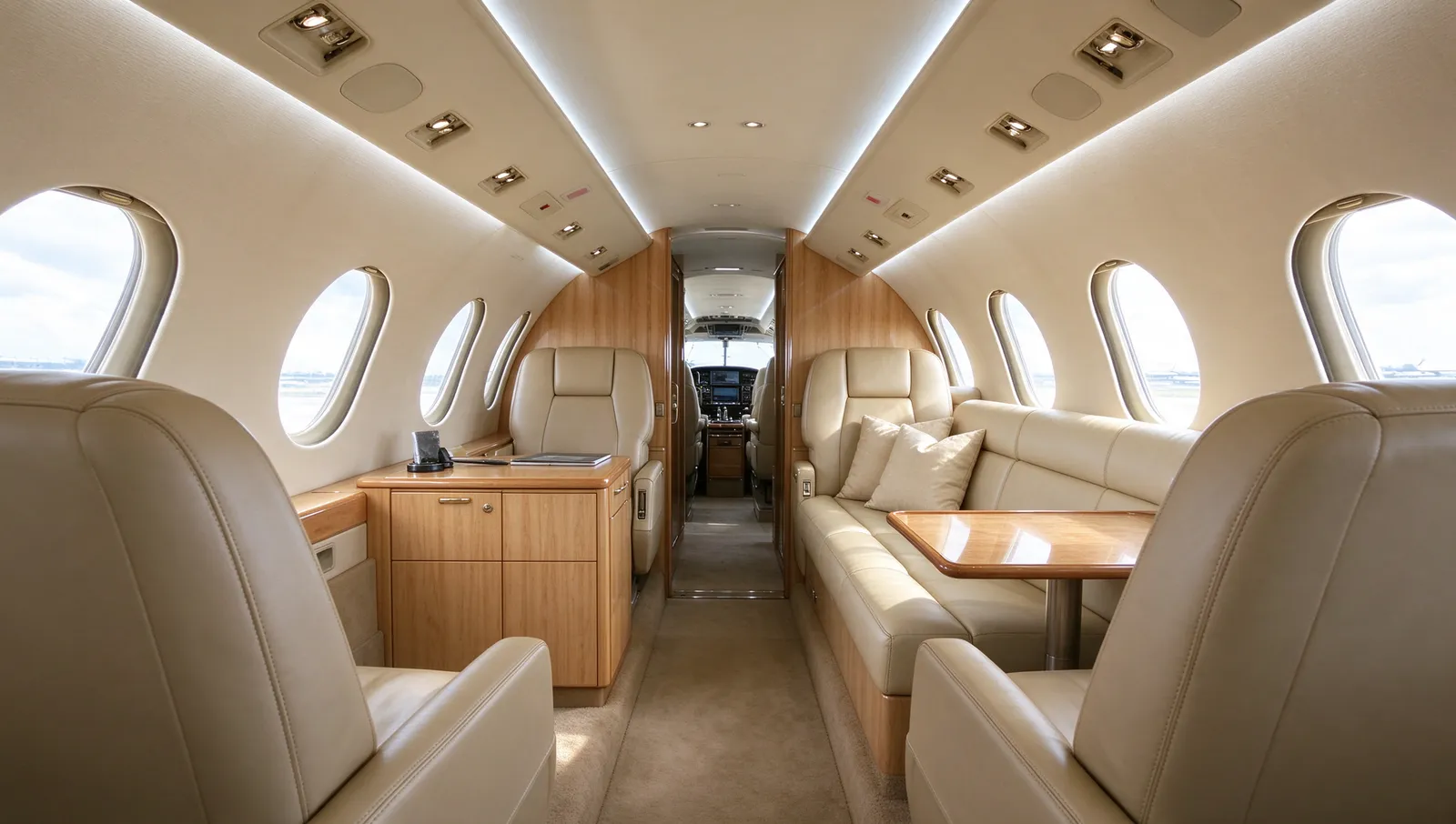
Figures are published manufacturer data, shown for illustration only. Images are generated for this concept and show the Falcon 50EX type, not a specific aircraft. Dassault Aviation and Falcon 50EX are trademarks of their owner, used only to identify the aircraft.