Large Jet
Dassault Falcon 900
Range
3,900 NM
Cruise speed
480 kts
Seats
12
History
Dassault announced the Falcon 900 in 1984, its first aircraft in the market for large-cabin jets with three engines. The aircraft was a significant step for the company: its structure made wide use of composite materials, a notable advance in business aircraft design at the time.
French and US authorities certified the Falcon 900 in 1986, and it was built until 1991. It uses three Honeywell TFE731-5AR-1C engines in a layout that follows the smaller Falcon 50, scaled up for a bigger cabin and more passengers. Operators gained the reassurance of three engines together with range for transcontinental trips.
The original aircraft became the starting point for a long line of variants. Dassault delivered 160 Falcon 900s and 900Bs, and more than 500 aircraft have been delivered across the whole 900 series, which shows how much demand there was for its trijet approach.
Technical Specifications
General information
| Model name | Falcon 900 |
|---|---|
| Manufacturer | Dassault Aviation |
| Aircraft category | large jet |
| ICAO Designator | F900 |
| Start/End of Production | 1986 - 1991 |
| Number of pilot(s) | 2 |
Performances
| Range (with IFR reserves) | 3900 NM (7222 km) |
|---|---|
| Ferry range | 4501 NM (8336 km) |
| Cruise speed | 480 kts (889 km/h) |
| Max Operating Speed – VMO | 370 KIAS |
| Max Mach Operating Speed - MMO | Mach 0.87 |
| Long-Range Cruise Speed - LRC | 428 KTAS |
| Approach Speed | 110 kts |
| Takeoff Distance | 1568 m |
| Average Landing Distance | 1067 m |
| Rate of Climb | 3000 ft/min |
| Service Ceiling | 51000 ft |
| Thrust | 4500 lbf |
Aircraft technology
| Engine type | Turbofan |
|---|---|
| Engine(s) | 3 x Honeywell TFE731-5AR-1C |
| Avionics | Rockwell/Collins |
Dimensions and capacity
| Aircraft length | 20.21 m |
|---|---|
| Aircraft height | 7.55 m |
| Wing span | 19.33 m |
| Cabin height | 1.88 m (6.17 ft) |
| Cabin length | 10.11 m (33.2 ft) |
| Cabin width | 2.34 m (7.7 ft) |
| Baggage volume | 3.6 m3 |
| Seats (standard config) | 12 |
| Seats (max) | 19 |
| Suitcases | 12 |
| Carry-on luggage | 10 |
| Maximum payload | 20865 kg |
| Maximum TakeOff Weight - MTOW | 20640 kg |
| Maximum Landing Weight - MLW | 15310 kg |
| Fuel capacity | 10769 L |
FAQ
How much extra range does the Falcon 900LX offer?
It does. The 900LX is rated at 8,797 km, against 7,222 km for the original Falcon 900, a gain of about 1,575 km. In practice, some city pairs that need a fuel stop in the earlier aircraft can be flown direct in the LX. For routes inside the Falcon 900's range, the older aircraft does the same job.
What are the Falcon 900's seating and cabin dimensions?
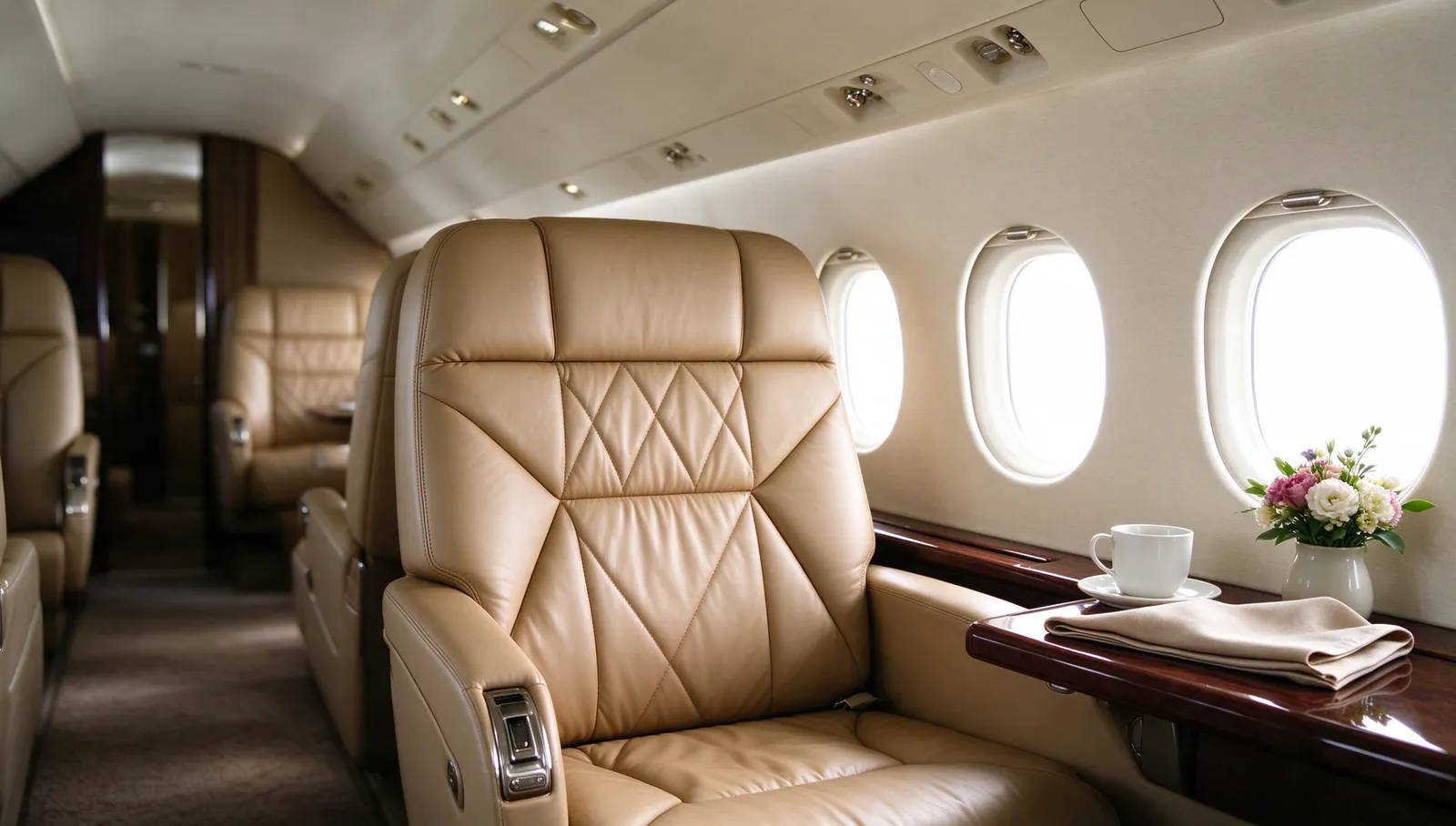
The standard layout seats 12, and the cabin is certified for up to 19. It measures 10.11 m long, 2.34 m wide and 1.88 m high, giving room to stand and move around. Passengers can bring around 12 suitcases and 10 pieces of hand luggage, with 3.6 m³ of baggage space in total.
How far can the Falcon 900 fly, and which routes does it suit?
Its range with IFR reserves is 3,900 nm (7,222 km), which covers Paris to Dubai or London to New York in one sector. Its ferry range, flown without passengers, reaches 4,501 nm (8,336 km). Weather and load affect the figure on any given day.
How quick is the Falcon 900?
It cruises at 480 knots (889 km/h), with a maximum operating speed of Mach 0.87. At that speed, London to Rome takes around two hours and 15 minutes. On longer sectors the crew can fly a long range cruise of 428 knots to save fuel, and the aircraft is cleared to climb as high as 51,000 ft.
Gallery
Figures are published manufacturer data, shown for illustration only. Images are generated for this concept and show the Falcon 900 type, not a specific aircraft. Dassault Aviation and Falcon 900 are trademarks of their owner, used only to identify the aircraft.