Super Large Jet
Dassault Falcon 900DX
Range
4,100 NM
Cruise speed
474 kts
Seats
8-14
History
Dassault put the 900DX into production in 2005 to replace the 900C, answering operators who wanted better avionics and more efficient operation. It used the same Honeywell TFE731-60 engines as the 900EX but left out the centreline fuel tanks. The result was a shorter-range version of the three-engine Falcon 900, aimed at operators whose routes did not call for the full range of its sister aircraft.
The flight deck was the main change. Honeywell and Dassault developed the Primus Epic EASy system together, and its digital displays cut pilot workload and improved safety compared with the analogue instruments of earlier Falcons. Deliveries ran from 2005 until 2010, when Dassault ended production to concentrate on the 900LX and its winglets.
Technical Specifications
General information
| Model name | Falcon 900DX |
|---|---|
| Manufacturer | Dassault Aviation |
| Aircraft category | super large jet |
| ICAO Designator | F900 |
| Start/End of Production | 2005 - 2010 |
| Number of pilot(s) | 2 |
Performances
| Range (with IFR reserves) | 4100 NM (7593 km) |
|---|---|
| Ferry range | 4500 NM (8334 km) |
| Cruise speed | 474 kts (878 km/h) |
| Max Operating Speed – VMO | 370 KIAS |
| Max Mach Operating Speed - MMO | Mach 0.87 |
| Long-Range Cruise Speed - LRC | 435 KTAS |
| Approach Speed | 110 kts |
| Takeoff Distance | 1490 m |
| Average Landing Distance | 730 m |
| Service Ceiling | 51000 ft |
| Thrust | 5000 lbf |
Aircraft technology
| Engine type | Turbofan |
|---|---|
| Engine(s) | 3 x Honeywell TFE731-60 |
| Avionics | Honeywell Primus Epic EASy |
Dimensions and capacity
| Aircraft length | 20.21 m |
|---|---|
| Aircraft height | 7.55 m |
| Wing span | 19.33 m |
| Cabin height | 1.89 m (6.2 ft) |
| Cabin length | 10.11 m (33.17 ft) |
| Cabin width | 2.34 m (7.7 ft) |
| Baggage volume | 3.6 m3 |
| Seats (standard config) | 8-14 |
| Seats (max) | 19 |
| Suitcases | 12 |
| Carry-on luggage | 10 |
| Maximum payload | 2297 kg |
| Maximum TakeOff Weight - MTOW | 21183 kg |
| Maximum Landing Weight - MLW | 19142 kg |
FAQ
How fast does the Falcon 900DX cruise?
Cruise speed is 474 knots, or 878 km/h, which is competitive for a super large jet. London to Rome takes roughly 1 hour 40 minutes at that pace, so the 900DX works well for European business trips as well as longer sectors.
Does the 900DX fly further than the Legacy 600?
Yes, by a clear margin. The 900DX is rated for 4,100 nautical miles (7,593 km), while the Legacy 600 manages about 3,250 nautical miles (6,019 km). The difference of roughly 850 nautical miles, or 1,574 km, means some routes the Falcon flies nonstop would need a fuel stop in the Legacy.
How many passengers fit in a Falcon 900DX?
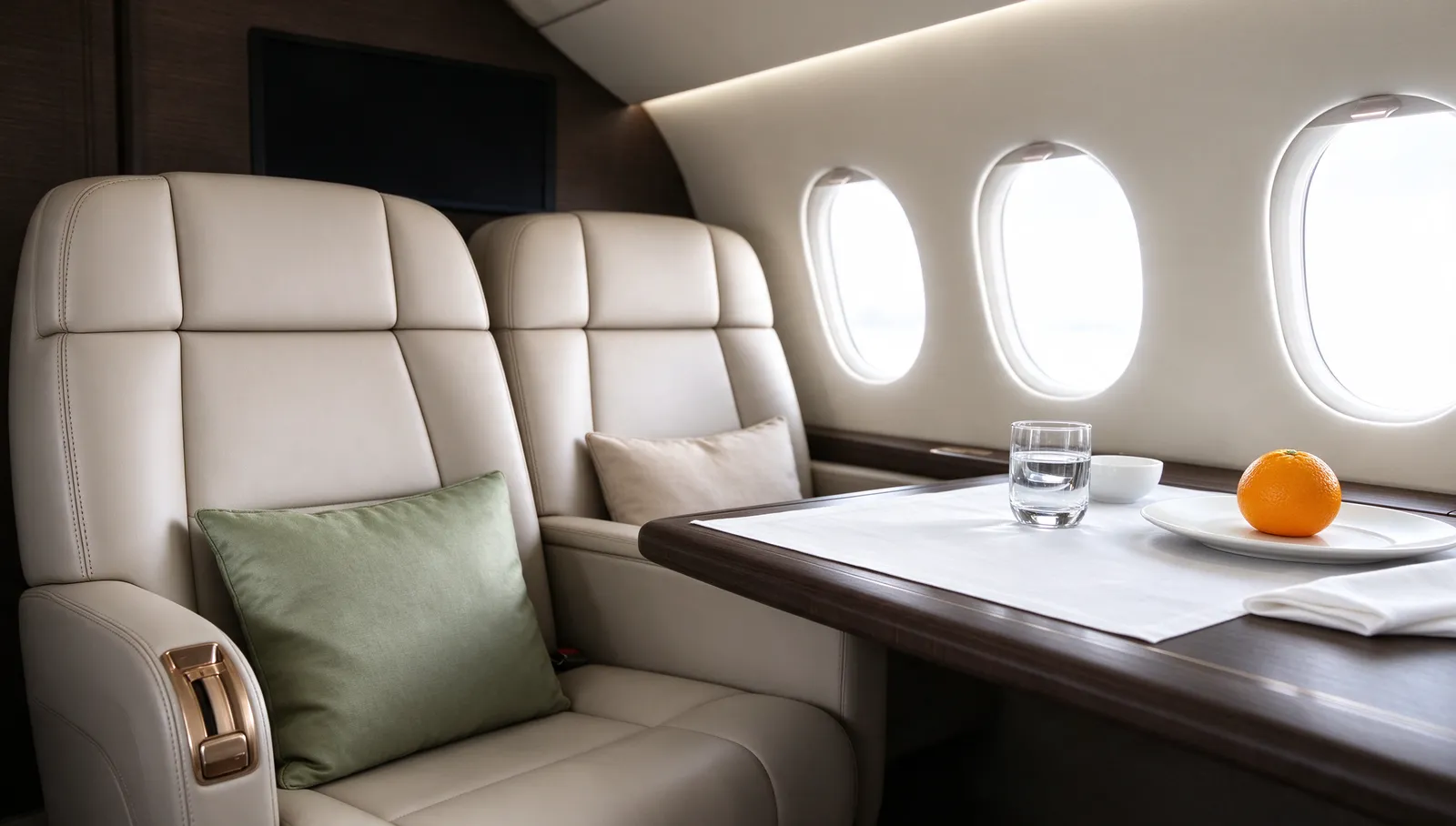
Standard layouts seat 8 to 14, and the aircraft is certified for up to 19. The cabin is 10.11 metres long, 2.34 metres wide and 1.89 metres high, split into three areas. Set up for an overnight flight, it sleeps up to seven passengers. There is space for around 12 suitcases and 10 carry-on bags.
What avionics does the 900DX use?
It has the Honeywell Primus Epic EASy flight deck, which Honeywell developed with Dassault. Introduced on the 900DX in 2005, the digital system automates routine tasks to lighten pilot workload, and it improved safety over the analogue instruments it replaced. It was a significant step forward for the Falcon line when it arrived.
How far can the Falcon 900DX fly without refuelling?
With IFR reserves it can fly 4,100 nautical miles, or 7,593 km. That puts Dubai within nonstop reach of London, and the aircraft suits intercontinental business travel as well as flights within Europe. For longer routes, our advisors confirm the planned payload and routing with the operator before booking.
Gallery
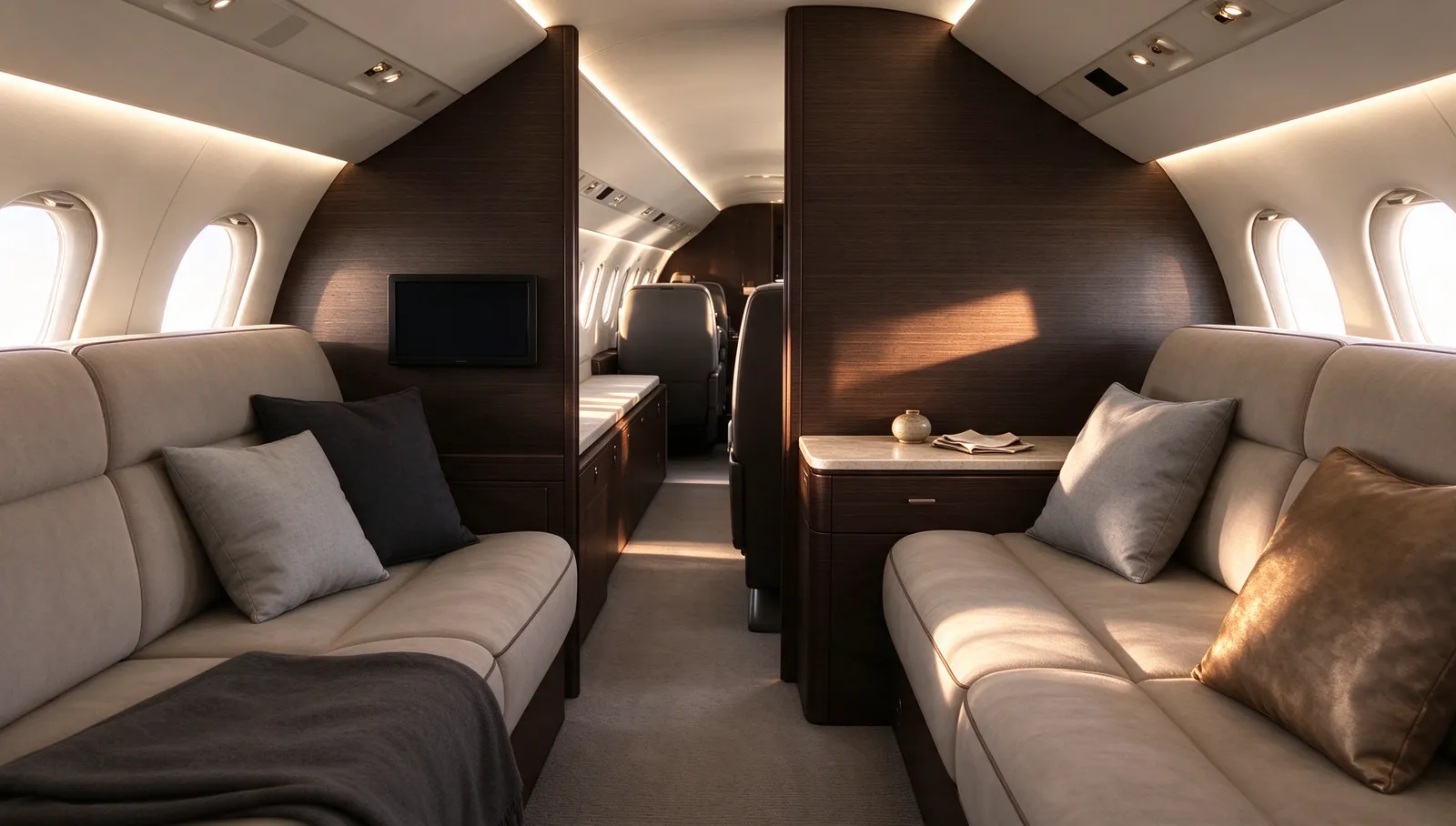
Figures are published manufacturer data, shown for illustration only. Images are generated for this concept and show the Falcon 900DX type, not a specific aircraft. Dassault Aviation and Falcon 900DX are trademarks of their owner, used only to identify the aircraft.