Midsize Jet
Embraer Praetor 500
Range
3,340 NM
Cruise speed
466 kts
Seats
7-9
History
Embraer introduced the Praetor 500 at the NBAA convention in October 2018. It is a development of the Legacy 450, keeping the established Legacy platform and adding fuel to extend the range. Flight testing had started on 13 September 2018, and the test aircraft had logged 80 hours by October.
Brazil's ANAC certified the aircraft first, and FAA and EASA approvals followed in May 2019. Usable fuel went up by 950 pounds over the Legacy 450, to 13,058 pounds, which gave the Praetor 500 a range of 3,340 nm (6,186 km) with IFR reserves.
The Praetor 500 kept the Legacy 450's fly-by-wire controls and flat-floor cabin. Embraer also offered existing Legacy 450 owners an upgrade to Praetor 500 standard, so their aircraft could gain the same capability, and continued to support the growing fleet. The type remains in production.
Technical Specifications
General information
| Model name | Praetor 500 |
|---|---|
| Manufacturer | Embraer |
| Aircraft category | midsize jet |
| ICAO Designator | E545 |
| Start/End of Production | 2019 - Still in production |
| Number of pilot(s) | 2 |
Performances
| Range (with IFR reserves) | 3340 NM (6186 km) |
|---|---|
| Ferry range | 3700 NM (6852 km) |
| Cruise speed | 466 kts (863 km/h) |
| Max Operating Speed – VMO | 320 KIAS |
| Max Mach Operating Speed - MMO | Mach 0.83 |
| Long-Range Cruise Speed - LRC | 436 KTAS |
| Approach Speed | 109 kts |
| Takeoff Distance | 1287 m |
| Average Landing Distance | 635 m |
| Service Ceiling | 45000 ft |
| Thrust | 6540 lbf |
Aircraft technology
| Engine type | Turbofan |
|---|---|
| Engine(s) | 2 x Honeywell HTF7500E |
| Avionics | Rockwell Collins Pro Line Fusion |
Dimensions and capacity
| Aircraft length | 19.69 m |
|---|---|
| Aircraft height | 6.42 m |
| Wing span | 21.5 m |
| Cabin height | 1.83 m (6.0 ft) |
| Cabin length | 7.32 m (24.0 ft) |
| Cabin width | 2.08 m (6.83 ft) |
| Baggage volume | 4.25 m3 |
| Seats (standard config) | 7-9 |
| Seats (max) | 9 |
| Suitcases | 10 |
| Carry-on luggage | 8 |
| Maximum payload | 1325 kg |
| Maximum TakeOff Weight - MTOW | 17100 kg |
| Maximum Landing Weight - MLW | 15650 kg |
FAQ
How does the Praetor 500's range compare with the Citation Latitude?
The Praetor 500 flies considerably further: 6,186 km against 5,000 km for the Latitude. It is also faster in cruise, at 863 km/h compared with 826 km/h. On longer flights, that extra range can mean one fewer fuel stop, which saves time on intercontinental trips.
How many passengers does the Praetor 500 seat?
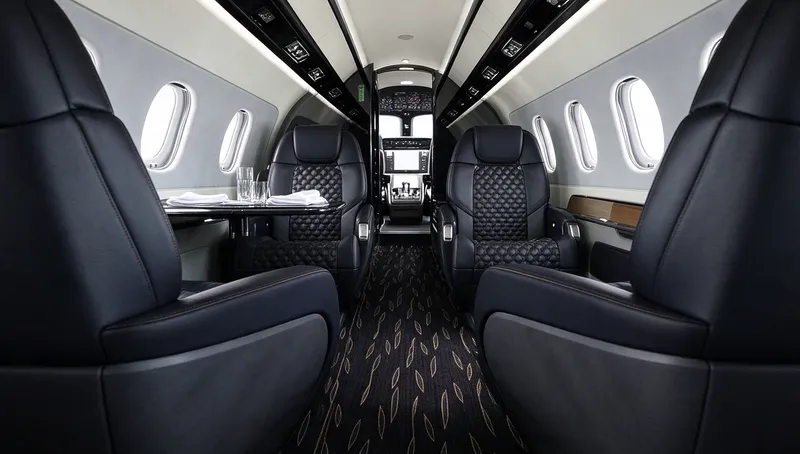
Standard layouts seat 7 to 9, and 9 is the maximum. The cabin is 7.32 m long and 1.83 m high, with a flat floor and room to stand along its length. Baggage space takes about 10 suitcases and 8 carry-on bags, and some of it can be reached during the flight.
Which routes can the Praetor 500 fly non-stop?
With IFR reserves it has 3,340 nm (6,186 km) of range, enough to cross a continent and to make some intercontinental trips. London to New York, Dubai to London and Bangkok to Dubai are all possible without stopping. A flight from Los Angeles to London, for example, needs one fuel stop.
How long do typical European flights take in a Praetor 500?
It cruises at 466 kts (863 km/h), a competitive figure for a midsize jet. At that speed, sectors such as Madrid from Paris, or Rome from London, take roughly 1.5 to 2 hours, which suits business trips on a tight schedule.
Can the Praetor 500 use short runways?
Yes. It can operate from short runways and from airports with difficult final approaches, which gives it a wider choice of airports than many aircraft in its class. Combined with fly-by-wire controls and its long range, that lets operators land at smaller regional airports near your destination and still fly long international sectors. Take-off distance is 1,287 m.
Gallery
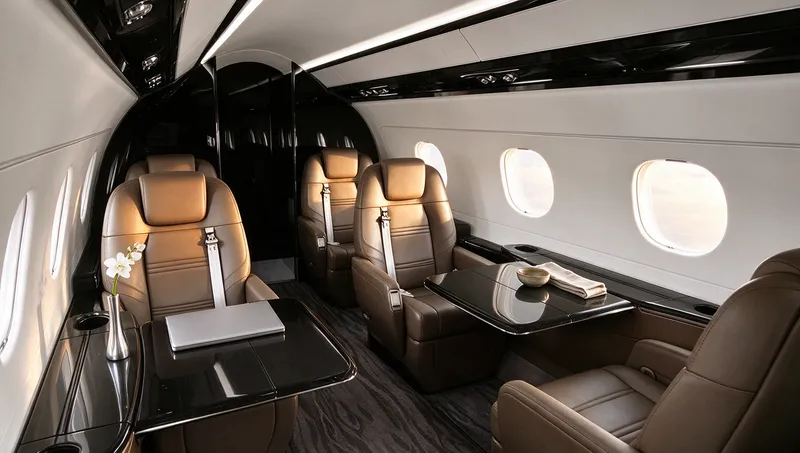
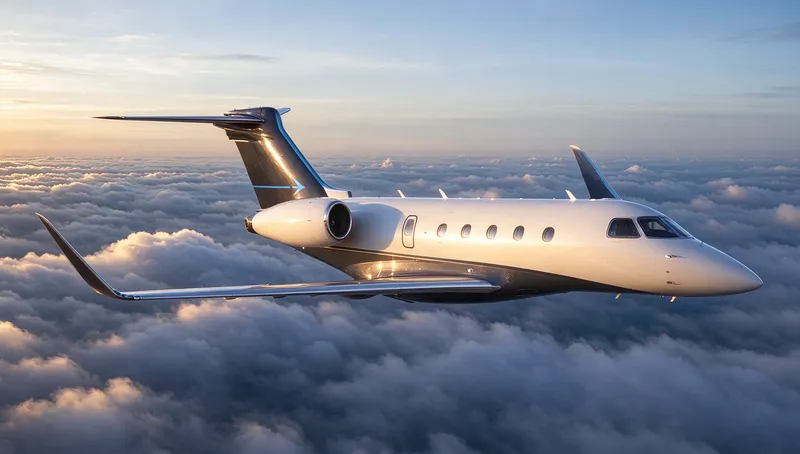
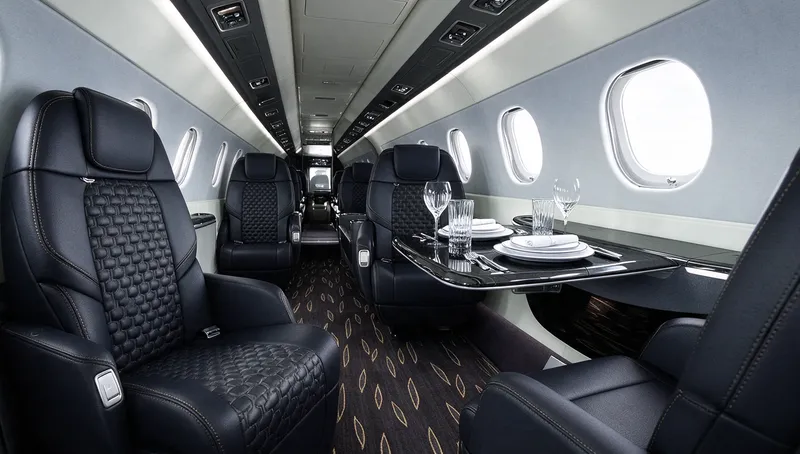
Figures are published manufacturer data, shown for illustration only. Images are generated for this concept and show the Praetor 500 type, not a specific aircraft. Embraer and Praetor 500 are trademarks of their owner, used only to identify the aircraft.