Turboprop Airliner
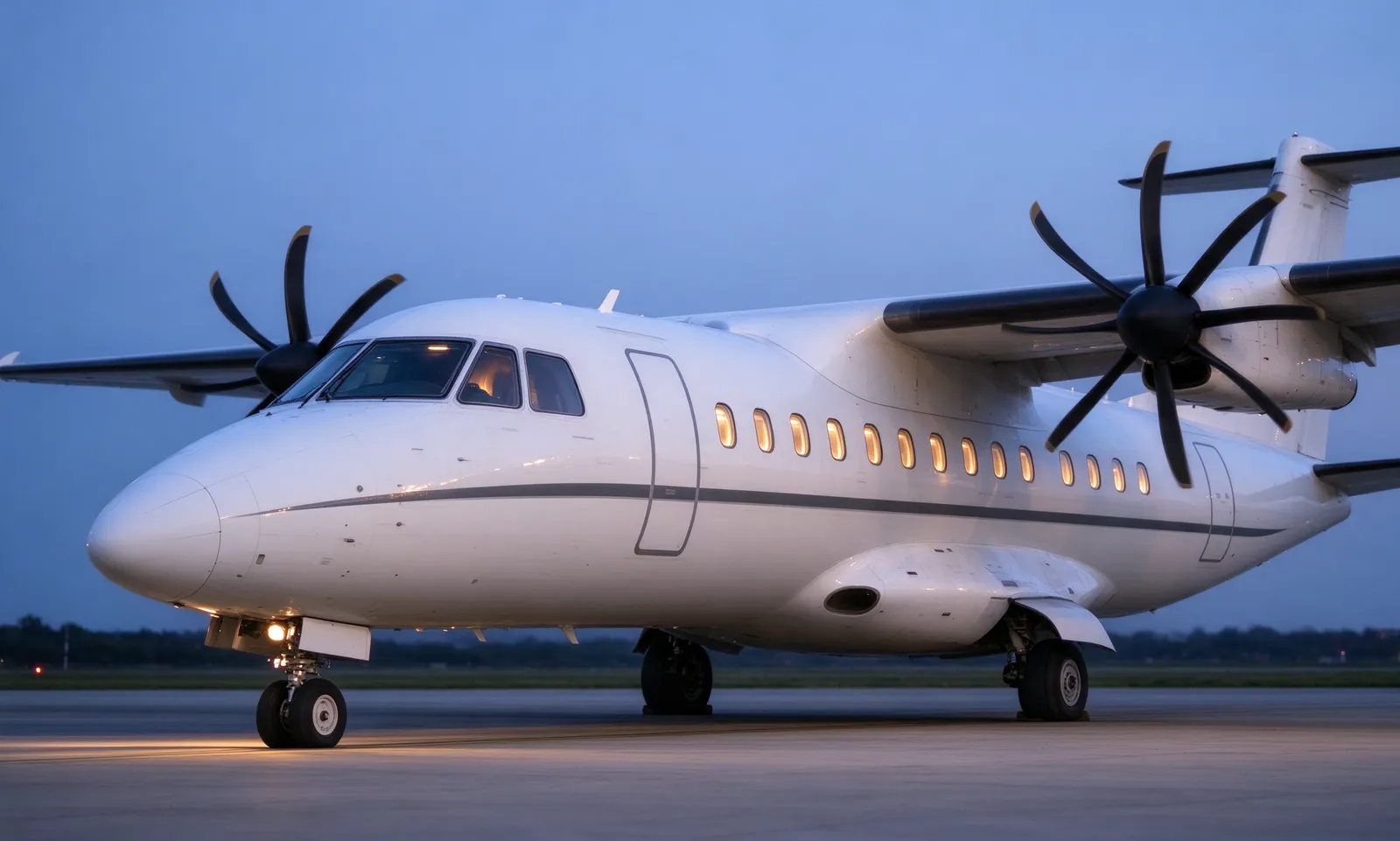
Fairchild Dornier 328
Range
1,000 NM
Cruise speed
335 kts
Seats
30
History
The Dornier 328 is a regional turboprop with 30 seats, built for short and medium-haul routes. Dornier developed it in Germany, and after Fairchild acquired Dornier's assets, the programme continued under the Fairchild Dornier name. The aircraft first flew in the early 1990s and was built from 1993 to 2000.
Its job was to sit between small commuter types and bigger regional jets. Two Pratt & Whitney Canada PW119B turboprops give it a cruise speed of 335 kts (620 km/h), and the flight deck uses Honeywell Primus 2000 EFIS avionics. A jet-powered variant was also produced, while the turboprop version was valued for its fuel efficiency on regional routes.
The cabin is 10.32 m long, 2.19 m wide and 1.89 m high, so passengers can stand, and the baggage hold takes 6.4 cubic metres, enough for 30 suitcases. Airlines around the world flew the 328 on many kinds of route and in a range of operating conditions, which today makes it a practical charter option for groups.
Technical Specifications
General information
| Model name | Dornier 328 |
|---|---|
| Manufacturer | Fairchild Dornier |
| Aircraft category | turboprop airliner |
| ICAO Designator | D328 |
| Start/End of Production | 1993 - 2000 |
| Number of pilot(s) | 2 |
Performances
| Range (with IFR reserves) | 1000 NM (1852 km) |
|---|---|
| Ferry range | 1850 NM (3426 km) |
| Cruise speed | 335 kts (620 km/h) |
| Max Operating Speed – VMO | 202 KIAS |
| Long-Range Cruise Speed - LRC | 281 KTAS |
| Approach Speed | 110 kts |
| Takeoff Distance | 1000 m |
| Average Landing Distance | 645 m |
| Rate of Climb | 2060 ft/min |
| Service Ceiling | 31000 ft |
| Thrust | 2180 shp |
Aircraft technology
| Engine type | Turboprop |
|---|---|
| Engine(s) | 2 x Pratt & Whitney Canada PW119B |
| Avionics | Honeywell Primus 2000 EFIS |
Dimensions and capacity
| Aircraft length | 21.28 m |
|---|---|
| Aircraft height | 7.24 m |
| Wing span | 20.98 m |
| Cabin height | 1.89 m (6.2 ft) |
| Cabin length | 10.32 m (33.83 ft) |
| Cabin width | 2.19 m (7.2 ft) |
| Baggage volume | 6.4 m3 |
| Seats (standard config) | 30 |
| Seats (max) | 33 |
| Suitcases | 30 |
| Carry-on luggage | 30 |
| Maximum payload | 3739 kg |
| Maximum TakeOff Weight - MTOW | 13990 kg |
| Maximum Landing Weight - MLW | 13230 kg |
| Fuel capacity | 3416 L |
FAQ
How many passengers does the Dornier 328 carry?
The standard layout seats 30, and up to 33 can be fitted. It is considerably bigger than the Dornier 228, which makes it a sensible choice for larger groups flying regional routes, with baggage space for 30 suitcases and 30 carry-on bags.
What engines does the Dornier 328 use?
Two Pratt & Whitney Canada PW119B turboprops, with a listed power of 2,180 shp. They are known for fuel efficiency and low operating costs on regional routes, and they give the aircraft dependable performance across many kinds of route and operating conditions.
How far can the Dornier 328 fly?
With IFR reserves the 328 is rated for 1,000 nm (1,852 km), which suits regional flying across Europe and similar distances elsewhere. Longer trips need a fuel stop. The ferry range, used when positioning the aircraft, reaches 1,850 nm.
What is the Dornier 328's cruise speed?
The 328 cruises at 335 kts (620 km/h), with a long-range cruise speed of 281 kts. That is quick for a turboprop and well matched to short and medium sectors, keeping flight times competitive on routes like Amsterdam to Copenhagen or Munich to Vienna.
Gallery
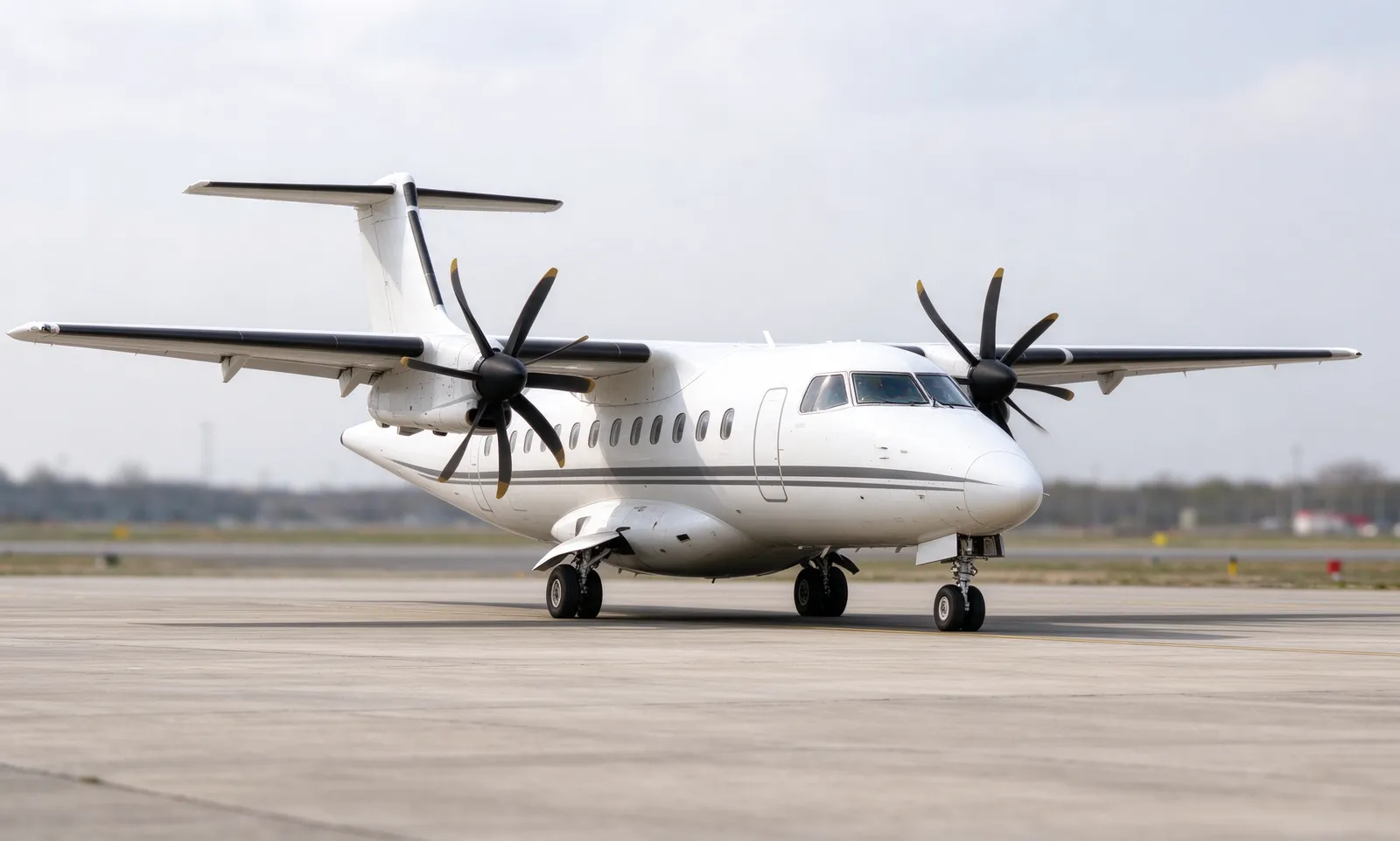
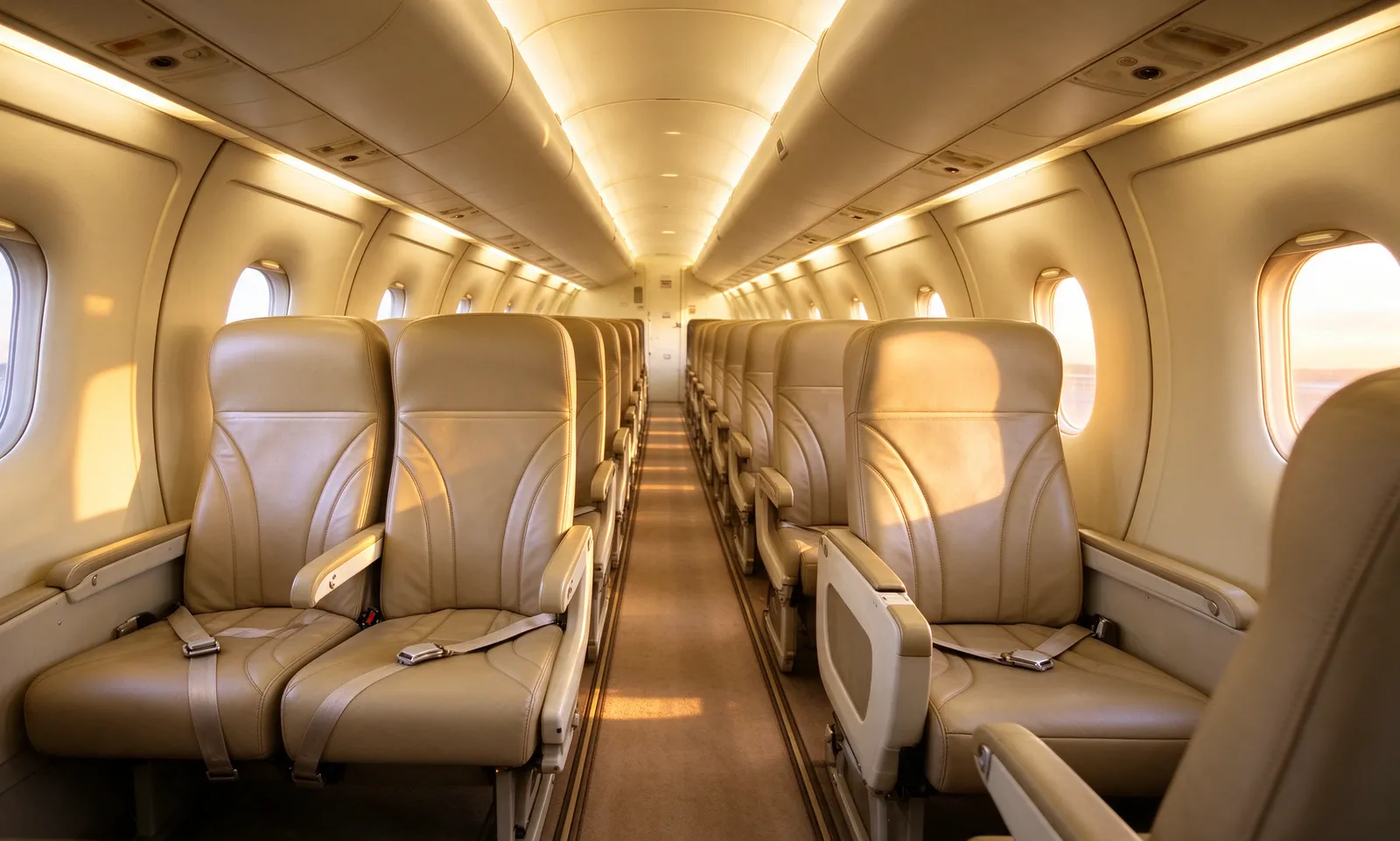
Figures are published manufacturer data, shown for illustration only. Images are generated for this concept and show the 328 type, not a specific aircraft. Fairchild Dornier and 328 are trademarks of their owner, used only to identify the aircraft.