Turboprop Airliner
Fokker 50
Range
1,110 NM
Cruise speed
287 kts
Seats
50
History
Fokker developed the Fokker 50 by stretching and modernising its successful F27 Friendship. Its first flight was in 1985, and airlines put it into service two years later, in 1987, confirming Fokker's commitment to the regional turboprop market. Two Pratt & Whitney Canada PW125B engines power it, and the avionics and systems were brought up to date compared with the F27.
In a single-class layout it can take up to 62 passengers. Production ended in 1997, when Fokker ceased operations, after 213 had been delivered. Regional airlines around the world chose the type for medium-density routes, where they wanted a reliable and economical aircraft.
Its sturdy design and flexibility let it work in many different operating environments. The Fokker 50 was the last development of a turboprop family that served regional aviation for more than five decades, and it remains an important chapter in Fokker's history as an airliner manufacturer.
Technical Specifications
General information
| Model name | Fokker 50 |
|---|---|
| Manufacturer | Fokker |
| Aircraft category | turboprop airliner |
| ICAO Designator | F50 |
| Start/End of Production | 1987 - 1997 |
| Number of pilot(s) | 2 |
Performances
| Range (with IFR reserves) | 1110 NM (2056 km) |
|---|---|
| Ferry range | 1628 NM (3015 km) |
| Cruise speed | 287 kts (532 km/h) |
| Max Operating Speed – VMO | 224 KIAS |
| Long-Range Cruise Speed - LRC | 245 KTAS |
| Approach Speed | 97 kts |
| Takeoff Distance | 1350 m |
| Average Landing Distance | 1130 m |
| Rate of Climb | 1500 ft/min |
| Service Ceiling | 25000 ft |
| Thrust | 2500 shp |
Aircraft technology
| Engine type | Turboprop |
|---|---|
| Engine(s) | 2 x Pratt & Whitney Canada PW125B |
| Avionics | EFIS and Automatic Flight Control System |
Dimensions and capacity
| Aircraft length | 25.25 m |
|---|---|
| Aircraft height | 8.32 m |
| Wing span | 29 m |
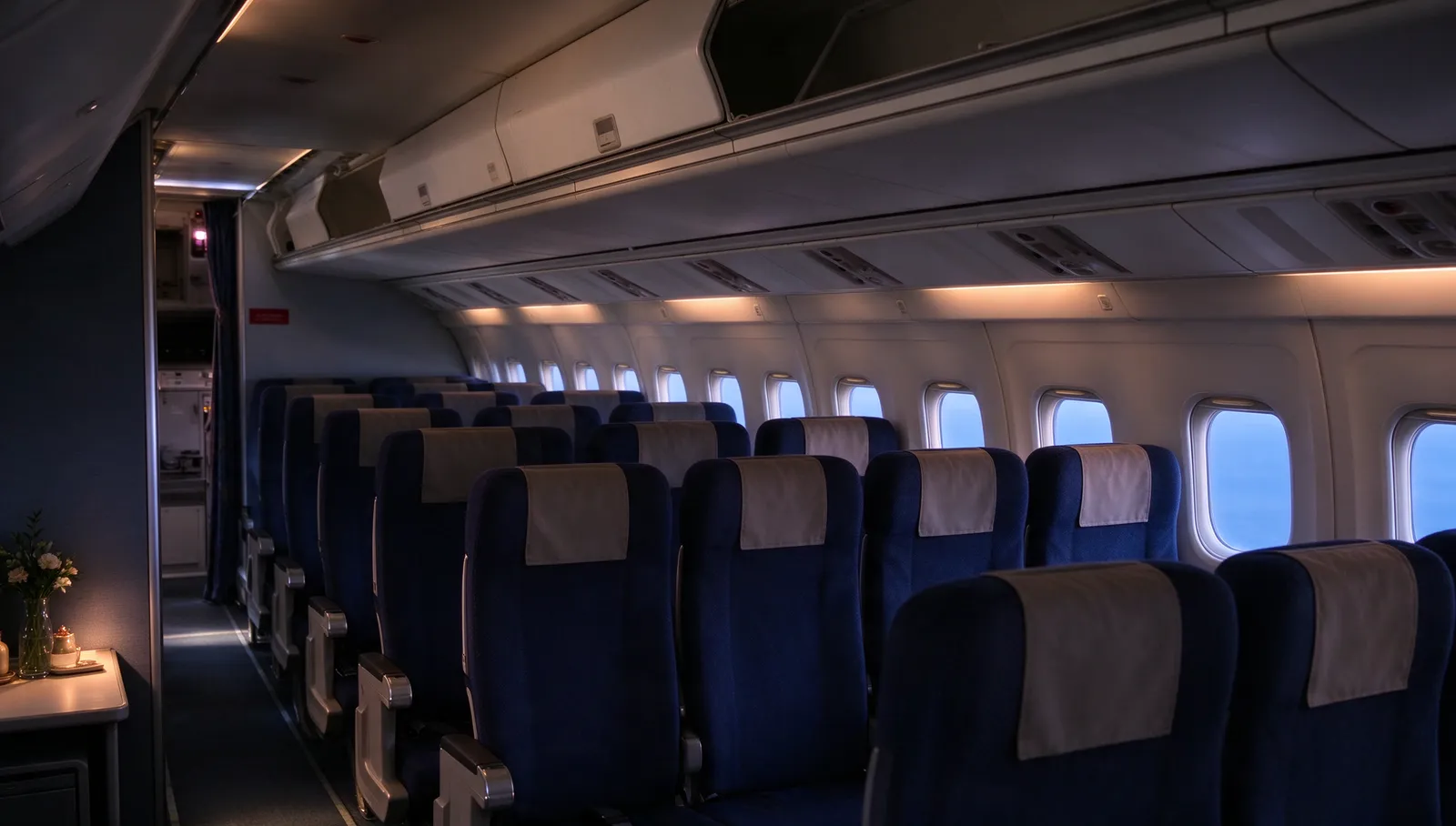
| Cabin height | 1.96 m (6.43 ft) |
| Cabin length | 15.96 m (52.36 ft) |
| Cabin width | 2.5 m (8.2 ft) |
| Baggage volume | 16.7 m3 |
| Seats (standard config) | 50 |
| Seats (max) | 62 |
| Suitcases | 15 |
| Carry-on luggage | 20 |
| Maximum payload | 5500 kg |
| Maximum TakeOff Weight - MTOW | 20820 kg |
| Maximum Landing Weight - MLW | 19730 kg |
| Fuel capacity | 5136 L |
FAQ
How many passengers does a Fokker 50 carry?
The standard layout seats 50, and a high-density cabin takes up to 62. Compared with other regional turboprops the cabin is roomy, at 2.5 m wide and 1.96 m high, and operators can adjust the seating to suit the route and the level of comfort required. Baggage space is 16.7 cubic metres.
How fast is the Fokker 50, and what powers it?
It cruises at 287 kts (532 km/h), a typical speed for a turboprop of its type. Two Pratt & Whitney Canada PW125B engines provide dependable performance and good fuel efficiency in a wide range of conditions. On short and medium routes the turboprop layout keeps operating costs below those of comparable jets.
What range does the Fokker 50 offer?
With IFR reserves it flies 1,110 nm (2,056 km), enough to link Rome with London or Berlin with Madrid. That covers most regional routes in Europe and comparable medium-distance flying in other markets, while leaving room to carry a useful payload.
Is the Fokker 50 roomier than the Saab 340?
Yes, considerably. The Fokker 50 seats 50 in standard layout and up to 62, while the Saab 340 typically carries 30 to 36. Its cabin is also wider and taller, which makes it the more comfortable option for larger groups, and it keeps operating costs competitive.
Gallery
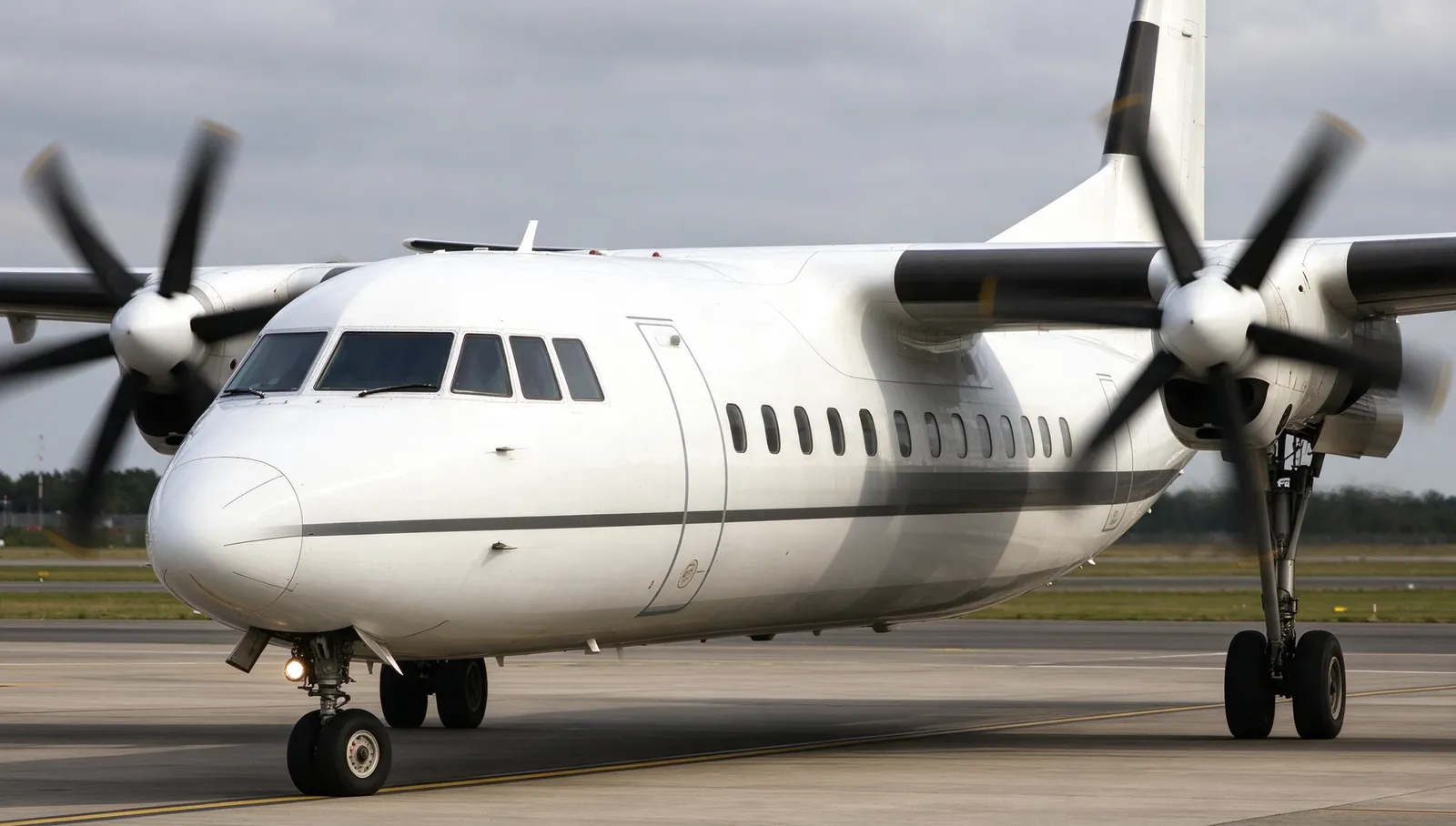
Figures are published manufacturer data, shown for illustration only. Images are generated for this concept and show the 50 type, not a specific aircraft. Fokker and 50 are trademarks of their owner, used only to identify the aircraft.