Super Large Jet
Gulfstream GIV
Range
4,091 NM
Cruise speed
480 kts
Seats
14
History
Work on the Gulfstream IV began in March 1983, with Gulfstream and Grumman as partners. Rather than design a new aircraft, they took the Gulfstream III, lengthened the fuselage and fitted new engines. The prototype first flew on 19 September 1985, which began a long programme of flight testing.
The FAA awarded the GIV its type certificate on 22 April 1987, and the first production aircraft, serial number 1000, entered service that year. Against the GIII it offered more range, a bigger cabin and newer avionics, and it set a fresh benchmark for business aircraft of its time.
From serial number 1214 in 1992, production moved to the improved GIV-SP. The GIV went on to rank among the most successful aircraft families in business aviation, and it did much to give Gulfstream its name for long range flying and comfortable cabins.
Technical Specifications
General information
| Model name | GIV |
|---|---|
| Manufacturer | Gulfstream |
| Aircraft category | super large jet |
| ICAO Designator | GLF4 |
| Start/End of Production | 1986 - 1992 |
| Number of pilot(s) | 2 |
Performances
| Range (with IFR reserves) | 4091 NM (7577 km) |
|---|---|
| Ferry range | 4220 NM (7815 km) |
| Cruise speed | 480 kts (889 km/h) |
| Max Operating Speed – VMO | 340 KIAS |
| Max Mach Operating Speed - MMO | Mach 0.88 |
| Long-Range Cruise Speed - LRC | 459 KTAS |
| Approach Speed | 130 kts |
| Takeoff Distance | 1722 m |
| Average Landing Distance | 911 m |
| Rate of Climb | 4000 ft/min |
| Service Ceiling | 45000 ft |
| Thrust | 13850 lbf |
Aircraft technology
| Engine type | Turbofan |
|---|---|
| Engine(s) | 2 x Rolls-Royce TAY 611-8 |
| Avionics | Honeywell SPZ-8000 |
Dimensions and capacity
| Aircraft length | 26.91 m |
|---|---|
| Aircraft height | 7.44 m |
| Wing span | 23.72 m |
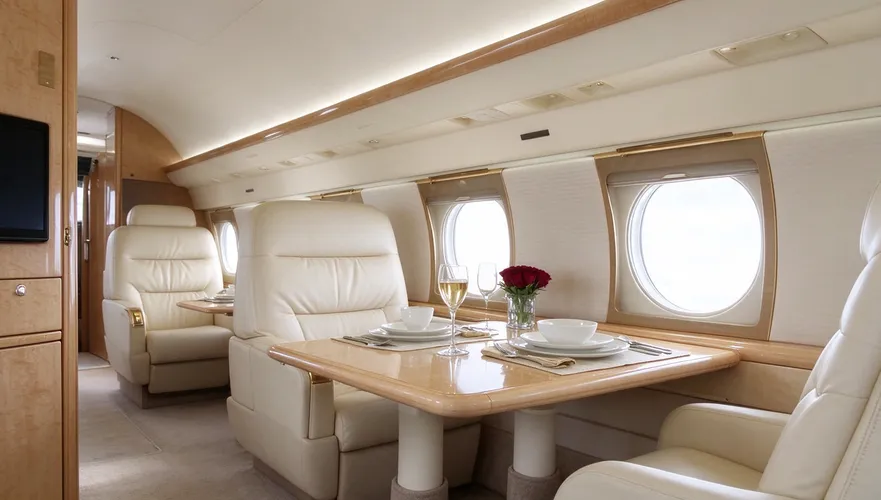
| Cabin height | 1.89 m (6.08 ft) |
| Cabin length | 13.75 m (45.08 ft) |
| Cabin width | 2.23 m (7.25 ft) |
| Baggage volume | 4.79 m3 |
| Seats (standard config) | 14 |
| Seats (max) | 19 |
| Suitcases | 19 |
| Carry-on luggage | 15 |
| Maximum payload | 1542 kg |
| Maximum TakeOff Weight - MTOW | 33203 kg |
| Maximum Landing Weight - MLW | 26535 kg |
FAQ
How far can the GIV fly, and what routes does that cover?
The GIV's range with IFR reserves is 4,091 nm (7,577 km), with a ferry range of 4,220 nm. That is enough for sectors such as New York to Rome or London to Dubai in one leg, provided the passenger and baggage load suits the distance.
How many passengers does the GIV seat, and what is the cabin like?
A standard layout seats 14, and denser layouts take up to 19. The cabin is 13.75 m long, 2.23 m wide and 1.89 m high, so passengers can stand and move around. The length allows separate zones for meetings, meals and sleep on long flights, and the aircraft holds around 19 suitcases.
How fast does the GIV cruise?
The GIV cruises at 480 knots (889 km/h), with a maximum operating speed of Mach 0.88 and a ceiling of 45,000 ft. That puts it on a par with other aircraft in its class, and a sector like London to Dubai fits comfortably inside a working day.
How does the GIV compare with the Gulfstream III before it?
The GIII is marginally quicker, at 488 knots against the GIV's 480. In almost every other respect the GIV moves ahead. It flies 7,577 km against the GIII's 6,760 km, seats 14 in a standard layout rather than 12, and has a 13.75 m cabin against 12.57 m. Its new engines also cut fuel burn and operating costs.
Why is the GIV significant, and why did production end in 1992?
The GIV set more than 50 world records connected with round-the-world flying, and its design became the basis for later Gulfstreams, including the G450 and G550. Production of the original model stopped in 1992 because Gulfstream switched to the GIV-SP, an improved version that kept the same basic design.
Gallery
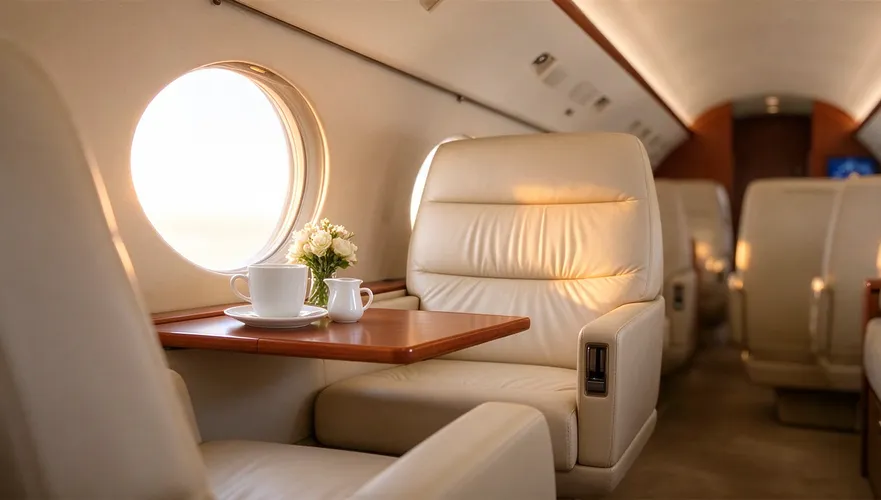
Figures are published manufacturer data, shown for illustration only. Images are generated for this concept and show the GIV type, not a specific aircraft. Gulfstream and GIV are trademarks of their owner, used only to identify the aircraft.