Long Range Jet
Gulfstream GV
Range
6,500 NM
Cruise speed
488 kts
Seats
13-15
History
Gulfstream introduced the GV in 1997 as the successor to the GIV, and at the time it was regarded as the first business jet with ultra-long range. It was also the first civil aircraft fitted with an Enhanced Vision System, which helps pilots see in poor visibility. Two Rolls-Royce BR710-48 engines and a Honeywell SPZ-8500 avionics suite gave the aircraft the performance and communications needed for intercontinental flying.
The aircraft was developed in response to Bombardier's Global Express, and its main advantages over that rival were greater range and lower fuel consumption. Its speed and range soon made it the reference point for private long-haul travel. Routes such as Aspen to Frankfurt, London to Hong Kong, Beijing to New York and Moscow to Los Angeles became routine sectors for GV operators, flown without a stop.
In February 1998 the National Aeronautic Association presented the Robert J. Collier Trophy to Gulfstream and its industry partners on the programme, and the type went on to set many world and national records. Gulfstream delivered 193 GVs before moving the production line to the G500 and G550 in December 2002.
Technical Specifications
General information
| Model name | GV |
|---|---|
| Manufacturer | Gulfstream |
| Aircraft category | long range jet |
| ICAO Designator | GLF5 |
| Start/End of Production | 1997 - 2002 |
| Number of pilot(s) | 2 |
Performances
| Range (with IFR reserves) | 6500 NM (12038 km) |
|---|---|
| Ferry range | 6751 NM (12503 km) |
| Cruise speed | 488 kts (904 km/h) |
| Max Operating Speed – VMO | 340 KIAS |
| Max Mach Operating Speed - MMO | Mach 0.89 |
| Long-Range Cruise Speed - LRC | 459 KTAS |
| Approach Speed | 120 kts |
| Takeoff Distance | 1801 m |
| Average Landing Distance | 844 m |
| Service Ceiling | 51000 ft |
| Thrust | 14750 lbf |
Aircraft technology
| Engine type | Turbofan |
|---|---|
| Engine(s) | 2 x Rolls-Royce BR710-48 |
| Avionics | Honeywell SPZ-8500 suite |
Dimensions and capacity
| Aircraft length | 29.4 m |
|---|---|
| Aircraft height | 7.9 m |
| Wing span | 28.5 m |
| Cabin height | 1.88 m (6.17 ft) |
| Cabin length | 15.27 m (50.08 ft) |
| Cabin width | 2.24 m (7.33 ft) |
| Baggage volume | 6.4 m3 |
| Seats (standard config) | 13-15 |
| Seats (max) | 19 |
| Suitcases | 20 |
| Carry-on luggage | 20 |
| Maximum payload | 2994 kg |
| Maximum TakeOff Weight - MTOW | 41277 kg |
| Maximum Landing Weight - MLW | 34156 kg |
FAQ
How far can the Gulfstream GV fly, and which routes suit it?
With IFR reserves the GV is rated for 6,500 nm (12,038 km), and its ferry range is 6,751 nm. That covers sectors such as London to Hong Kong or Beijing to New York in one leg, so travellers can cross continents without a technical stop. The real figure on the day depends on passenger load, baggage and winds.
How many passengers does the GV carry, and what is the cabin like?
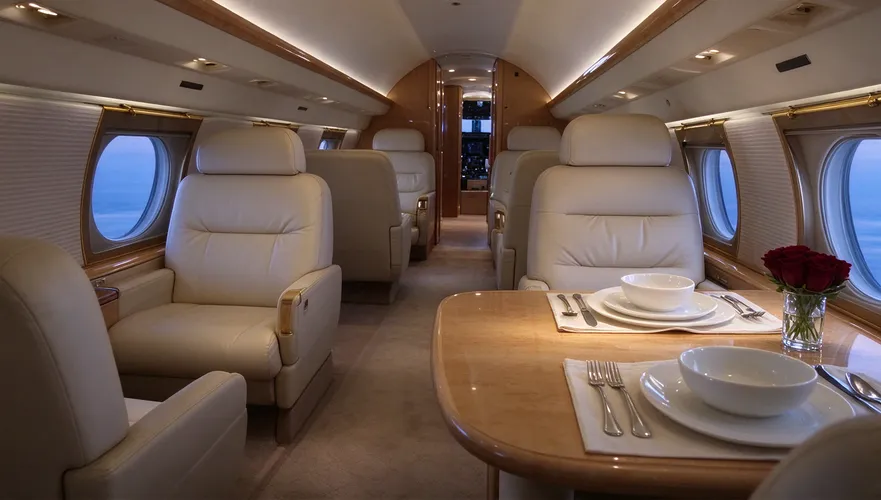
A standard GV layout seats 13 to 15 passengers, and the maximum is 19. The cabin is 15.27 m long, 2.24 m wide and 1.88 m high, so adults can stand and move between seating areas. Baggage space is generous at 6.4 cubic metres, with room for about 20 suitcases and 20 carry-on bags.
What speed does the GV cruise at?
The GV cruises at 488 kts (904 km/h) and has a maximum operating speed of Mach 0.89. On the longest sectors, crews can fly the long-range cruise speed of 459 kts, which gives up a little time in exchange for extra distance. The service ceiling is 51,000 ft.
How does the GV compare with the GIV and the Global Express?
The GV followed the GIV and took Gulfstream into the ultra-long-range class when it arrived in 1997. It was designed as an answer to Bombardier's Global Express, and its advantages over that aircraft were greater range and more economical fuel consumption. For a charter client, that means fewer technical stops on the longest routes.
Why is the GV seen as an important aircraft in business aviation?
Two firsts stand out: it was among the first business jets with intercontinental range, and the first civil aircraft fitted with an Enhanced Vision System. The 1998 Collier Trophy recognised that work, and its successors, the G500 and G550, took over the production line in 2002. Many GVs still fly today, which keeps the type available for long-range charter.
Gallery
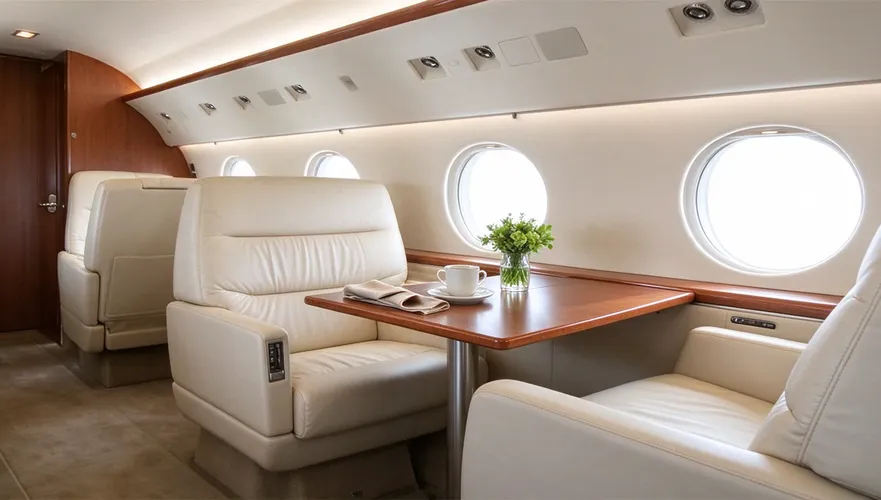
Figures are published manufacturer data, shown for illustration only. Images are generated for this concept and show the GV type, not a specific aircraft. Gulfstream and GV are trademarks of their owner, used only to identify the aircraft.