Light Jet
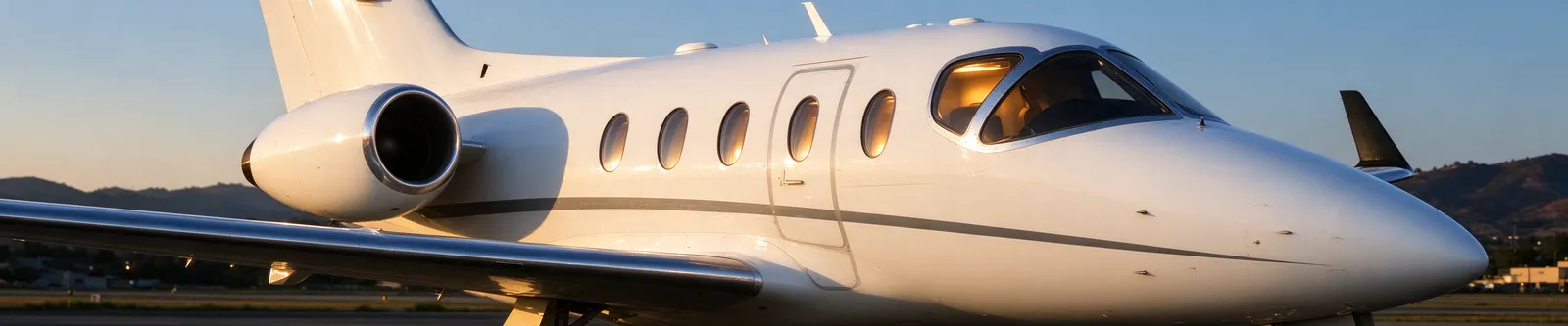
Hawker 400XP
Range
1,333 NM
Cruise speed
450 kts
Seats
7
History
The aircraft began as the Mitsubishi MU-300 Diamond, a new design meant to sit above the MU-2 at the top of Mitsubishi Heavy Industries' business aircraft range. It first flew on 29 August 1978 and was certified on 6 November 1981. Mitsubishi then sold the rights in 1985, together with a number of unfinished airframes, to Beechcraft, which built it as the Beechjet 400 and gained FAA approval in May 1986.
In 1990 an improved version followed, with more range, a higher take-off weight, a better-appointed interior and a glass flight deck. By then Beechcraft belonged to Raytheon. In 1993 Raytheon bought the Hawker business jet line from British Aerospace, and the Beechjet 400 became the Hawker 400 so that it fitted the new product family.
The Hawker 400XP, built from 2004 to 2010, gained thrust reversers, an emergency locator, the TCAS II traffic warning system, a nine-seat option and an increased gross weight. Nextant Aerospace later rebuilt the 400XP as the Nextant 400XT, replacing the Pratt & Whitney Canada JT15D engines with Williams FJ44-3AP units and updating the avionics and interior.
Over more than 30 years the type has been sold as the Mitsubishi Diamond and Diamond II, the Beechjet 400 and 400A and the Hawker 400XP, and a military version serves as the T-1 Jayhawk. More than 900 have been delivered. Since 2017 a further upgrade, the Hawker 400XPR, has offered up to 20 per cent lower fuel burn and about 33 per cent more range.
Technical Specifications
General information
| Model name | Hawker 400XP |
|---|---|
| Manufacturer | Hawker |
| Aircraft category | light jet |
| ICAO Designator | BE40 |
| Start/End of Production | 2004 - 2010 |
| Number of pilot(s) | 2 |
Performances
| Range (with IFR reserves) | 1333 NM (2469 km) |
|---|---|
| Ferry range | 1750 NM (3241 km) |
| Cruise speed | 450 kts (833 km/h) |
| Max Operating Speed – VMO | 329 KIAS |
| Max Mach Operating Speed - MMO | Mach 0.78 |
| Long-Range Cruise Speed - LRC | 420 KTAS |
| Approach Speed | 119 kts |
| Takeoff Distance | 1430 m |
| Average Landing Distance | 920 m |
| Rate of Climb | 4020 ft/min |
| Service Ceiling | 45000 ft |
| Thrust | 2965 lbf |
Aircraft technology
| Engine type | Turbofan |
|---|---|
| Engine(s) | 2 |
| Avionics | Collins Pro Line 4 |
Dimensions and capacity
| Aircraft length | 14.76 m |
|---|---|
| Aircraft height | 4.1 m |
| Wing span | 13.23 m |
| Cabin height | 1.45 m (4.75 ft) |
| Cabin length | 4.72 m (15.50 ft) |
| Cabin width | 1.50 m (4.92 ft) |
| Baggage volume | 1 m3 |
| Seats (standard config) | 7 |
| Seats (max) | 9 |
| Suitcases | 5 |
| Carry-on luggage | 5 |
| Maximum payload | 900 kg |
| Maximum TakeOff Weight - MTOW | 7400 kg |
| Maximum Landing Weight - MLW | 7100 kg |
| Fuel capacity | 2800 L |
FAQ
How far can the Hawker 400XP fly?
With IFR reserves it covers 1,333 nautical miles (2,469 km), which suits European and regional routes rather than intercontinental ones. Earlier versions such as the 400A flew a few hundred kilometres less, and the Nextant 400XT rebuild stretches the figure to 3,713 km. Because range varies so much between generations, our advisors match the variant to your route.
How many passengers does the Hawker 400XP take?
Seven in the standard charter layout, or up to nine in a maximum configuration. The pressurised cabin is 4.72 metres long, 1.50 metres wide and 1.45 metres high, with 8.66 cubic metres of volume, and its square-oval cross-section gives more usable room than many light jets. Baggage space takes around 5 suitcases and 5 carry-on bags.
How does the Hawker 400XP compare with the Phenom 300?
Both are popular light jets for short and medium-haul trips. The Phenom 300 flies further, has the larger cabin and uses shorter runways, and passengers like its large windows (there is even one in the lavatory), generous legroom and seats that recline. The Hawker counters with a flat floor and square-oval cabin that make it easy to move around on board.
Hawker 400XP or Citation CJ2: which is quicker?
The Hawker, by a clear margin. It cruises at 450 knots (833 km/h) against 407 knots (754 km/h) for the CJ2, about 79 km/h faster, which helps on time-sensitive trips. The CJ2 is certified for single-pilot operation, which can lower its operating costs, while the 400XP always flies with two pilots.
What are the Hawker 400XP's drawbacks for charter?
It is not certified for single-pilot operation, so every flight needs two pilots, which adds crew cost compared with many modern light jets. All aircraft date from 2004 to 2010, so the cabins lack the latest technology. Its engines are also louder than those of newer models, which can rule out some noise-sensitive airports with strict limits.
What does it cost to charter a Hawker 400XP?
Prices are set trip by trip. The quote depends on your route and dates, where the nearest suitable aircraft is positioned and which operator flies it. Our advisors price each flight individually and can tell you whether a 400XP or a different light jet makes more sense for the trip.
Gallery
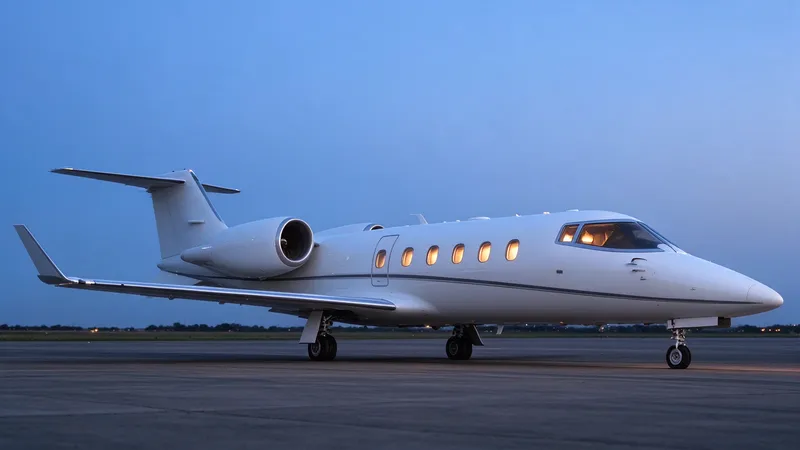
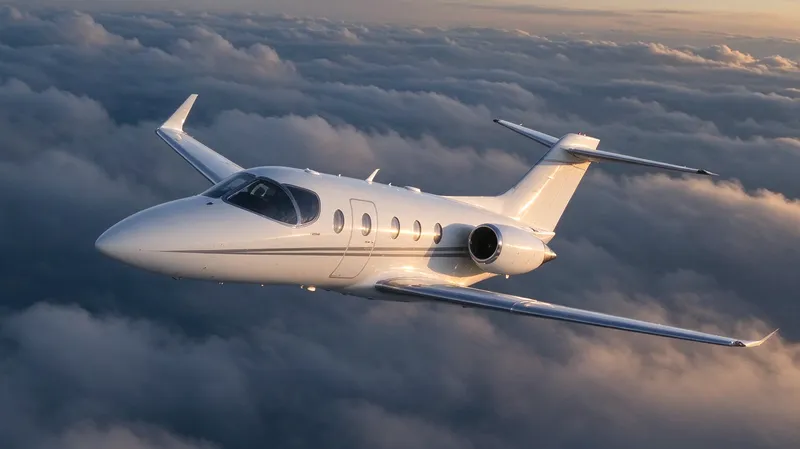
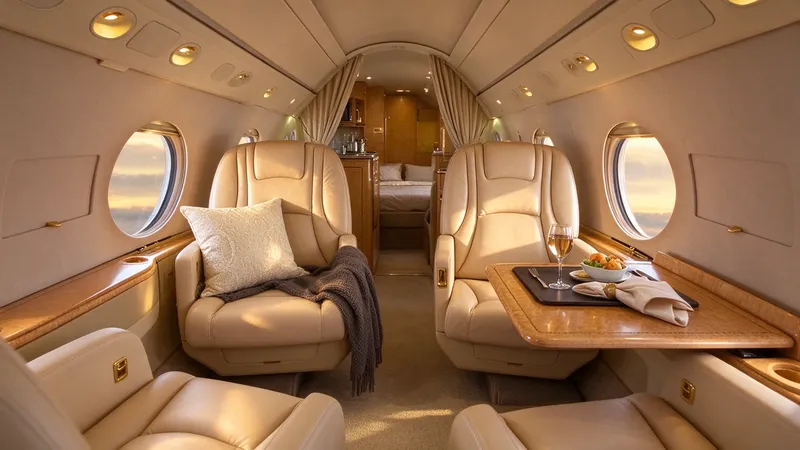
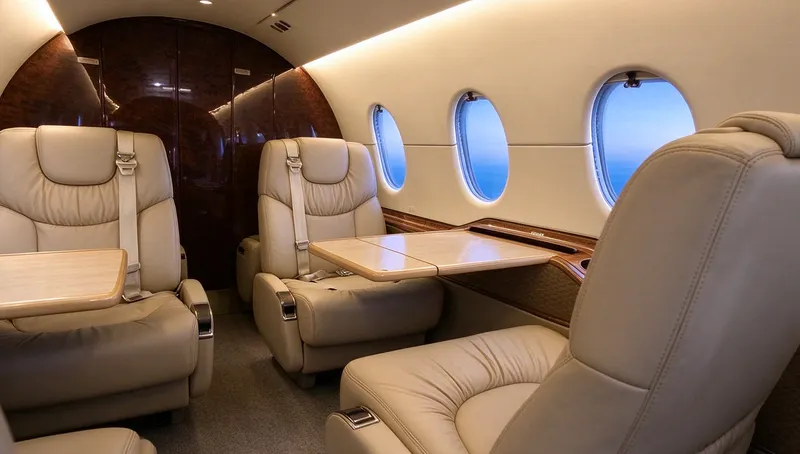
Figures are published manufacturer data, shown for illustration only. Images are generated for this concept and show the 400XP type, not a specific aircraft. Hawker and 400XP are trademarks of their owner, used only to identify the aircraft.