Midsize Jet
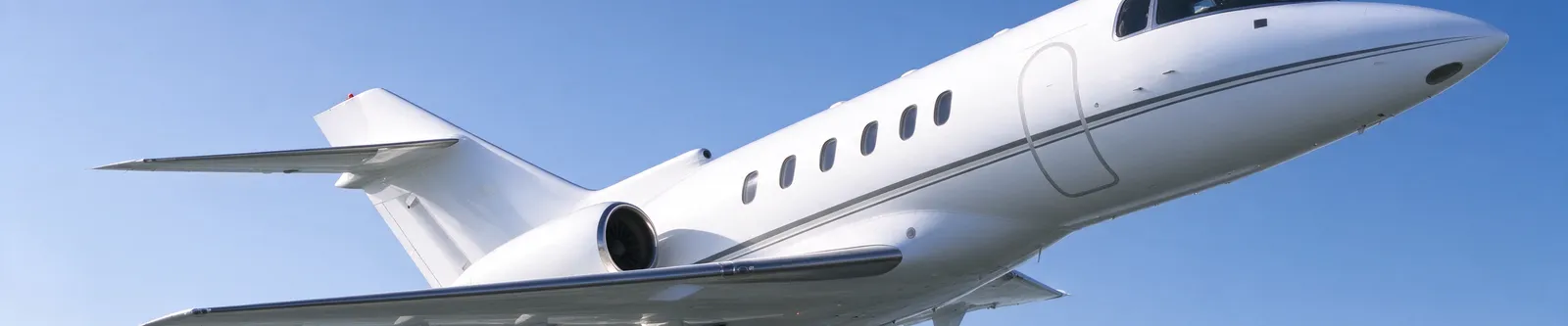
Hawker 700/750
Range
2,111 NM
Cruise speed
447 kts
Seats
8
History
The Hawker 750 belongs to the Hawker 800 family, which grew out of the 125, a design that passed from de Havilland to Hawker Siddeley and then to British Aerospace. Hawker 800 aircraft have long been a common choice among owners of mid-size business jets, and the series sold more than 650 aircraft over almost 30 years of production.
Development continued with the Hawker 850XP, certified on 3 February 2006. Its main addition was a set of winglets developed by Raytheon Aircraft, and with two Honeywell 731-5BR turbofans it had a top speed of 827 km/h. Hawker presented it as the next stage of the 800 series, part of a wider programme of upgrades across its fleet.
The Hawker 750 followed as a variant that gives up some range in exchange for a larger cabin and more baggage space. Its maiden flight took place on 23 August 2007, and certification followed on 19 February 2008, with deliveries starting that year. Like the 850XP, it is powered by a pair of Honeywell TFE731-5BR turbofans.
The Hawker Beechcraft 900XP was developed alongside it and brought more payload, better performance and easier-to-use cockpit avionics, with Honeywell TFE731-50R turbofans. It made its public debut at NBAA in October 2006, gained US certification a year later, in October 2007, and reached its first customers in 2008.
Technical Specifications
General information
| Model name | Hawker 700/750 |
|---|---|
| Manufacturer | Hawker |
| Aircraft category | midsize jet |
| ICAO Designator | H25B |
| Start/End of Production | 2008 - 2012 |
| Number of pilot(s) | 2 |
Performances
| Range (with IFR reserves) | 2111 NM (3910 km) |
|---|---|
| Ferry range | 2145 NM (3973 km) |
| Cruise speed | 447 kts (828 km/h) |
| Max Operating Speed – VMO | 310 KIAS |
| Max Mach Operating Speed - MMO | Mach 0.8 |
| Long-Range Cruise Speed - LRC | 402 KTAS |
| Approach Speed | 123 kts |
| Takeoff Distance | 1431 m |
| Average Landing Distance | 684 m |
| Rate of Climb | 3500 ft/min |
| Service Ceiling | 41000 ft |
| Thrust | 5525 lbf |
Aircraft technology
| Engine type | Turbofan |
|---|---|
| Engine(s) | 2 x Honeywell TFE 731-5BR |
| Avionics | Collins Pro Line 21 |
Dimensions and capacity
| Aircraft length | 15.6 m |
|---|---|
| Aircraft height | 5.52 m |
| Wing span | 15.66 m |
| Cabin height | 1.75 m (5.75 ft) |
| Cabin length | 6.5 m (21.33 ft) |
| Cabin width | 1.83 m (6.0 ft) |
| Baggage volume | 2.24 m3 |
| Seats (standard config) | 8 |
| Seats (max) | 10 |
| Suitcases | 8 |
| Carry-on luggage | 5 |
| Maximum payload | 998 kg |
| Maximum TakeOff Weight - MTOW | 12247 kg |
| Maximum Landing Weight - MLW | 10206 kg |
Advantages & Disadvantages
Advantages
- Proven airframe: Many Hawkers in service are older aircraft, and operators often refresh them with new paint and new cabins. Their durability and reliability keep the 750 and the other Hawker models a sound choice for short business trips, and a well-kept example remains a practical charter aircraft.
- Midsize comfort at a lower cost: The Hawker 750 gives charter clients the cabin and amenities of a midsize jet at a price nearer the light jet segment. That balance runs through the whole Hawker range and suits business travellers who watch their budget.
- Useful range: With 2,111 nautical miles (3,910 km) of range, the Hawker flies further than many midsize jets and reaches distant destinations direct. A full cabin still covers most routes without a stop, and with fewer passengers on board the range extends further.
- Easy to find: Plenty of Hawkers are based at airports in Switzerland, Austria and Germany, so one is often available at short notice. With the quick check-in at private aviation terminals, departure can follow booking within a few hours.
- Comfortable cabin: The cabin is roomy and finished in high-quality materials, so passengers can rest or work as they prefer. Pressurisation and modern air conditioning keep the air fresh, and travellers arrive feeling rested.
Disadvantages
- Baggage loaded through the cabin: Hawker jets have no external hold access, so bags take longer to load and unload than on comparable aircraft. Owners often name this as the change they would most like to see. If you travel light, it makes no practical difference.
- Older engine technology: The design predates recent advances in fuel efficiency, so fuel burn is higher than on newer aircraft. That raises both the variable cost and the environmental footprint of each flight, although the effect is small on short sectors.
FAQ
How many passengers fit in a Hawker 750, and how big is the cabin?
The standard layout seats eight, and the maximum is ten. The cabin is 6.5 m long, 1.83 m wide and 1.75 m high, about 17.1 cubic metres in all, so there is space for a meeting on board or for resting. The hold takes around eight suitcases and five carry-on bags.
How fast does the Hawker 750 fly?
It cruises at 447 knots (828 km/h), with a maximum operating speed of Mach 0.8. That is a sound figure for the midsize class and keeps business and leisure trips efficient. Two Honeywell TFE731-5BR engines deliver consistent speed across regional routes and longer European sectors.
How does range vary across the Hawker 700 to 900 models?
Range grew with each model as newer, more efficient engines arrived. The Hawker 750 is rated for 2,111 nautical miles (3,910 km) with IFR reserves. The 900XP reaches 5,219 km, while the original Hawker 700 falls roughly 2,000 km short of that. For most flights within Europe, the difference between the models does not matter.
Is the Hawker 750 a newer aircraft than the Hawker 800?
Yes. The 750 first flew in 2007 and was built from 2008 to 2012, long after the Hawker 800 series entered service. It was designed with a shorter range, a larger cabin and more baggage space than the older models, and Hawker positioned it as a cost-effective way to fly with midsize comfort.
What separates the Hawker 800XP from a Cessna Citation Excel?
Both are midsize jets with roomy cabins and high cruise speeds. Range is the clearest difference: in ideal conditions the Hawker can fly coast to coast across the United States, while the Excel's range falls almost a quarter short of the Hawker's. The Hawker also has the larger cabin, and its luggage area between the cockpit and the cabin can be reached during the flight.
Can a Hawker 700 to 900 series jet be flown by a single pilot?
No. Every model in the Hawker 700 to 900 range needs two pilots, as none is certified for single-pilot operation. Against single-pilot aircraft in the same class, that can be seen as a drawback, but a second pilot in the cockpit adds a margin of safety to every charter.
What does a Hawker 750 charter cost?
Each trip is priced on its own details. The route, your travel dates, where the aircraft has to position from and the operator flying it all affect the figure. A Hesper Jets advisor will prepare a quote for your itinerary and can compare the Hawker with other midsize options for the same trip.
Figures are published manufacturer data, shown for illustration only. Images are generated for this concept and show the 700/750 type, not a specific aircraft. Hawker and 700/750 are trademarks of their owner, used only to identify the aircraft.