Light Jet
Hawker Premier 1A
Range
1,360 NM
Cruise speed
451 kts
Seats
6
History
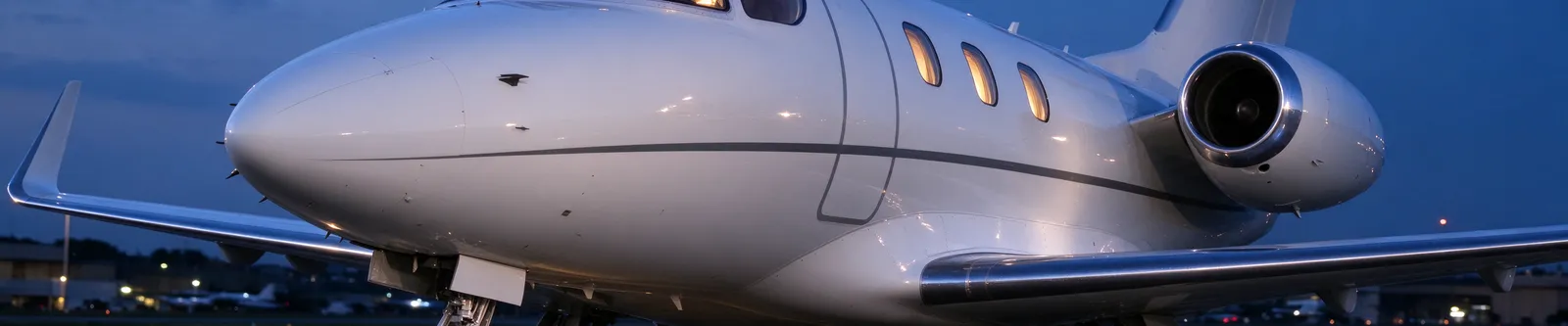
Hawker designed the Premier 1A as a light jet built around composite construction and modern avionics, with the aim of competing on performance in a crowded category. Its fuselage is made of carbon fibre and other lightweight materials, which keeps weight down while leaving the structure strong. Power comes from two Williams International FJ44-2A turbofans, an engine family known for its fuel efficiency and reliability.
The composite fuselage made room for a cabin that is 1.65 m high and 1.68 m wide, unusually generous for a light jet. The aircraft was also designed for single-pilot operation, with Rockwell Collins Pro Line 21 avionics on the flight deck. It cruises at 451 kts (835 km/h) and has 1,360 nm (2,519 km) of range with IFR reserves.
Production ran from 2006 to 2012. Despite its technology and performance, the Premier 1A found the light jet market difficult. It was Hawker's attempt to build a presence in that segment while keeping to the build quality expected of the Hawker brand.
Technical Specifications
General information
| Model name | Premier 1A |
|---|---|
| Manufacturer | Hawker |
| Aircraft category | light jet |
| ICAO Designator | PRM1 |
| Start/End of Production | 2006 - 2012 |
| Number of pilot(s) | 1-2 |
Performances
| Range (with IFR reserves) | 1360 NM (2519 km) |
|---|---|
| Ferry range | 1480 NM (2741 km) |
| Cruise speed | 451 kts (835 km/h) |
| Max Operating Speed – VMO | 320 KIAS |
| Max Mach Operating Speed - MMO | Mach 0.8 |
| Long-Range Cruise Speed - LRC | 369 KTAS |
| Approach Speed | 120 kts |
| Takeoff Distance | 1156 m |
| Average Landing Distance | 966 m |
| Rate of Climb | 4000 ft/min |
| Service Ceiling | 41000 ft |
| Thrust | 2300 lbf |
Aircraft technology
| Engine type | Turbofan |
|---|---|
| Engine(s) | 2 x Williams International FJ44-2A |
| Avionics | Rockwell Collins Pro Line 21 |
Dimensions and capacity
| Aircraft length | 14.02 m |
|---|---|
| Aircraft height | 4.67 m |
| Wing span | 13.56 m |
| Cabin height | 1.65 m (5.41 ft) |
| Cabin length | 4.11 m (13.5 ft) |
| Cabin width | 1.68 m (5.51 ft) |
| Baggage volume | 2.2 m3 |
| Seats (standard config) | 6 |
| Seats (max) | 8 |
| Suitcases | 5 |
| Carry-on luggage | 6 |
| Maximum payload | 726 kg |
| Maximum TakeOff Weight - MTOW | 5670 kg |
| Maximum Landing Weight - MLW | 5262 kg |
| Fuel capacity | 2070 L |
FAQ
How many people fit in a Premier 1A, and how roomy is the cabin?
Six in the usual layout, a club arrangement of four seats plus two individual seats, and up to eight at most. The cabin is 4.11 m long, 1.68 m wide and 1.65 m high, taller and wider than many light jets and larger in cross-section than some super light jets such as the Learjet 45XR. The carbon fibre fuselage is what makes that space possible.
What range does the Premier 1A have?
With IFR reserves the Premier 1A is rated for 1,360 nm (2,519 km). That suits regional and medium-distance flights, such as New York to Miami, and from a central European base it reaches most destinations on the continent without a fuel stop. It is built for short-haul business travel rather than long sectors.
How fast is the Premier 1A, and what does that mean on short flights?
It cruises at 451 kts (835 km/h), a competitive speed for a light jet. Typical European trips such as Frankfurt to Madrid or London to Rome take under two hours. Combined with its roomy cabin, that speed makes it a good fit for business trips where arriving quickly and comfortably both matter.
Why does the carbon fibre fuselage matter to passengers?
When the Premier 1A appeared in 2006, a carbon fibre composite fuselage was an advanced feature for a light jet. It gives the aircraft its unusually large cabin for the class, combines strength with low weight and contributes to a smooth ride. Passengers get a cabin closer to what larger categories offer, which suits anyone who values interior space.
Gallery
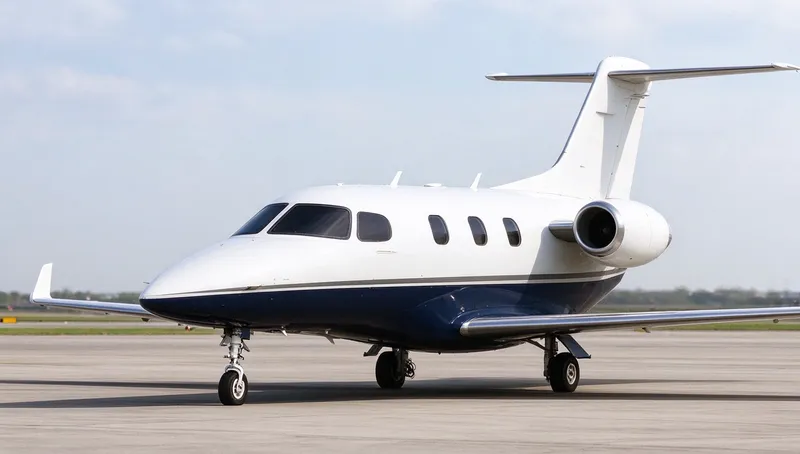
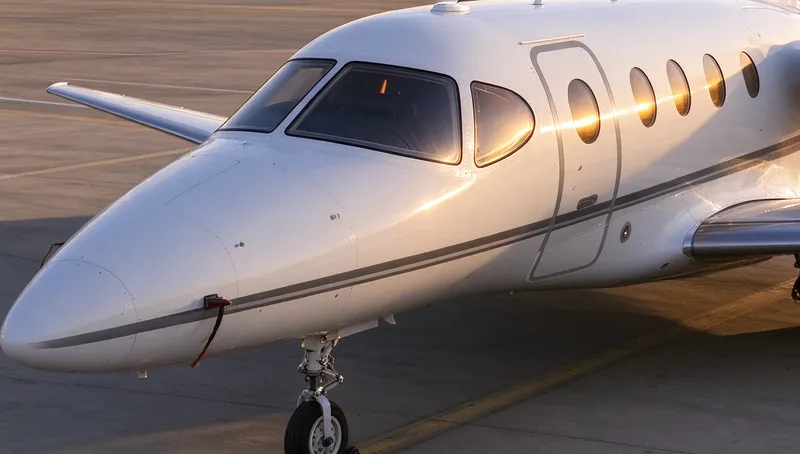
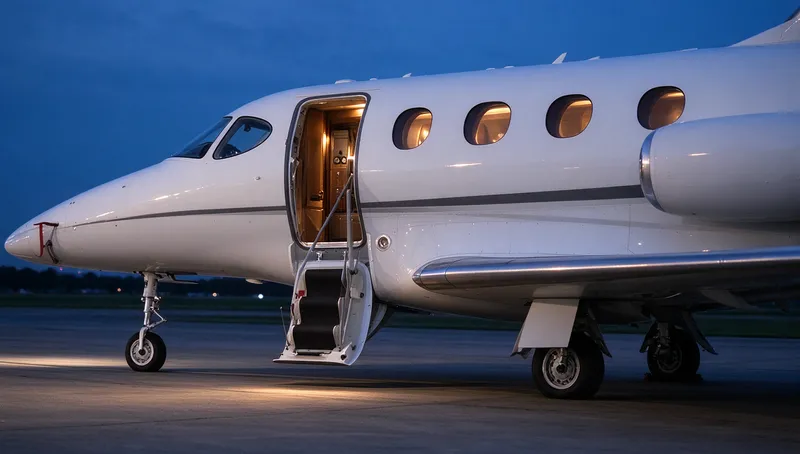

Figures are published manufacturer data, shown for illustration only. Images are generated for this concept and show the Premier 1A type, not a specific aircraft. Hawker and Premier 1A are trademarks of their owner, used only to identify the aircraft.