Very Light Jet
Honda HondaJet HA 420
Range
1,100 NM
Cruise speed
422 kts
Seats
5
History
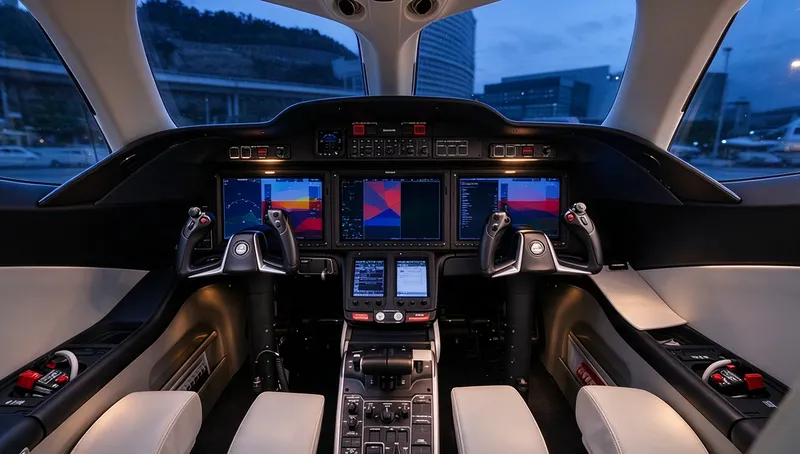
The HondaJet introduced several ideas new to the private jet market, aimed at more cabin space, less noise and better fuel efficiency. It was seen as a pioneer when it launched, partly because of its composite fuselage, and its Garmin G3000 flight deck uses three 14-inch widescreen displays with two touchscreen controllers.
Honda spent many years of research refining the wing profile and the shape of the fuselage nose to achieve laminar flow. The result, known as Natural Laminar Flow, keeps the airflow smooth, which reduces drag and improves both cruise speed and fuel efficiency.
It belongs to the very light jet class, the smallest aircraft currently used for business travel, which typically seat four to eight people. The class was first defined by a maximum take-off weight limit, but that rule is no longer applied strictly, and today the HondaJet exceeds it, as do many of its closest competitors.
The first flight took place on 1 July 2014, certification followed just under a year later, and the first customer delivery was on 23 December 2015. The HondaJet Elite arrived in 2018 with improved avionics, more range and an optional galley, and the Elite S, announced in May 2021, added further gains in avionics, maximum take-off weight and range. Honda Aircraft Company's recognition includes an award from Flying Magazine in 2017 and the AIAA Foundation's Award for Excellence in 2018.
Technical Specifications
General information
| Model name | HondaJet HA 420 |
|---|---|
| Manufacturer | Honda Aircraft Company |
| Aircraft category | very light jet |
| ICAO Designator | HDJT |
| Start/End of Production | 2015 - Still in production |
| Number of pilot(s) | 1 |
Performances
| Range (with IFR reserves) | 1100 NM (2024 km) |
|---|---|
| Ferry range | 1388 NM (2571 km) |
| Cruise speed | 422 kts (782 km/h) |
| Max Operating Speed – VMO | 270 KIAS |
| Max Mach Operating Speed - MMO | Mach 0.72 |
| Long-Range Cruise Speed - LRC | 380 KTAS |
| Approach Speed | 106 kts |
| Takeoff Distance | 1220 m |
| Average Landing Distance | 930 m |
| Rate of Climb | 3990 ft/min |
| Service Ceiling | 43000 ft |
| Thrust | 2050 lbf |
Aircraft technology
| Engine type | Turbofan |
|---|---|
| Engine(s) | 2 |
| Avionics | Garmin G3000 |
Dimensions and capacity
| Aircraft length | 12.99 m |
|---|---|
| Aircraft height | 4.54 m |
| Wing span | 12.12 m |
| Cabin height | 1.47 m (4.83 ft) |
| Cabin length | 5.43 m (17.80 ft) |
| Cabin width | 1.52 m (5.00 ft) |
| Baggage volume | 2 m3 |
| Seats (standard config) | 5 |
| Seats (max) | 7 |
| Suitcases | 4 |
| Carry-on luggage | 2 |
| Maximum payload | 800 kg |
| Maximum TakeOff Weight - MTOW | 4850 kg |
| Maximum Landing Weight - MLW | 4400 kg |
| Fuel capacity | 1700 L |
FAQ
HondaJet or Embraer Phenom 100EV: which performs better?
On most measures the HondaJet has a slight edge, and its cabin volume is also a little larger. The Embraer's range is a few kilometres longer than the original HA 420's, although it is slower. Once upgraded to Elite standard, the HondaJet beats the Phenom on range too.
How far can a HondaJet fly, and which cities can it link?
With IFR reserves the HA 420 covers 1,100 nm (2,024 km), and its ferry range is 1,388 nm (2,571 km). That is enough for regional sectors such as Rome from London, Miami from New York or Denver from Los Angeles without refuelling. Headwinds, tailwinds and passenger load all affect the distance on a given day.
What does a HondaJet charter cost?
Each trip is quoted on its own terms. The distance and flight time, your dates, where the nearest available HondaJet is based and the operator flying it all affect the price. Send our advisors your route and dates, and they will come back with a price for that trip.
Can a HondaJet fly with one pilot?
Yes. It is certified for single-pilot operation, so one pilot can fly it from departure to landing, although a co-pilot can join when required. The Garmin G3000 avionics support this with added safety features, better monitoring of the surrounding airspace and visual guidance cues, which improve the pilot's situational awareness, particularly on landing.
How many passengers fit in a HondaJet?
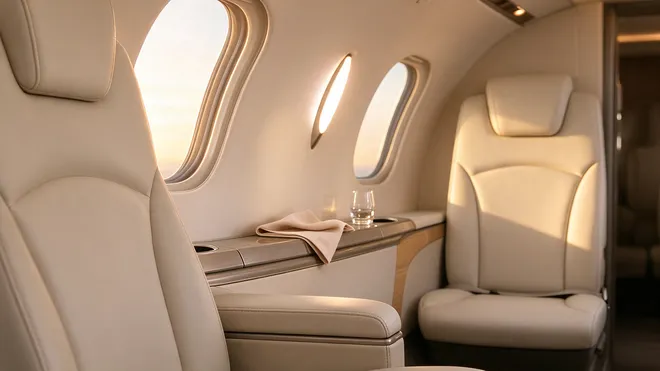
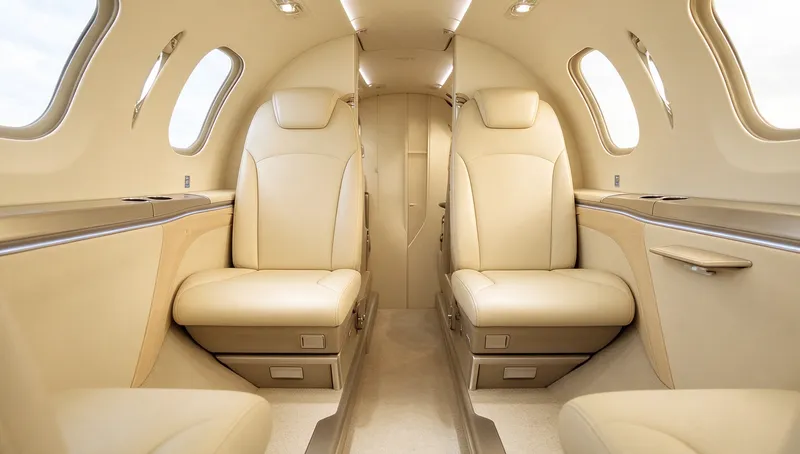
The standard layout seats five, and the maximum is seven. The cabin is 5.43 m long, 1.52 m wide and 1.47 m high, with a pair of forward-facing club seats, two rear seats with good legroom and an on-board lavatory. There is room for four suitcases and two carry-on bags, which suits short and medium-haul trips.
How fast is the HondaJet?
Its maximum cruise speed is 422 kts (782 km/h), quick for a very light jet. Compared with an airline flight on a regional route, the time saving comes from flying direct and from using smaller airports closer to where you are going.
Why are the HondaJet's engines mounted above the wings?
No other business jet carries its engines over the wing. Moving them off the fuselage lowers cabin noise, frees space inside and cuts drag, which saves fuel, and the layout works alongside the laminar flow design to raise cruise performance. The composite fuselage adds cabin volume within the same exterior size and needs less maintenance.
HondaJet or Pilatus PC-12: which has more range?
The PC-12 goes considerably further, flying up to 3,334 km against 2,024 km for the HondaJet, so it can manage longer trips such as London to Moscow. The HondaJet is the faster aircraft, though, cruising at 422 kts with jet performance, which makes it the quicker choice on shorter regional routes.
Gallery
Figures are published manufacturer data, shown for illustration only. Images are generated for this concept and show the HondaJet HA 420 type, not a specific aircraft. Honda Aircraft Company and HondaJet HA 420 are trademarks of their owner, used only to identify the aircraft.